
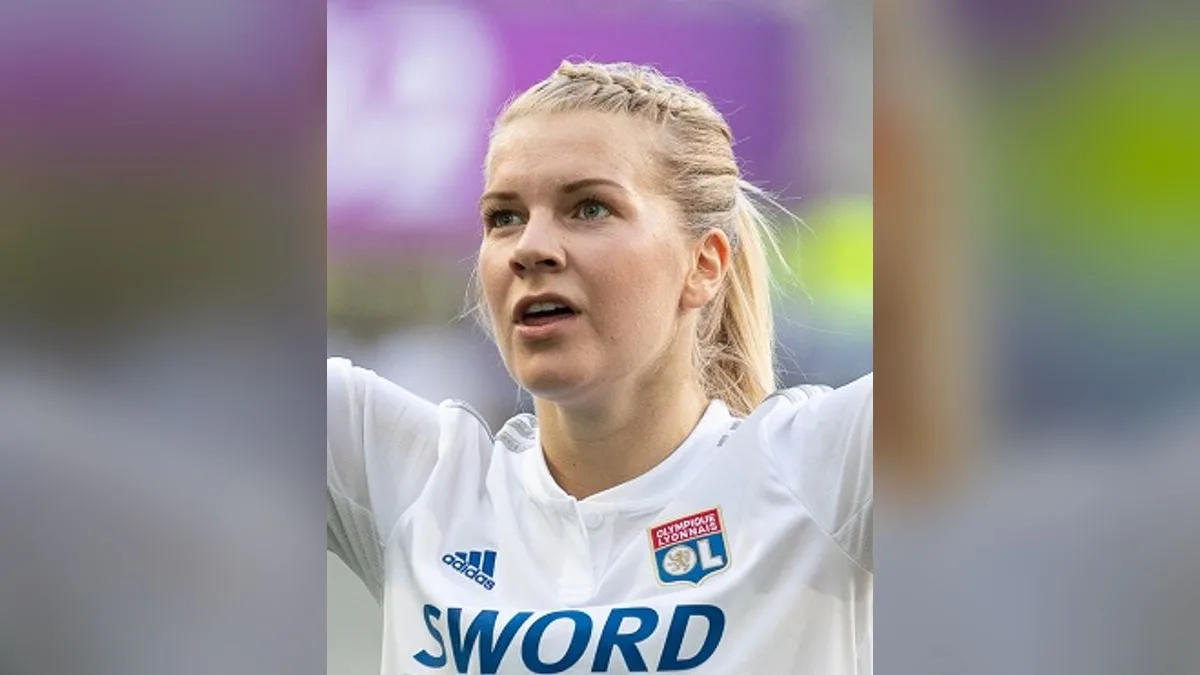
Ada Hegerberg emerged as one of the defining figures of a generation. Her impact rests on two interlocking things: ruthless efficiency in front of goal, and the decision to use her platform to demand better structures for women’s football. That combination made her both a headline player on the pitch and a quietly disruptive voice off it.
| Born | 10 July 1995 |
|---|---|
| Nationality | Norway |
| Position | Forward |
| Height | 1.77 m |
| National team | Norway (2011–) |
Origins and early progress
Born into a sporting family in Norway, Hegerberg moved through her country’s youth ranks and into senior football at an early age. From those first steps in local clubs she showed the traits that would come to define her play: quick, direct movement into and around the box, a natural ability to read late attacking runs, and a coldness about finishing chances.
Her arrival on the wider European scene followed the familiar path of the most talented northern European players: strong performances at home opened doors abroad. Once in continental club football, Hegerberg’s game tightened into a highly efficient striking profile — one that thrived in the systems built around technical possession and a high supply of chances.
Club career and Lyon years
Hegerberg’s move to the top tier of club football saw her join a dominant European outfit where she became central to one of the most successful teams in the women’s club game. At that club she won domestic and continental honours repeatedly, and she established herself as a consistent match-winner in the biggest fixtures.
Her record in UEFA club competition attracted particular attention. Season after season she converted from the sort of positions that matter most in knockout football: late runs behind defences, decisive headers in crowded penalty areas and composed finishes from tight angles. Those qualities helped build a reputation as both a clutch performer and a high-volume scorer in elite matches — a player opponents planned specifically to contain.
International career and principled stand
Hegerberg broke into Norway’s senior set-up as a young forward and was a regular presence for a period. At one point in her international career she chose to step away from the national team, citing dissatisfaction with the structures and support around the women’s programme. That decision removed a top talent from Norway’s squads for several years and sparked a wider conversation about treatment, resources and respect in women’s football.
Her absence was a rare example of a leading player using personal withdrawal to press for systemic change. The debate it created helped accelerate public and institutional scrutiny of how federations managed the women’s game. Hegerberg later resumed international involvement, bringing back experience gained at the highest club level.
What she does on the pitch
Hegerberg is foremost a goalscorer — a forward who locates the soft spots in a defence and times runs to meet crosses or through balls. Her movement is economical rather than flamboyant: she finds pockets, drifts behind the last defender and then converts chances with minimal fuss.
Technical attributes underpin that effectiveness. Close control at speed, an ability to finish with both feet and reliable aerial ability make her difficult to mark in the box. Equally important is her spatial intelligence; she often positions herself where a single accurate pass or cross will create a clear chance. In possession phases she can also play as a focal point, holding up the ball and laying it off for runners, which allows her teams to combine patterns of play and maintain pressure in the attacking third.
Defensively she contributes through pressing triggers and by occupying central defenders, helping to create space for teammates to exploit. That two-way work rate is not flashy, but it is integral to the systems that have delivered consistent team success.
Legacy and why she matters
Hegerberg’s significance extends beyond goals and medals. She was the first recipient of the Ballon d’Or Féminin, a landmark that underlined individual excellence in the women’s game and raised the profile of the sport on the global awards stage. That moment recognised not only a single season but also the idea that women’s club performances deserve the same singular recognition long afforded to men.
Her insistence on better conditions for women’s football — expressed through a sustained national-team protest — placed her among the small group of elite players who have leveraged personal standing to press for institutional change. That decision cost her playing time at international tournaments, but it also intensified public debate and helped shape subsequent conversations about equity in the women’s game.
On the pitch, sustained excellence in continental competition made her one of the most feared forwards of her era. She set a benchmark for clinical finishing in high-stakes matches and left a measurable imprint on how elite teams structure their attacking play. Clubs and coaches studying contemporary striking models will find her movement, decision-making and finishing a reference point.
Enduring influence
Beyond statistics and trophies, Hegerberg’s career matters because it combined top-level achievement with advocacy. She proved that sporting success and principled stands can coexist. Younger players have looked to her both for what she accomplishes in a stadium and for what she stands for off it.
As women’s club football continues to professionalise and attract broader audiences, her career will be read as part of the transition: one in which a small set of leading players elevated standards while also forcing institutions to confront uncomfortable questions. Those dual contributions are the reason her name remains central to discussions about the modern game.
Champions League record scorer
Club career
| Years | Club | Apps | Goals |
|---|---|---|---|
| 2010–2011 | Kolbotn Fotball | 30 | 15 |
| 2011–2011 | Kolbotn IL | 20 | 12 |
| 2012–2012 | Stabæk Fotball Kvinner | 18 | 24 |
| 2013–2014 | 1. FFC Turbine Potsdam | 25 | 11 |
| 2014– | OL Lyonnes | — | — |
Frequently asked questions
What are Ada Hegerberg’s main strengths as a forward?
She is a clinical goalscorer who times runs to exploit space and converts chances with little fuss. Strong close control at speed, two-footed finishing and good aerial ability combine with smart positioning and the capacity to hold up play for teammates.
Why did Ada Hegerberg step away from the Norway national team?
She withdrew from international selection to protest inadequate structures and support for the women’s programme. Her personal decision aimed to pressure federations to improve treatment and resources for the women’s game.
How has Ada Hegerberg influenced women’s football off the pitch?
She used her standing to demand better conditions, turning a personal protest into a broader debate about equity and federation responsibility. That advocacy, combined with her on-field success, made her a reference point for younger players and helped push institutions to reassess how they manage the women’s game.
