
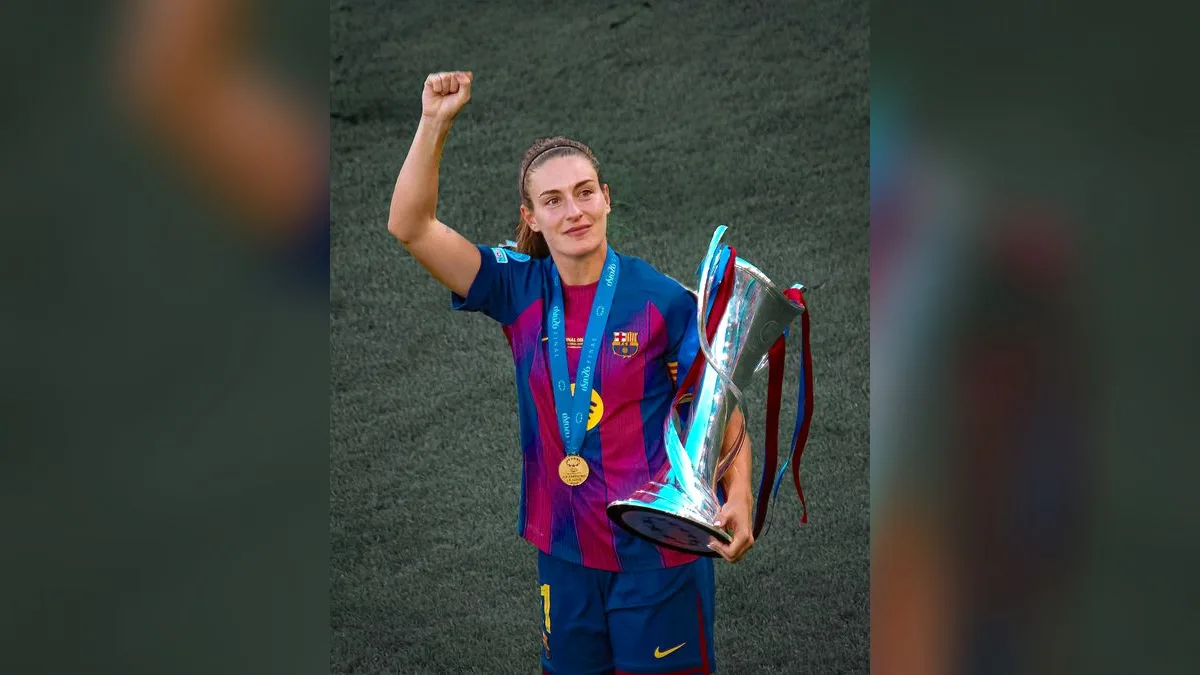
Alexia Putellas has been central to Barcelona’s modern era and Spain’s rise on the international stage. A left-footed midfielder with command of tempo and space, she became the first player to win the Ballon d’Or Féminin in consecutive years and did so while redefining what a playmaker can look like in the women’s game. Her career has spanned early breakthroughs, club dominance, a landmark European title, and a long road back from a major knee injury.
| Born | 4 February 1994 |
|---|---|
| Nationality | Spain |
| Position | Midfielder |
| Height | 1.73 m |
| National team | Spain (2013–2026) — 91 caps, 21 goals |
From Catalonia to the professional game
Born in Catalonia in 1994, Putellas grew up around the club culture of the region and developed in local academies before reaching senior football as a teenager. She learned the game in teams that valued positional play, quick circulation, and intelligent off-ball movement. That background shaped her understanding of space and encouraged the technical base that later defined her style.
Putellas made her senior bow while still young, first catching attention with her poise in possession and a striking left foot. A move to Levante brought regular top-flight minutes and proved she could carry responsibility in a competitive side. Barcelona signed her soon after, and the fit was immediate. The club’s philosophy matched her instincts: keep the ball, pass with purpose, and control the rhythm for long stretches.
Barcelona’s heartbeat
From 2012 onward, Putellas grew with Barcelona as the club invested in building a European contender. She played wide at times early on but settled as an attacking midfielder who connects lines, dictates the pace, and finishes moves. As leadership duties grew, she became the side’s reference point in big moments, trusted to manage the game state and to strike from the edge of the box.
Barcelona’s domestic dominance came with a clear style, and Putellas sat at the centre of it: third-player runs, diagonal switches to wingers, and combinations that unpick deep blocks. Her goals and assists followed naturally from those patterns rather than from chasing numbers. She scored in European knockout ties and shone in finals, helping Barcelona lift the UEFA Women’s Champions League and turn that first title into a platform for more.
Individual recognition arrived in step with team success. Putellas won the Ballon d’Or Féminin in 2021 and 2022, an acknowledgment of sustained influence rather than a single purple patch. She also captained Barcelona, embodying the group’s standards on and off the ball.
Spain: from promise to world champions
Putellas debuted for Spain in her teens and became a fixture through multiple tournament cycles. She featured at European Championships and World Cups as Spain transitioned from a talented outsider to a side expected to control matches. Her role mirrored the one at club level: link midfield to attack, dictate tempo, and arrive in the box with timing.
Her international momentum paused with a serious knee injury on the eve of a major tournament in 2022. The setback removed Spain’s chief organizer and long-range threat, and it forced a rethink of the midfield balance. Putellas returned to action the following season and worked back to full rhythm with careful minutes. She then rejoined Spain’s core as the team climbed to the top of the world game, adding a global title to a career already rich with club honours.
The injury, the return, and the mentality
The knee injury threatened the peak years of a player who relies on timing, strength in duels, and sharp changes of direction. Rehabilitation demanded patience and a recalibration of workload. When Putellas returned to the pitch, the first signs were cautious, then steadily more assertive: cleaner pivots under pressure, longer passing ranges attempted, and the old habit of ghosting into scoring positions.
Coming back to a Barcelona side that had evolved in her absence required adaptation. Younger teammates had grown into larger roles, and opponents paid different kinds of attention to the half-spaces she likes to occupy. Putellas adjusted by picking her moments, dropping deeper to speed circulation when needed and stepping higher when a game asked for late arrivals into the box. The ability to manage phases and tempo — the hallmark of her pre-injury game — re-emerged as fitness and confidence returned.
What sets her apart on the pitch
Putellas blends technique with structure. The first touch opens her body to the field, and scanning before receiving lets her play forward one or two steps sooner than most. She uses her left foot to punch vertical passes between lines and to bend diagonals to the far wing. Under pressure she shields the ball on the half-turn, draws a defender, and releases at the last possible moment to free a teammate on the outside.
Finishing is another edge. She strikes cleanly from the top of the box and times late runs to meet cut-backs. Set pieces add variety: outswinging corners, disguised short routines, and direct shots when the angle suits. None of this is flashy for its own sake. The economy of her movement and decision-making means she spends energy where it changes the match.
Without the ball she leads the press by cue rather than volume. A nudge to a centre-back’s weaker side, a block to a passing lane, and suddenly Barcelona win territory high. Recoveries are about positioning more than tackles; she anticipates second balls and restarts possession with the pass that keeps the team’s structure intact.
Why she matters
Putellas became a touchstone for a generation of Spanish players raised on positional play. Her career tracks the growth of Barcelona from domestic power to European champion and the evolution of Spain into a team comfortable controlling knockout matches. As captain, she set standards for preparation and clarity of roles, helping turn a talented squad into a relentless one.
Her back-to-back Ballon d’Or awards placed a spotlight on a style often described more than celebrated: midfield craft that kills counter-attacks before they happen and tilts a match through angles and timing. The ACL injury, and the methodical comeback that followed, added a chapter about resilience. It also broadened the conversation about return-to-play pathways and long-term athlete management in the women’s game.
For club and country, Putellas has been the player others orbit. The numbers, when viewed over seasons rather than weeks, reflect that influence, but the real measure is how teams look with and without her. With her, passing sequences have more purpose, wingers see the ball a beat earlier, and final thirds feel larger. That is legacy as much as it is form.
Alexia Putellas’s story is not just about medals and awards. It is about shaping how an elite side thinks, raising expectations for what a midfielder contributes, and returning from a career-threatening setback to keep doing those things. That arc will stand, no matter how many more trophies come.
Club career
| Years | Club | Apps | Goals |
|---|---|---|---|
| 2010–2011 | RCD Espanyol Femenino | 24 | 3 |
| 2011–2012 | Levante UD Women | 34 | 15 |
| 2012–2026 | FC Barcelona Femení | 355 | 151 |
| 2026– | London City Lionesses | — | — |
Frequently asked questions
What position does Alexia Putellas play and what are her key strengths?
She is a left-footed attacking midfielder who links midfield and attack, controls tempo and finds space between the lines. Her game is built on a sharp first touch, vertical and diagonal passing, late runs into the box and a measured defensive sense that wins territory and restarts possession.
How did Alexia Putellas recover from her major knee injury?
A serious knee problem sidelined her at a crucial moment, and her return involved a patient, carefully managed rehabilitation with gradual reintroduction of minutes. She rebuilt fitness and confidence by adapting her positioning and timing, first showing cautious signs before regaining the assertive, tempo-managing role she had before the injury.
What are Alexia Putellas’s biggest achievements and why does she matter for club and country?
She captained Barcelona through a period of domestic and European success and won back-to-back Ballon d’Or awards, marking sustained influence rather than a brief peak. For Spain and Barcelona she has been the focal point who organizes play, raises standards around preparation and roles, and changes how teams function when she is on the pitch.
