
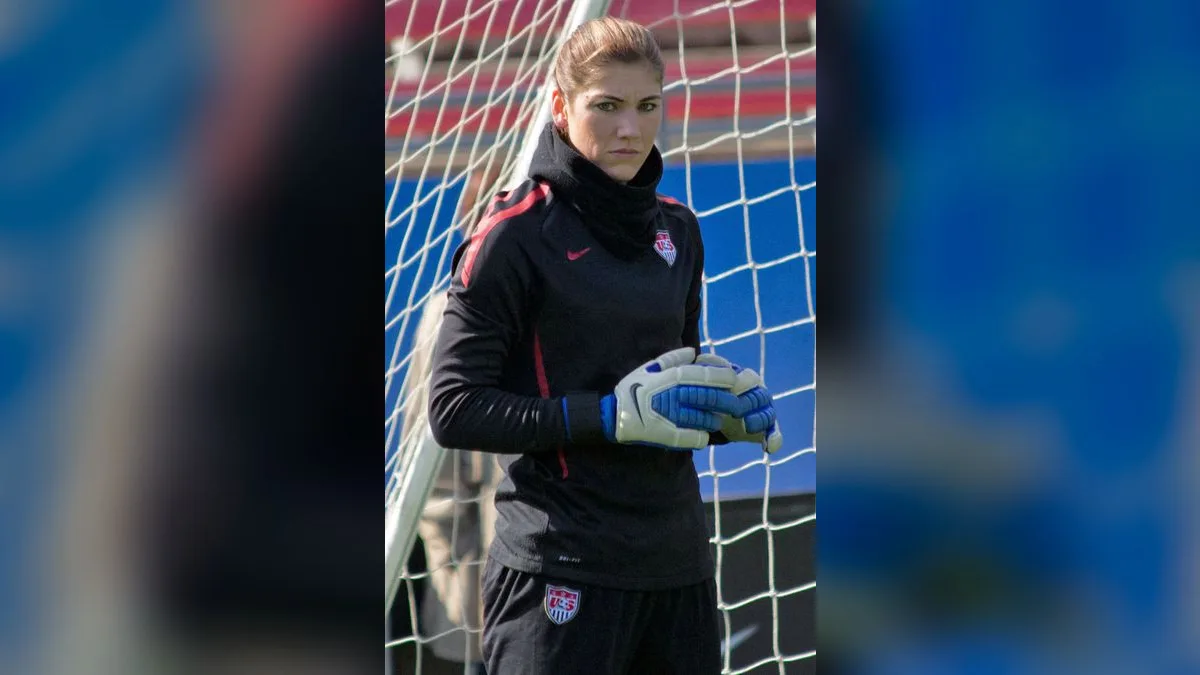
Hope Solo rose from college goalkeeper to the most recognisable American keeper of her generation through a string of club moves and sustained national-team selection. Her career path took her from the early professional years in the United States to spells in Sweden and France before returning repeatedly to domestic leagues; each move sharpened different parts of her game and underpinned a long international presence with the United States women’s national soccer team.
| Born | 30 July 1981 |
|---|---|
| Nationality | United States |
| Position | Goalkeeper |
| Height | 1.75 m |
| National team | United States (2000–) |
Early years and first professional steps
Solo came through the American college system and entered the professional ranks in the early 2000s. Her earliest recorded pro season was with Philadelphia Charge in 2003, a move that opened the door to regular first-team football and exposed her to the demands of a pro schedule. After that season she moved to Europe, joining BK Häcken FF in Sweden in 2004. The Scandinavian league provided a different tactical and physical environment, and Solo spent a season there learning to handle varied attacking styles and colder, more direct games.
Europe and technical growth
In 2005 Solo continued in Europe, signing for OL Lyonnes. Lyon was already building a reputation for technical intensity and competition for places, and her time in France added another layer to her experience. Training and matches in continental Europe challenged her distribution, command of the penalty area, and her ability to organise defenders who came from different coaching backgrounds. Those seasons abroad were short in appearance terms but important for development: they broadened her exposure to international club football and set a foundation for the leadership she would later show at international level.
Return to the United States and the WPS era
Solo returned to the United States as professional domestic football reconstituted itself. She joined Saint Louis Athletica in 2009, then moved to Atlanta Beat in 2010 and to magicJack in 2011. Each move coincided with a turbulent period for domestic leagues, but they kept Solo in match practice against top American forwards. When the National Women’s Soccer League and other domestic structures stabilised, Solo continued her club career closer to home: she played briefly for Seattle Sounders Women in 2012 before joining Seattle Reign FC in 2013. That return to Seattle anchored the latter stage of her club career and linked her to a growing professional scene in the Pacific Northwest.
International career and major tournaments
Solo’s profile rests primarily on her international record. She became a fixture for the United States women’s national soccer team from the early 2000s, and she was the starting goalkeeper through two World Cup cycles and the Olympic campaign that ended with an Olympic gold for the squad. At major tournaments she was chosen for the role that requires calm under pressure and readier hands in one-on-one situations. Tournament football highlighted her shot-stopping and her psychological edge in high-stakes games. Selection across multiple cycles also made her a consistent presence in the squad room, where continuity in the goalkeeper position stabilised defensive plans.
Playing style and strengths
Solo’s game combined reflex saves with an ability to read attackers’ intent. She was strongest in these areas:
- Shot-stopping reflexes: Her reactions in tight situations repeatedly kept scores lower than they might otherwise have been, especially in close tournament matches where a single save can decide progression.
- One-on-one presence: Solo used her positioning and timing to narrow angles and force attackers into suboptimal finishing options, a useful skill against fast, direct forwards.
- Command of the box: While cross-heavy teams presented challenges, she developed a commanding voice and timing for aerial claims that improved with experience at club and international level.
- Distribution under pressure: Her passing and throws worked as quick starts to counterattacks, and she adapted distribution choices after time in Europe taught different build-up approaches.
Why she matters to the game
Hope Solo’s importance goes beyond particular matches. She anchored the goalkeeper position during a period in which the United States relied on experience and continuity in defence while integrating new attacking talent. Her presence gave coaches a known quantity in selection and a reference point for younger keepers entering the national setup. Solo also became a recognisable figure for fans, representing a generation that bridged the early professional era and the more stable, higher-profile leagues that followed. Those connections helped sustain interest in the goalkeeper role and highlighted how a single player can shape defensive identity across club and country.
Long-term impact and legacy
When assessing Solo’s legacy, two threads stand out. First is the footballing thread: she showed how a goalkeeper can combine shot-stopping with active distribution and leadership, helping to modernise expectations of the position. Second is the cultural thread: Solo was a high-profile athlete whose career coincided with the growth of women’s professional football in the United States and beyond. That visibility mattered for young players choosing to specialise as goalkeepers and for fans discovering the tactical value of a top keeper. Her club odyssey — Philadelphia Charge in 2003, BK Häcken FF in 2004, OL Lyonnes in 2005, Saint Louis Athletica in 2009, Atlanta Beat in 2010, magicJack in 2011, Seattle Sounders Women in 2012 and Seattle Reign FC from 2013 — maps the development of the modern professional pathway for American keepers and underlines why her career remains a reference point.
Club career
| Years | Club | Apps | Goals |
|---|---|---|---|
| 2003–2003 | Philadelphia Charge | 8 | 0 |
| 2004–2004 | BK Häcken FF | 19 | 0 |
| 2005–2005 | OL Lyonnes | 7 | 0 |
| 2009–2010 | Saint Louis Athletica | 23 | 0 |
| 2010–2010 | Atlanta Beat | 16 | 0 |
| 2011–2011 | magicJack | 4 | 0 |
| 2012–2012 | Seattle Sounders Women | 3 | 0 |
| 2013– | Seattle Reign FC | — | — |
Frequently asked questions
When did Hope Solo play for OL Lyonnes?
Hope Solo spent the 2005 season at OL Lyonnes, a period that exposed her to high-level continental club football and influenced her technical development in distribution and positioning.
Which clubs did Hope Solo join after returning to the United States?
After returning from Europe Solo played in the re-forming domestic scene with Saint Louis Athletica in 2009, then Atlanta Beat in 2010, magicJack in 2011, Seattle Sounders Women in 2012 and Seattle Reign FC from 2013, keeping her competitive minutes and linking her to the evolving professional leagues.
What are Hope Solo’s main strengths as a goalkeeper?
Hope Solo was known for exceptional reflex shot-stopping and strong one-on-one instincts, combined with improved command of the penalty area and pragmatic distribution developed through years in different leagues.
