
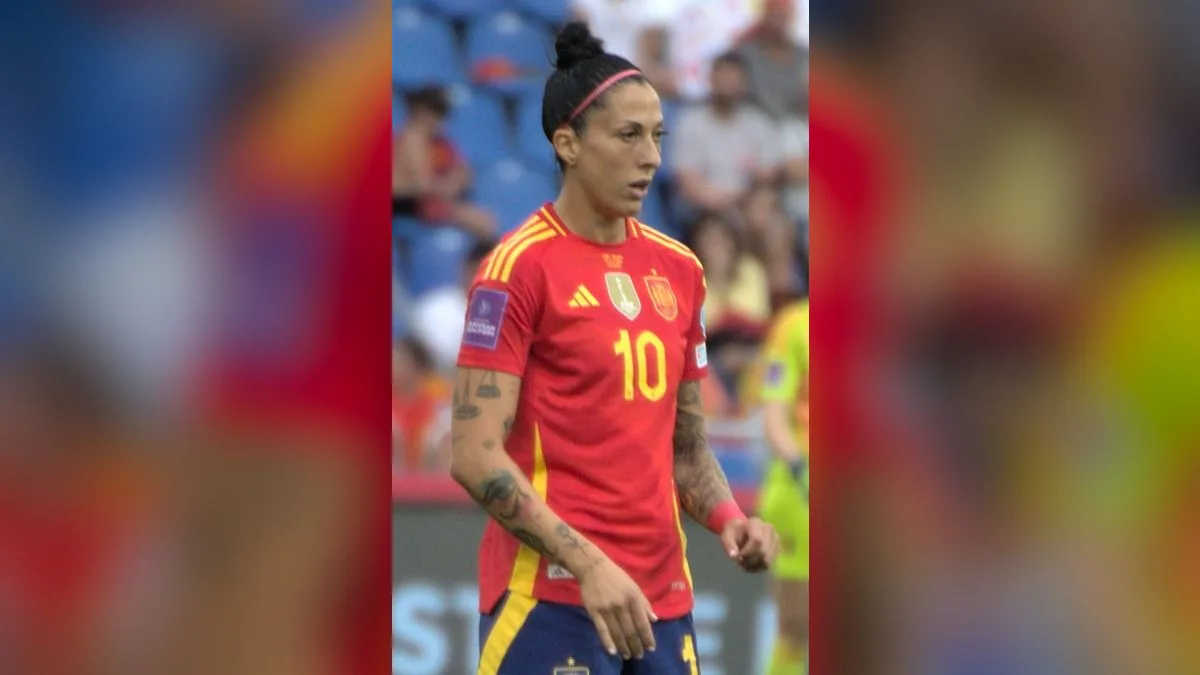
Early development and breakthrough
Jenni Hermoso emerged from Spain’s domestic system as a player whose game married craft with goals. She came through local youth pathways and established herself in senior football in the Spanish league before becoming a national figure. Her early years were notable for a steady upward arc: coaches moved her between midfield and the front line, recognising an ability to both create and finish. That positional fluidity proved decisive in the season that brought wider attention; it allowed her to affect games from deeper positions as well as by playing off the main striker. By the time Barcelona signed her in 2019, Hermoso was already viewed as one of the country’s most accomplished attacking talents.
| Born | 9 May 1990 |
|---|---|
| Nationality | Spain |
| Position | Midfielder, Second striker, Attacking midfielder, Forward |
| Height | 1.75 m |
FC Barcelona Femení, 2019–2022
Joining FC Barcelona Femení in 2019 marked a defining phase. At Barcelona she operated within a side built around possession, positional rotation and high pressing. The club’s structure amplified her strengths: she benefited from team movement that opened the half-spaces where she prefers to receive the ball. Barcelona’s tactical setup also gave her license to drift from a nominal forward position into pockets between defence and midfield, turning her into a constant goal threat as well as a link player.
Her spell at Barcelona saw a sustained purple patch of finishing and creative influence. The environment there — coaching stability, training standards and the squad’s collective intelligence — allowed Hermoso to sustain form across competitions. She combined with wide players and midfield runners so that she rarely had to rely on solo moments; her scoring came from timing, off-the-ball movement and an eye for the run. That period is often taken as the peak of her club career, where individual output matched collective ambition and Barcelona’s model suited her game.
Role, attributes and on-pitch style
Hermoso is a hybrid attacking player rather than a one-dimensional striker. She can play as a second striker, an attacking midfielder or a forward, and each role highlights a different facet of her game. Her first key attribute is spatial intelligence: she finds half-spaces and diagonal channels that unsettle defensive lines. That movement is both a creator of opportunities for team-mates and a way for her to arrive late into the box. Her finishing is another asset; she scores with timing rather than relying solely on power, often using placement and composure in tight areas.
Beyond goals, Hermoso contributes to build-up play. Her passing range across short and medium distances helps sustain possession and overloads central zones. She reads teammates’ runs and anticipates when to release the ball to a wide player or to the runner from deep. On set plays she has been a focal point for late runs into the area. Defensively she presses intelligently rather than freneticly, seeking to cut passing lanes and force hurried exits from opposing defenders. The combination of these traits — movement, finishing and playmaking — is what makes her adaptable to different tactical systems.
Spain national team and wider influence
On the international stage Hermoso is Spain’s all-time leading scorer, a status that underlines her importance across tournament cycles. She has been central to Spain’s attacking shape, often deployed in roles that let her combine creative responsibility with a goalscoring mandate. That dual responsibility changed how opponents defended against Spain: teams could not afford to respect only the wide threats because Hermoso’s movement created central overloads and late runs that unlocked tight games.
Her influence goes beyond statistics. She became a figure around whom tactical plans were built and a player younger Spaniards looked to as a model for combining technique with attacking intelligence. Hermoso has also been a public presence in the sport’s debates in Spain, including matters of governance and professional standards, notably in the aftermath of the Rubiales case when discussions about respect and player treatment intensified. Her prominence has therefore been equal parts sporting and social, making her a touchstone in conversations about the women’s game in Spain.
Why she matters to the game
Jenni Hermoso matters because she represents a modern attacking archetype and because her career coincided with a rapid professionalisation of women’s football in Spain. On the field she proved that a forward can be both a primary goalscorer and a central playmaker. That hybrid role influenced coaches and youth development models; teams began to value players who could rotate between creative midfield responsibilities and the finishing demands of the front line.
Off the field she helped focus attention on player voice and standards in the women’s game. Her standing as a top scorer and a high-profile club player gave weight to conversations about respect, equality and professional conditions. Those discussions have been integral to how the sport has evolved in Spain, and they continue to affect governance and player representation. In football terms and in influence, Hermoso’s career has been an example of how on-pitch excellence can translate into wider change for the sport.
Key moments and the legacy she is building
Hermoso’s career contains several turning points that shaped her legacy: the positional shift that established her as a hybrid attacker, the move to a club where tactical context magnified her strengths, and the performances that made her Spain’s leading scorer. Each of these moments combined technical quality with timing: arriving at an elite club at a moment of institutional investment, or stepping into an international side during a growth phase for the national programme. Those alignments matter because they allowed her to both collect goals and shape the way teams used attacking players in Spain.
- Technical intelligence: She reads space and times runs to create consistent scoring opportunities rather than relying on isolated brilliance.
- Tactical versatility: She can occupy multiple attacking roles, making her useful in different systems and under different coaches.
- Public profile: Her prominence has given her a platform in debates about the structure and culture of the women’s game in Spain.
Those elements together explain why Hermoso’s name appears in discussions about Spain’s recent footballing rise. Her on-field contributions and off-field presence have left a mark on a generation of players and on the conversations that shape the sport’s future.
Frequently asked questions
What position does Jenni Hermoso play?
Jenni Hermoso is a hybrid attacker who operates as a second striker, attacking midfielder or forward. She combines finishing with playmaking, drifting into half-spaces to create and score.
When did Jenni Hermoso join Barcelona?
Hermoso joined FC Barcelona Femení in 2019 and played there until 2022, a period when the club’s tactical setup amplified her strengths as both a creator and a goalscorer.
Why is Jenni Hermoso important for Spain?
She is Spain’s all-time leading scorer and a tactical focal point for the national side, influencing both results and how attacking players are developed. Her visibility has also contributed to wider debates about standards and respect in the women’s game.
