
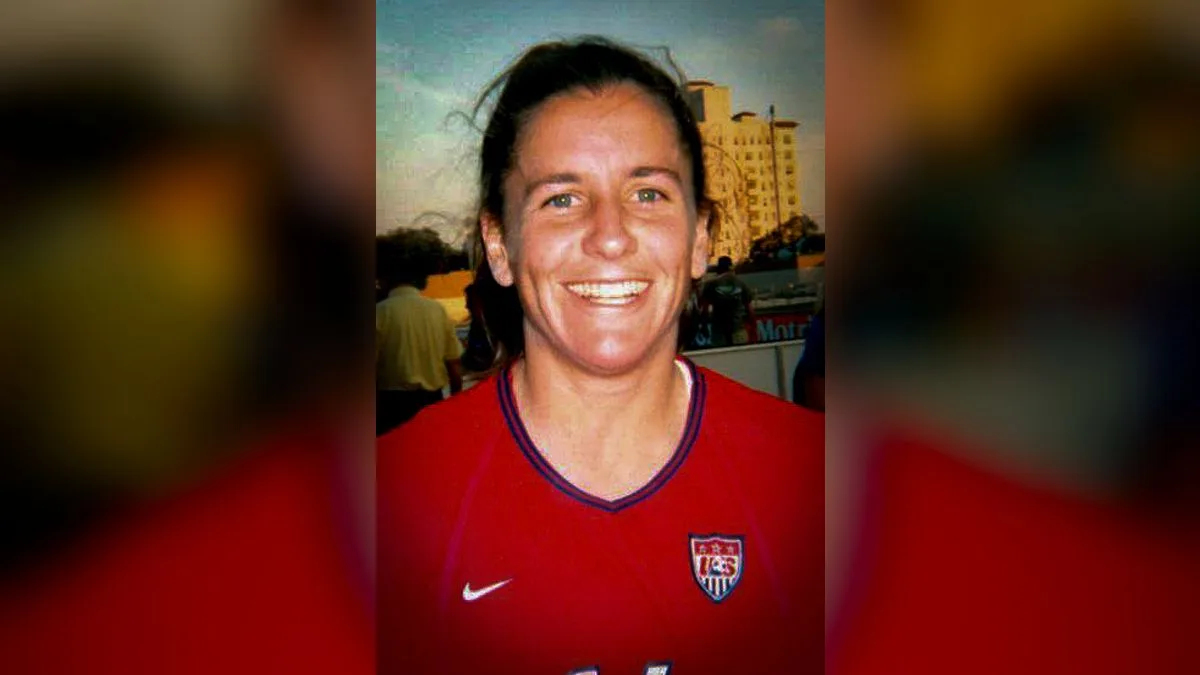
Joy Fawcett emerged as one of the defining defenders of the first great United States women’s national team. From the late 1980s through the early 2000s she built a reputation not for flash but for the kind of dependable, game-defining defending that made title-winning teams possible. Her career bridged the amateur era of international women’s soccer and the professionalising years at the turn of the century, and she carried influence both on the pitch and in the culture around the game.
| Born | 8 February 1968 |
|---|---|
| Nationality | United States |
| Position | Defender |
| Height | 1.65 m |
| National team | United States (1987–2004) — 239 caps, 27 goals |
Early pathway and breakthrough into the national team
Fawcett’s route into elite soccer followed the patterns available to American women of her generation: youth and college football provided the platform, while national team selection remained the pathway to the highest level. She won her early caps in the late 1980s, a period when the United States was still carving out a place on the women’s international calendar. Breaking into the national team required versatility and a mental toughness that coaches valued; Fawcett supplied both. Her defensive intelligence — the ability to intercept danger before it fully developed — made her an immediate fit for a team building a new identity around organisation and pressing play.
Club move: San Diego Spirit, 2001
When the Women’s United Soccer Association launched, it offered many veteran internationals a chance to test themselves in a domestic professional setup. Fawcett joined the San Diego Spirit in 2001, bringing to the new league experience and a standard of preparation that younger players could emulate. At San Diego Spirit she continued the habits that had defined her international career: precise positioning, aerial reliability from set pieces and an emphasis on steady distribution from the back. Her presence in the squad also helped the league by giving games a competitive intensity and drawing fans familiar with her national team pedigree.
International longevity: the hallmarks of her national-team career
Fawcett’s national-team career stretched for nearly two decades, a span that encompassed the USA’s earliest major tournament successes and its consolidation as a global power. She was a regular selection through multiple World Cups and Olympic cycles. What kept her at the centre of the side was consistency; she made herself available and adaptable, able to anchor a flat back line or step into a sweeping role as the tactical demands changed. Her fitness and ability to avoid long-term injury made her a dependable presence in tournament squads, and coaches relied on her experience in high-pressure moments.
What she brought on the pitch
Fawcett’s strengths were plain and complementary. She read the game exceptionally well, cutting off passes and breaking play apart before danger matured. In the air she was authoritative, an asset at both ends of the field on set pieces. Technically she was sound rather than spectacular: her passing aimed to reset possession and advance play rather than to produce risky turnovers. Equally important was her temperament; Fawcett played with the kind of calm aggression that stabilises a defence. Opponents found her hard to beat one-on-one because she timed challenges rather than relying on pace alone.
Three defining traits
- Reading the game: She anticipated opponents’ movements and intercepted more often than she was dribbled past, shutting down attacks early.
- Aerial presence: She dominated set pieces, offering defensive security and a threat at the other end from corners and free kicks.
- Dependability under pressure: Across tournaments she produced steady performances that allowed teammates to play with confidence.
Why she matters to the game
Fawcett’s importance goes beyond match reports. She helped define what a top-level female defender looked like at a time when the role was still being codified in the United States. Her consistency set a template: defenders could win games as much by preventing chances as by creating them. That model influenced coaching at youth and collegiate levels, encouraging an emphasis on reading the game, positioning and set-piece training. She was also a visible part of the generation that gave the USWNT its early identity — physically robust, tactically disciplined and mentally resilient.
Legacy and influence off the pitch
As the women’s game professionalised, former core internationals like Fawcett became reference points for younger players. Her transition into the professional club scene with San Diego Spirit showed a path players could take after years in the national setup. Beyond that, her long service and the way she performed under pressure contributed to the cultural cachet of the USWNT; she belongs in any account of how the team built an expectation of success. Her career remains a touchstone for defenders who prize consistency and leadership over individual accolades.
How she will be remembered
Joy Fawcett will be remembered as an iron-woman defender whose game aged well and whose presence raised the standards of everyone around her. She did not chase headlines; she provided the foundation on which headline-grabbing attackers could thrive. For coaches, players and historians, her career is a lesson in the long-term value of steadiness, in how one player’s temperament and tactical clarity can help a national team make the leap from promising contender to sustained winner.
Frequently asked questions
When did Joy Fawcett play for the United States?
Joy Fawcett was a long-serving member of the national team from the late 1980s into the early 2000s. Her international career spanned multiple World Cup and Olympic cycles, making her one of the team’s most experienced defenders.
What position did Joy Fawcett play?
Fawcett played as a defender. She combined strong positional sense with aerial ability and calm distribution, roles that made her a regular on tournament squads.
Which club did Joy Fawcett join in 2001?
In 2001 Fawcett joined the San Diego Spirit in the newly formed professional league, bringing international experience and leadership to the squad as the domestic game professionalised.
