
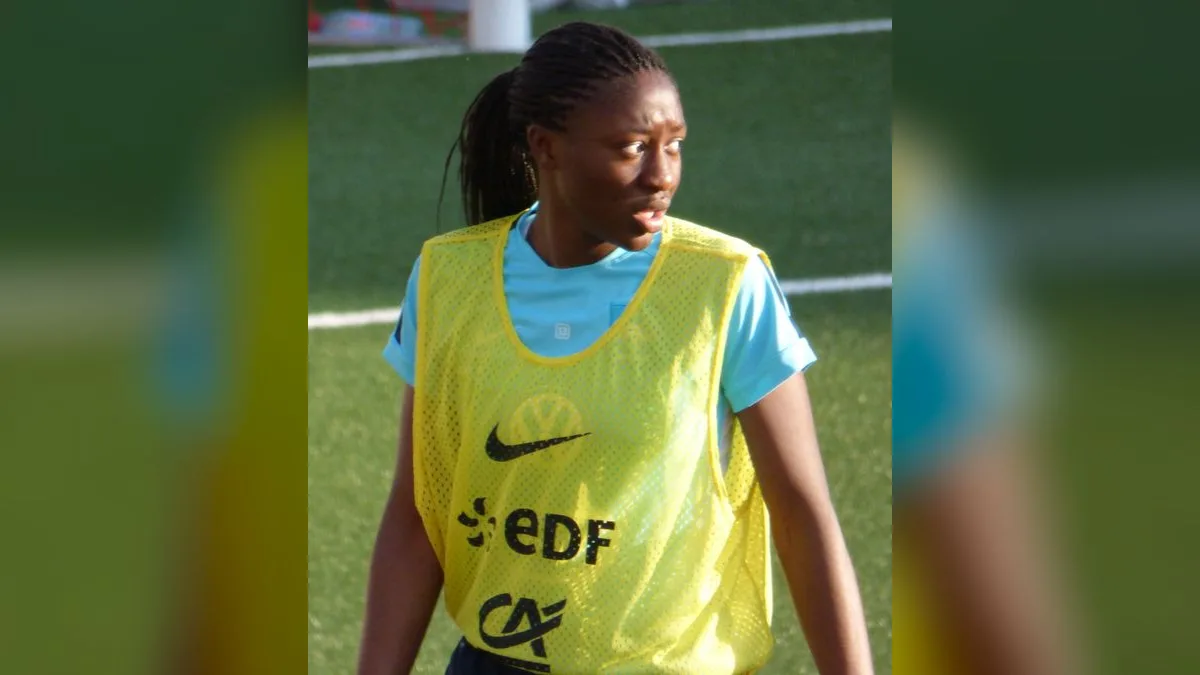
Kadidiatou Diani has been a constant attacking presence for France across a decade of major tournaments. Her career maps a steady climb through French women’s football: developing at Juvisy, testing herself in a short but significant spell at Montpellier, establishing herself as a regular match-winner with Paris Saint-Germain, and moving to Olympique Lyonnais as she entered the next phase of her game. With the France national team she became a forward who offers both pace and purpose, a player coaches use when a match needs an immediate change of tempo.
| Born | 1 April 1995 |
|---|---|
| Nationality | France |
| Position | Forward |
| Height | 1.68 m |
Early pathway and breakthrough at Juvisy
Diani’s professional development began in the youth structures that feed French women’s football, but her first senior foothold came with Juvisy. She arrived at the club as a teenager and cut her teeth in a side known for producing technically comfortable attackers. At Juvisy she learned to time runs behind defences and to operate in several frontline roles. The club’s emphasis on possession and positional rotation suited her emerging strengths: quick acceleration, a low centre of gravity in tight spaces, and an appetite for pressing defenders immediately after losing the ball. Those seasons provided the platform she needed to make the step up; coaches at national youth level took notice, and the senior national setup would follow soon after.
Short-term move and sharpening at Montpellier
The move to Montpellier was a deliberate test. It lasted a single season but mattered in two ways. First, Montpellier gave her more responsibility in attack, asking her to lead the line at times rather than only support from wide positions. That task sharpened her finishing and her ability to hold the ball under pressure. Second, the club’s tactical variety — switching between narrow and wide attacking systems — forced her to add more positional intelligence to her raw speed. The experience was a bridge: it took a promising young forward and turned her into a player ready to attract interest from the country’s biggest projects.
Prime years and profile-raising at Paris Saint-Germain
The transfer to Paris Saint-Germain marked Diani’s arrival on a larger stage. At PSG she became a focal point for high-intensity attacking play and a regular contributor in domestic and European campaigns. The club’s expectation of winning and its schedule of marquee fixtures exposed her to matches with knockout consequences. That environment accelerated her development in two practical ways: she learned to deliver under pressure and to adapt her output to different tactical plans, from rapid counter-attacks to more patient build-up. Her time at Paris Saint-Germain also coincided with her establishing a consistent place in the France squad for major tournaments, where her role as a pacey option and a pressing forward was clear.
Why Olympique Lyonnais mattered for the next phase
The move to Olympique Lyonnais represented both a change of environment and a new benchmark. Lyon’s culture of continental ambition and its intense internal competition for places forced Diani to refine the parts of her game that win minutes at an elite club: tactical discipline in possession, varied finishing techniques inside the penalty area, and defensive work-rate without the ball. Joining Lyon also placed her alongside players with long experience of winning the Champions League and major international honours, which in turn increased the tactical expectation placed on her in training and matchday preparation. This stage of her career is best understood as a period of consolidation: taking the attacking instincts that delivered at PSG and fitting them into a system that demands small details be executed perfectly.
International career and tournament consistency
Across several European Championships and World Cups, Diani became a dependable attacking option for France. National coaches value her for the same reasons club managers do: she provides a change of speed, the ability to carry the ball into dangerous areas, and the willingness to press defenders from the front. Over time she moved from a squad player to a forward who could start or come off the bench to change a game’s rhythm. Her tournament role has rarely been static; sometimes she has been used as a wide outlet to stretch defences, at other times as a central runner exploiting channels between full-backs and centre-backs. That tactical flexibility is part of why she has been a mainstay of France selections across a decade.
Playing profile: what she brings on the pitch
Diani’s game reads as straightforward but effective. Her principal strengths are acceleration, direct dribbling and timing of runs into the box. She does not rely on intricate individual tricks; instead she wins metres quickly and turns that penetration into opportunities for teammates or shots on goal. She is also notable for her engagement in the team’s defensive scheme, often the first forward to initiate pressing triggers. Coaches prize that balance because it allows her to be deployed in several tactical systems without a drop-off in intensity. Across club and country she has shown an ability to adapt her finishing to different styles of play, moving from low-driven attempts to composed finishes when the situation requires patience.
Why she matters to the game
Kadidiatou Diani matters because she combines a clear, repeatable set of strengths with the resilience to evolve. She has been part of the generation that raised the profile of France’s attack in major tournaments, and she has done so while remaining a practical, coachable forward rather than an outsize personality. Her pathway — early responsibility at Juvisy, a sharpening season at Montpellier, a profile-raising spell at Paris Saint-Germain, and then the pressure of Olympique Lyonnais — maps how modern top-level forwards develop in France: technical grounding, tactical adaptability and incremental increases in expectation. That pattern is now familiar to a new cohort of players who see her career as a workable blueprint for reaching the highest levels domestically and internationally.
- Versatile forward: Able to play wide or through the centre, which increases tactical options for coaches.
- Direct threat: Acceleration and penetration that break defensive lines and create space for teammates.
- Work-rate: Consistent pressing from the front that helps teams win the ball high up the pitch.
Frequently asked questions
Which clubs has Kadidiatou Diani played for?
Diani progressed from Juvisy to Montpellier before joining Paris Saint-Germain and later moving to Olympique Lyonnais. Each move marked a step up in responsibility and tactical expectation.
What is Kadidiatou Diani’s playing style?
Diani is a direct, pacey forward who excels at quick dribbles, timed runs into the box and pressing from the front. She is adaptable and can play wide or centrally to suit different tactical systems.
How has Diani been used by France at major tournaments?
France have used her both as a starter and as an impact substitute, deploying her to change tempo, stretch defences and apply pressure high up the pitch. Her tactical flexibility has made her a regular squad presence across multiple tournaments.
