
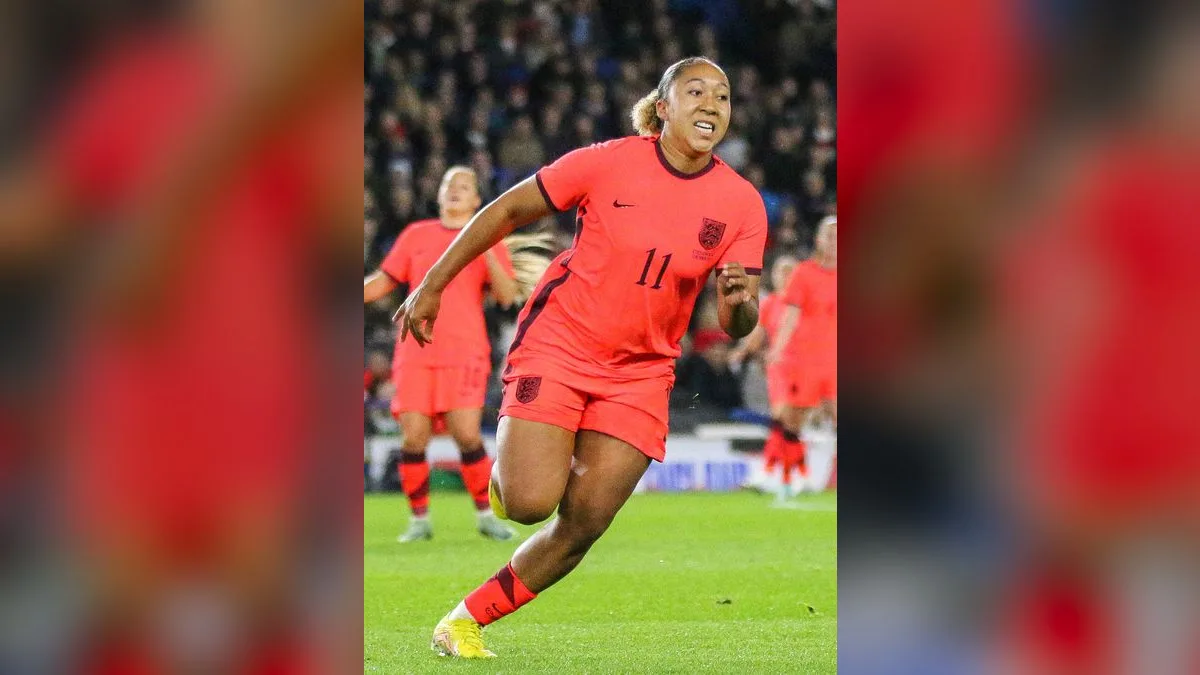
Lauren James arrived in senior football as a player difficult to pin down. Officially listed as a forward and a midfielder, she has spent her career so far refusing tidy labels: creative in tight spaces, willing to carry the ball from deep, and capable of finishing as well as creating. She joined Manchester United W.F.C. in 2018 and that move set the template for a career shaped by rapid development, positional freedom and a sense that the game changes when she is given the ball.
| Born | 29 September 2001 |
|---|---|
| Nationality | United Kingdom |
| Position | Forward, Midfielder |
Early pathway and breaking through
James rose through youth setups and into senior football at an age when most players are still making the jump from academy fixtures to adult competition. Her transition to a senior environment in 2018 was the moment she started to play under intense physical and tactical pressure every week. The move to Manchester United W.F.C. placed her in a high-expectation setting where the club’s structure and access to experienced teammates and coaches accelerated her adaptation to top-level women’s football.
At United, James did not arrive as a finished product. Coaches and staff treated her development as an ongoing process: refining decision-making in the final third, building endurance to maintain her impact across 90 minutes, and learning when to use possession and when to speed up play. She found minutes through a combination of substitute appearances and starts, with the club leaning on her to change attacking rhythm when matches stalled.
Role at club level: freedom and responsibility
Manchester United have used James in several attacking roles. Sometimes she starts on the wing, where her direct dribbling and close control allow her to unsettle full-backs; at other times she operates in a central, playmaking position, tasked with linking midfield and attack. That positional flexibility is not accidental: it suits a player whose first instincts are technical and reactional rather than purely tactical. United often give her licence to roam into pockets of space between opposition lines, and teammates look to her to create overloads in tight areas.
The practical result is a player who influences matches in multiple ways. She will carry the ball forward from deep, take on defenders in one-on-one situations, and arrive late into the box to finish moves. The club environment has asked her to add consistency to this natural unpredictability: learning to choose the right moment for a risky dribble, and to contribute defensively when the team is out of possession. That blend of freedom and responsibility has defined her growth at United since 2018.
What she does well on the pitch
On the ball, James is notable for three complementary qualities. First, her dribbling — she combines close control with sudden changes of pace, which makes her difficult to mark in short spaces. Second, her spatial awareness — she anticipates where teammates will run and times her passes to exploit those movements. Third, her finishing instincts — whether in concentrated penalty-area situations or after running at defenders, she shows a preference for composed, technical finishes rather than brute power.
Off the ball, James brings pressing intensity and a disruptive presence. Opponents must account for her movement even out of possession, because she is likely to press a loose pass or occupy a centre-back stepping out with the ball. That creates passing lanes for her team and forces opponents into hurried choices.
Strengths, weaknesses and tactical fit
- Explosive dribbler: Her acceleration over short distances helps win free-kicks and break lines, forcing defenders into reactionary defending.
- Creative passer: She can thread passes between close markers and often finds teammates on diagonal runs behind defensive lines.
- Versatile attacker: She adapts to wing and central roles, giving managers tactical flexibility when shaping an attack.
- Decision-making: She can opt for flashy solutions when a simpler pass would be better, a trait that improves with experience against top opposition.
- Consistency of end product: Her moments of brilliance are clear, but sustaining peak influence across a full season remains a development area.
These attributes make James a particularly useful weapon in systems that value transitions and high-possession attacking play. She suits teams that allow forwards to drop into midfield to collect the ball and that encourage quick one- and two-touch combinations in the final third. Conversely, in very structured systems that demand strict positional discipline without roaming, her best qualities are harder to exploit.
International recognition and wider significance
International coaches have monitored James as part of England’s wider talent pool. Her ability to play across the frontline and between the lines gives national team setups another tactical option: she can stretch defences wide or act as a central fulcrum depending on the opponent. For England, the attraction is the same as for her club — an unpredictable presence who can change the tempo and create moments that clear structured defences.
Beyond tactical considerations, James matters because she represents a modern attacking profile in the women’s game: technically gifted, mobile, and comfortable with multiple roles. That profile helps coaches transition squads away from rigid, position-specific thinking and toward more fluid attacking models. Young players watch the way she carries the ball and chooses creative routes; that influences youth coaching and the kinds of attackers clubs seek to recruit.
Why she matters to the game
Lauren James matters because of the choices she forces upon opponents and coaches alike. Defences must prepare for individual brilliance; managers must design structures that let her invent without compromising team balance. Her presence encourages tactical experimentation. Clubs and national teams exploring positional fluidity look to players like her as proof that an attacker can combine technical panache with team-compatible work-rate.
Her career so far is a study in blending raw talent with professional demands. The move in 2018 to Manchester United W.F.C. placed her in a setting that requires constant improvement. If her development continues, James will be remembered not just for the moments of individual magic she produces, but for how those moments helped shift how teams think about attacking roles in the women’s game.
Frequently asked questions
When did Lauren James join Manchester United?
Lauren James signed for Manchester United in 2018. That transfer marked her arrival in senior club football and set the platform for regular top-level development.
What position does Lauren James prefer?
James is listed as both a forward and a midfielder and plays in multiple attacking roles. She thrives in positions that allow her to carry the ball, take on defenders and link midfield with the front line.
How does Lauren James impact matches tactically?
She changes the tempo by carrying the ball into dangerous areas and by creating overloads between the lines. Her dribbling and movement force opponents to adjust, which opens space for teammates and creates chances.
