
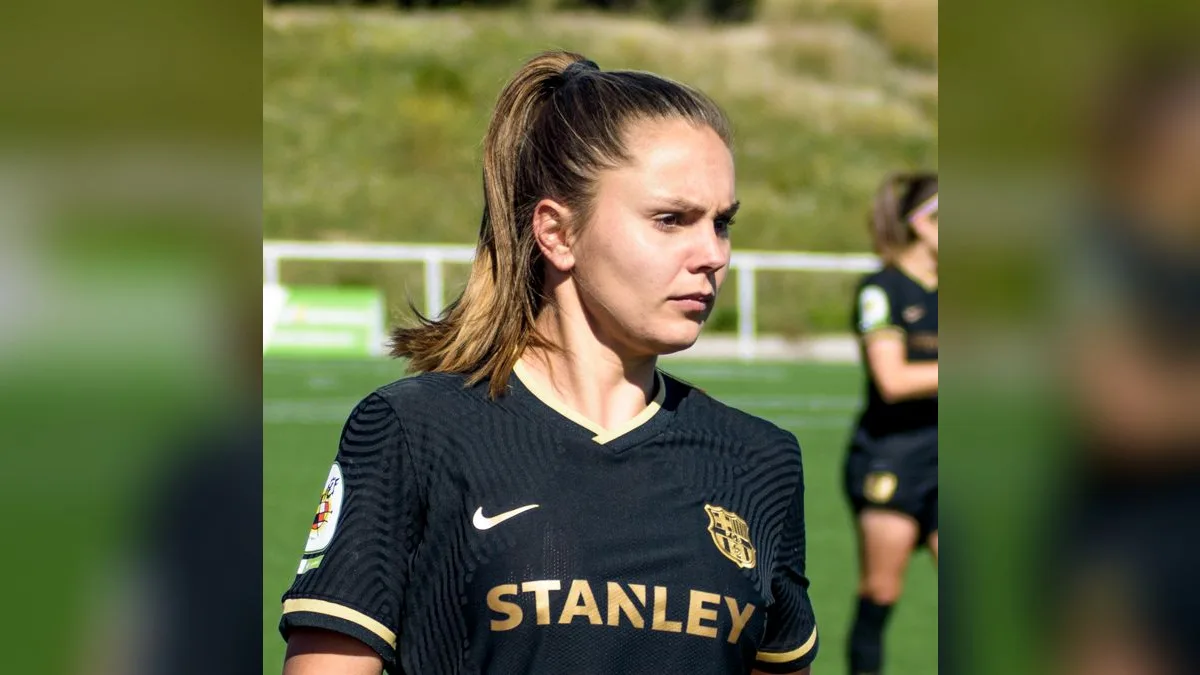
Lieke Martens emerged from the Dutch youth system as a wide forward who could do more than finish chances: she made them. Her career traces a rapid climb through the Netherlands and across Europe, with each club move sharpening the traits that made her a decisive international presence. Martens’ technical composure, spatial intelligence and eye for key moments established her as a pivotal player for the Netherlands and a sought-after signing for elite sides.
| Born | 16 December 1992 |
|---|---|
| Nationality | the Netherlands |
| Position | Forward |
| Height | 1.70 m |
| National team | Netherlands (2011–2024) — 126 caps, 53 goals |
Early years and domestic breakthrough
Martens began her senior career in the Netherlands where the focus was on gaining match experience and developing a versatile attacking game. After a season at SC Heerenveen in 2009–2010 she moved to VVV-Venlo for 2010–2011, a spell that brought more responsibility in the final third and permitted her to show a natural scoring touch. Those early seasons taught Martens how to run channels, combine with overlapping full-backs and time her runs to stretch defences — skills that would become central to her game as she stepped onto bigger stages.
First steps abroad: Belgium and Germany
Her first move outside the Netherlands took her to Standard Liège in 2011–2012. Playing in Belgium offered regular European football and a platform to show she could carry a team’s attacking burden. The following transfer to FCR 2001 Duisburg in 2012 marked Martens’ introduction to the Frauen-Bundesliga, a league with a different tempo and physicality. In Germany she learned to cope with close marking and rapid transitions, improving off-the-ball movement and her decision-making under pressure. These years were an apprenticeship in adapting technique to stronger opponents and faster games.
Nordic refinement and a leap in finishing
Martens’ move to BK Häcken FF in 2014 brought her to the Damallsvenskan, where teams prioritise technical play and patient build-up. The Swedish phase allowed her to refine ball retention, one-on-one play and the timing of incisive passes. It set the stage for a productive spell at FC Rosengård from 2016 to 2017, where her finishing became sharper and her contributions in the penalty area more consistent. That sharpening coincided with a pivotal international summer and raised her profile among Europe’s top clubs.
Club peak: FC Barcelona Femení and continental visibility
Joining FC Barcelona Femení in 2017 placed Martens at the heart of one of the game’s most ambitious projects. Barcelona’s emphasis on possession, positional rotation and high pressing suited her strengths: she was given licence to drift inside from the flank, link play between midfield and attack and arrive late into goal-scoring positions. At Barcelona she developed better combinations in tight spaces and a keener sense for when to accelerate play and when to slow it down. The environment also amplified her visibility, allowing her performances to define matches in the Liga F and in the Champions League.
Later moves and Paris chapter
After five seasons in Spain Martens moved to Paris Saint-Germain Féminine in 2022. The switch was an example of a player seeking new challenges at another elite club while bringing experience of different tactical systems. In Paris she encountered fresh defensive schemes and a renewed emphasis on quick transitional attacks. That stage of her career reinforced her adaptability: Martens continued to contribute both as a creator and a scorer while mentoring younger attacking players around her.
International career and the 2017 breakthrough
Martens made her first senior appearances for the Netherlands in 2011 and became a regular presence thereafter. Her defining international moment came during the tournament when the Netherlands captured the 2017 European title. Martens was the creative engine for a team that blended tactical organisation with expressive attacking play. Her ability to unlock tightly packed defensive lines, take on defenders in isolated situations and provide decisive final passes changed how the Dutch attacked. That tournament elevated the Netherlands on the international map and cemented Martens as a household name in women’s football.
What Martens does on the pitch
Martens is most effective in wide attacking positions where her first touch and close control let her operate in crowded corridors. She combines quick lateral footwork with a compact centre of gravity, making her difficult to dispossess. Martens is comfortable cutting inside to shoot with her stronger foot or to play a through ball behind the defence. Her decision-making is pragmatic: she recognises when to take a risk and when to recycle possession, which makes her reliable across long matches and intense tournament schedules.
Key attributes and role
- Ball control: She maintains possession in tight areas and uses small adjustments to create shooting or passing lanes.
- Creative vision: Martens spots and executes passes that split defences and set team-mates into dangerous positions.
- Late runs: She times her arrival in the box to meet crosses or pick up second balls, adding an unpredictable scoring threat.
- Set-piece threat: Her delivery on free-kicks and corners creates scoring opportunities for team-mates and occasional direct chances.
Why she matters to the game
Martens’ influence goes beyond goals and assists. She helped demonstrate the value of technically gifted wide forwards who can both create and finish. Her performances at domestic and international stages contributed to a shift in how coaches use wide attackers—encouraging more fluid, interchangeable front lines that can overload wide zones while still threatening centrally. Martens has also been a public face for the growth of the women’s game in the Netherlands, linking club success with national achievement and helping to raise standards for player development across the country.
Career highlights and influence
- Club progression: A steady rise from SC Heerenveen to elite clubs shows deliberate career planning and adaptability to different leagues and styles.
- International impact: Central to the Netherlands’ success in major tournaments, providing decisive creative moments that changed matches.
- Technical model: Represents a hybrid modern forward who contributes in build-up play, wide overloads and penalty-area finishing.
Across a career that moved from the Dutch league into Belgium, Germany, Sweden, Spain and France, Martens proved the value of technique married to tactical intelligence. Her trajectory matters because it illustrates how a player from a modest domestic start can shape elite teams and national fortunes through continuous refinement of skills and clear positional instincts.
Club career
| Years | Club | Apps | Goals |
|---|---|---|---|
| 2009–2010 | SC Heerenveen Vrouwen | 18 | 2 |
| 2010–2011 | VVV-Venlo | 20 | 9 |
| 2011–2012 | Standard Liège | 25 | 17 |
| 2012–2014 | FCR 2001 Duisburg | 30 | 7 |
| 2014–2015 | BK Häcken FF | 37 | 12 |
| 2016–2017 | FC Rosengård | 29 | 20 |
| 2017–2022 | FC Barcelona Femení | 110 | 54 |
| 2022–2025 | Paris Saint-Germain Féminine | 30 | 6 |
Frequently asked questions
What position does Lieke Martens play?
Lieke Martens is primarily a forward who often operates from wide attacking positions. She combines dribbling, creative passing and late runs into the box, making her effective as both a creator and a scorer.
How did Lieke Martens influence Netherlands’ 2017 success?
Martens supplied decisive creative actions and finishing at the tournament, regularly unlocking defences and creating high-quality chances. Her performances gave the Netherlands an attacking focal point and helped the team manage key moments in tight games.
Which clubs did Lieke Martens play for in Europe?
Martens progressed through clubs in the Netherlands before spells abroad: she played for Standard Liège, FCR 2001 Duisburg and in Sweden, then joined FC Barcelona Femení and later Paris Saint-Germain Féminine. Each move exposed her to new tactical demands and sharpened different facets of her game.
