
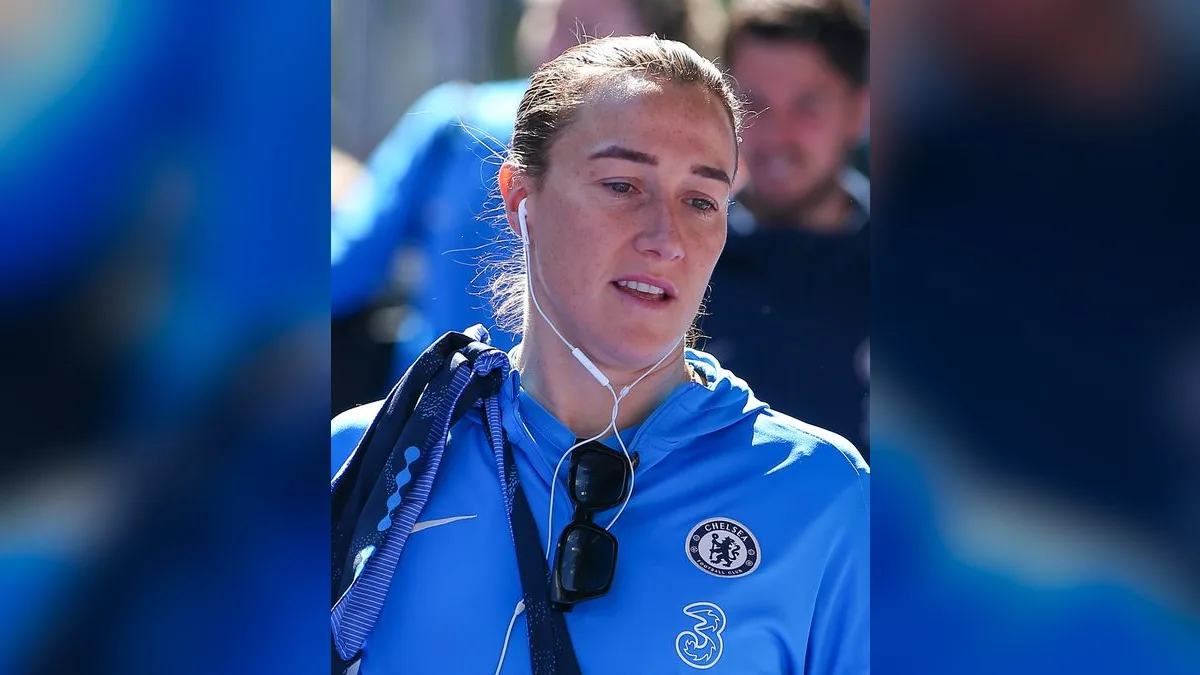
Early years and first steps
Born on 28 October 1991, Lucy Bronze came through the English youth system with a clear early focus on defence and athleticism. Her senior club career began at Sunderland, where she played from 2007 to 2010. Those first years gave her regular senior minutes and the platform to develop the positional instincts and physical resilience that would define her game. Moving away from youth football into the senior ranks at a young age set the pattern for how she would approach every subsequent step: learning quickly from match experience and using each move to add a specific new skill to her game.
| Born | 28 October 1991 |
|---|---|
| Nationality | United Kingdom, Portugal |
| Position | Defender |
| Height | 1.72 m |
| National team | England (2013–) |
Breaking into the top flight: Everton and Liverpool (2010–2014)
In 2010 Bronze joined Everton, a move that exposed her to a higher level of coaching and a faster tempo of matches. She stayed at Everton until 2012 and contributed in attack as well as defence. In 2012 she moved to Liverpool, where she remained until 2014. Both moves mattered because they placed her in environments where expectations were higher and the margin for error smaller. At Everton and Liverpool she learned to time forward runs into the box and to combine with midfielders on the overlap—traits that would become signature elements of her offensive output from a defensive position. The years in Merseyside also brought her to wider public attention and helped secure her first long-term role with the national team setup.
Manchester City: consolidation and identity (2014–2017)
Joining Manchester City in 2014 was a clear step into a programme with top-level ambitions and resources. Across the 2014–2017 period Bronze established herself as a first-choice right full-back in one of the most competitive domestic squads. At City she was asked to perform a hybrid role: a disciplined defensive base combined with significant licence to influence the attack. That tactical responsibility forced refinement of defensive timing, one-vs-one defending and recovery speed, while also encouraging better crossing and final-third decision-making. The City years turned potential into a consistent professional standard and marked her out as a player capable of influencing club success in the most demanding matches.
European peak: OL Lyonnes (2017–2020)
The transfer to OL Lyonnes in 2017 moved Bronze to a team already dominant in continental football, and the change sharpened her competitive edge. Lyon offered daily training at a level many top players only meet in international camps, and the tactical demands there required absolute precision in positional play and ball retention. Playing alongside and against some of the best players in Europe accelerated her football intelligence, particularly in transitional moments where a defender becomes an extra attacking option. The move also exposed her to different coaching models and a winning culture that prizes marginal gains; those influences can be seen in how she balanced defensive solidity with offensive contribution after leaving Lyon.
Barcelona and later club chapters (2022–2024)
After a period away from the English league and continental club football, Bronze joined FC Barcelona in 2022, bringing elite experience to another top club. Her time at Barcelona was another tactical education: a system that prizes possession and positional rotation required a defender comfortable on the ball and willing to operate high up the pitch without losing defensive discipline. That balance—occupying advanced areas while maintaining recovery awareness—has become a recurring theme of her club career, and Barcelona provided a different stylistic test to add to what she had learned at City and Lyon.
International career and standing
Bronze made her senior England debut in 2013 and has been a regular presence in the national setup since then. Selection across multiple tournament cycles speaks to her adaptability and consistency. For England she has often been deployed to provide width and recycling of possession from the full-back position, while still carrying clear defensive responsibilities. Her experience in different domestic systems has allowed managers to use her both as a disciplined full-back in structured defensive phases and as a more advanced outlet when the team needs to press and create overloads on the flank. That tactical versatility has made her a dependable selection across major competitions.
What she does on the pitch
Lucy Bronze is best understood as a modern full-back who blends tight defensive workmanship with significant attacking output. Her primary defensive strengths are positional awareness and recovery pace: she reads danger early and uses speed to close or cover when teammates are beaten. Offensively she times forward runs into half-spaces and the penalty area, and she has a reliable technique for crossing under pressure. Ball control and short passing let her operate in possession-heavy systems, while aerial ability and physical presence help in direct duels and set-piece situations. These combined traits make her valuable in teams that switch between control and counter-attacking plans within the same game.
Why she matters to the game
Bronze’s career matters because she represents the archetype of the modern attacking defender who can still defend at the highest level. Her moves—from Sunderland to Everton, Liverpool, Manchester City, OL Lyonnes and Barcelona—map the path available to English players who seek varied tactical schooling and continental success. She has also helped raise the profile of the defensive full-back as a central building block rather than a specialist afterthought. Young defenders study her timing, work-rate and positional choices as a template for combining defensive responsibility with genuine attacking threat. Her longevity and repeated selections at club and country level underline a professional standard that clubs and national teams increasingly expect from top defenders.
Key attributes
- Recovery speed: Uses pace intelligently to regain defensive shape after forward forays.
- Crossing technique: Delivers accurate balls into the box from advanced wide positions.
- Positional intelligence: Anticipates opposition play to limit high-quality chances.
- Versatility: Fits possession-based and more direct systems without a drop in effectiveness.
- Experience in big games: Regular participant in top-level club and international matches, bringing calm to decisive moments.
Legacy and influence
Bronze will be remembered as one of the defining English defenders of her generation. Her club trajectory—from early development at Sunderland through the domestic step-ups at Everton and Liverpool, the professional consolidation at Manchester City, the continental refinement at OL Lyonnes and the tactical completion at Barcelona—offers a model career path for defenders. Beyond trophies and appearances, her influence is technical and tactical: full-backs who combine athleticism with intelligent attacking positioning now set their benchmarks against the standards she helped normalise. That shifting standard is perhaps her most durable contribution to the women’s game.
Club career
| Years | Club | Apps | Goals |
|---|---|---|---|
| 2007–2010 | Sunderland A.F.C. Women | — | — |
| 2010–2012 | Everton F.C. Women | 24 | 3 |
| 2012–2014 | Liverpool F.C. Women | 28 | 3 |
| 2014–2017 | Manchester City W.F.C. | — | — |
| 2017–2020 | OL Lyonnes | — | — |
| 2022–2024 | FC Barcelona | — | — |
Frequently asked questions
What position does Lucy Bronze play?
Lucy Bronze is primarily a defender who operates mainly as a right full-back. Her role combines defensive duties with frequent forward runs to support the attack.
Which clubs has Lucy Bronze played for?
Her senior clubs include Sunderland (2007–2010), Everton (2010–2012), Liverpool (2012–2014), Manchester City (2014–2017), OL Lyonnes (2017–2020) and FC Barcelona (2022–2024). These moves trace a path from domestic development to continental competition.
When did Lucy Bronze make her England debut?
Lucy Bronze made her senior England debut in 2013 and has been part of the national team setup since then, providing both defensive stability and attacking width across multiple tournament cycles.
