
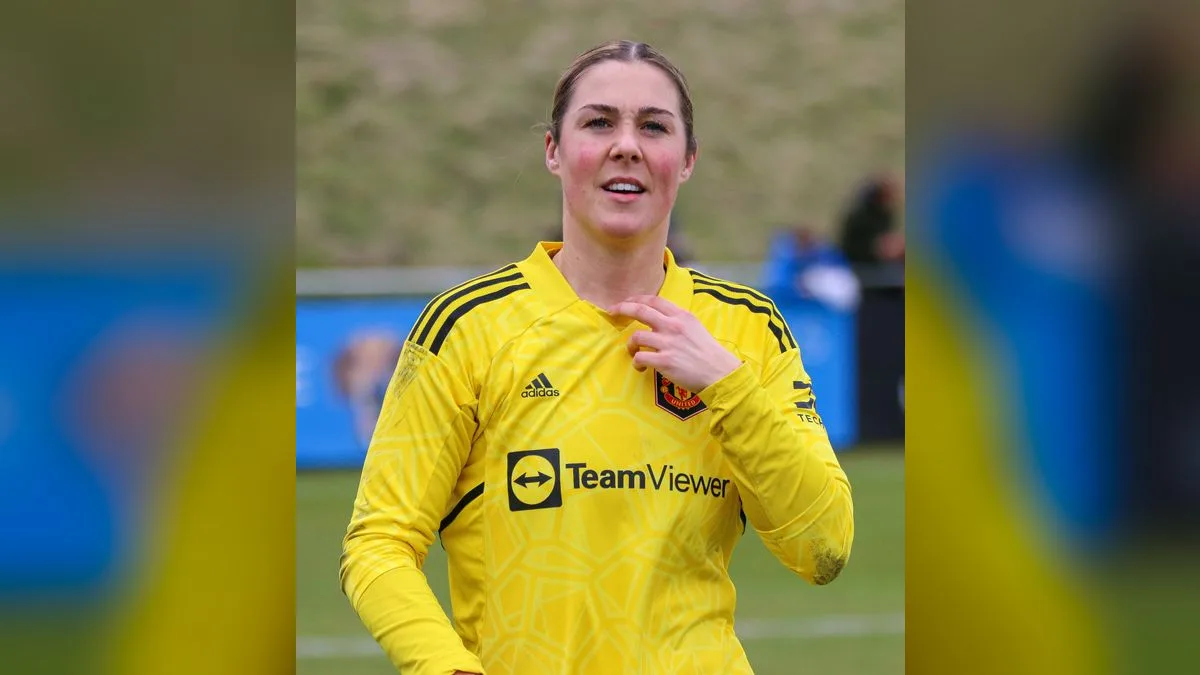
Mary Earps has built a career that reads as steady professional progression and cultural influence in equal measure. A goalkeeper by trade, she moved through English clubs from Nottingham Forest in 2010 to Manchester United in 2019, with spells at Doncaster Rovers Belles, Birmingham City, Bristol City and Reading, and a season in Germany with VfL Wolfsburg. Each move nudged her toward the international stage, and each stop exposed a new element of her game: shot-stopping, command of the penalty area, and a growing presence as a public figure whose image now reaches beyond the pitch.
| Born | 7 March 1993 |
|---|---|
| Nationality | United Kingdom |
| Position | Goalkeeper |
| Height | 1.73 m |
Early years and first steps in senior football
Earps arrived in senior football as a teenager. She joined Nottingham Forest Women in 2010 and left for Doncaster Rovers Belles a year later. Those first seasons were about learning the rhythms of adult competition: coping with physical forward play, dealing with long winter fixtures and finding the consistency required of a goalkeeper. In that environment she developed the basic instincts — positioning, handling and the mental resilience that goalkeepers need when games turn on a single moment.
Establishing herself across the English game
The next chapters followed a familiar pattern for promising English players of her generation: moves that offered incremental steps up. A transfer to Birmingham City in 2013 provided regular exposure at a higher competitive level, and a season at Bristol City in 2014 gave her more responsibility between the sticks. Reading, which signed her in 2016, proved an important stage. At Reading she took on the role of a first-choice goalkeeper over two seasons and showed an ability to marshal a defence, read the game and perform under pressure. Those qualities marked her out for consideration at the national level and for clubs outside England.
Short spell abroad and return home
In 2018 Earps moved to VfL Wolfsburg. The transfer offered experience in a different tactical and training culture and exposure to continental competition. Her time in Germany was brief but significant: training alongside established internationals and competing in a league known for tactical discipline sharpened her game. A year later she returned to England to sign for Manchester United. The return signalled a period in which her performances, profile and off-field influence all expanded.
Manchester United and the rise in profile
Joining Manchester United in 2019 placed Earps in one of the highest-profile settings in the domestic game. The club’s platform amplified everything she did on the pitch: shot-stopping moments gained national attention and leadership of the defence became part of her public identity. At United she consolidated her reputation for reflex saves, quick recovery from rebounds and strong distribution from hand and foot when launching counterattacks. Her style suits teams that play on the front foot while trusting the goalkeeper to start moves from the back.
International recognition and what she brings on the pitch
Earps’s club trajectory fed into a role with the England national team. Her strengths are the attributes that matter most for modern goalkeepers: reliable shot-stopping, confident handling under crosses and calmness in one-on-one situations. She reads the angles well and is effective at narrowing the shooter’s options. Equally important is her distribution; she is comfortable with the ball at her feet and can initiate quick transitions that benefit teams who want to counter directly. Those combined skills make her a goalkeeper who fits both traditional and contemporary tactical demands.
Beyond saves: merchandising, image and influence
Mary Earps’s significance extends beyond matchday performances. She became a figure around whom clubs and the wider game reconsidered how women’s football is marketed. A high-profile shirt campaign featuring her image and name changed the shape of commercial thinking: clubs, retailers and kit manufacturers began to see women’s shirts as headline products in their own right rather than secondary items. The campaign helped normalise the sight of women’s shirts selling in large numbers and encouraged other players and clubs to expect equal treatment in merchandising and kit presentation.
That shift did not pass without friction. There has been public debate and dispute around kit partnerships and image rights; those conversations reflect the growing commercial value of women’s football and the tensions that come with it. The matter has been covered in detail on this site as part of ongoing coverage of player and brand relations.
Why Mary Earps matters to the game
Earps matters for two closely linked reasons. First, on the pitch she represents a dependable model of modern goalkeeping: technically capable, tactically aware and able to adapt to different team styles. Second, off the pitch she has helped shape how the women’s game is presented and sold. Her presence in major campaigns made it harder for clubs and sponsors to treat women’s merchandising as an afterthought. That dual effect — raising standards in goal and raising expectations commercially — marks her as part of a generation that moved the game forward.
- Career progression: Moves through English clubs and a season abroad provided steady development at each step.
- Playing attributes: Shot-stopping, aerial command and distribution make her a keeper for contemporary tactics.
- Commercial impact: Campaigns with her image changed how clubs and brands market women’s shirts.
- Public role: Involvement in disputes over kit and image rights highlights wider issues around player representation and sponsorship.
Mary Earps’s career is still relevant to how the women’s game defines professionalism. She demonstrates that a player’s influence can extend beyond clean sheets and saves. By the time she settled at Manchester United, she had already combined steady on-field improvement with a role in reshaping the commercial conversation. For clubs, sponsors and fans, that combination is a reminder that players now operate in a wider ecosystem where sporting performance and public profile both shape the game’s future.
Club career
| Years | Club | Apps | Goals |
|---|---|---|---|
| 2010–2011 | Nottingham Forest Women F.C. | — | — |
| 2011–2012 | Doncaster Rovers Belles L.F.C. | — | — |
| 2013–2014 | Birmingham City F.C. | — | — |
| 2014–2015 | Bristol City W.F.C. | — | — |
| 2016–2018 | Reading F.C. | — | — |
| 2018–2019 | VfL Wolfsburg | — | — |
| 2019–2024 | Manchester United W.F.C. | — | — |
Frequently asked questions
What clubs has Mary Earps played for?
Mary Earps has progressed through several English clubs and had a season in Germany. Her senior career includes Nottingham Forest, Doncaster Rovers Belles, Birmingham City, Bristol City, Reading, VfL Wolfsburg and Manchester United.
What are Mary Earps’s strengths as a goalkeeper?
Her strengths include reflex shot-stopping, aerial command and confident distribution from hand and foot. She is comfortable initiating transitions and organising a defence in high-pressure situations.
How did Mary Earps influence women’s football merchandising?
A high-profile shirt campaign featuring Earps helped change commercial thinking by demonstrating strong demand for women’s shirts. That visibility encouraged clubs and brands to treat women’s merchandising as a primary commercial product rather than an afterthought.
