
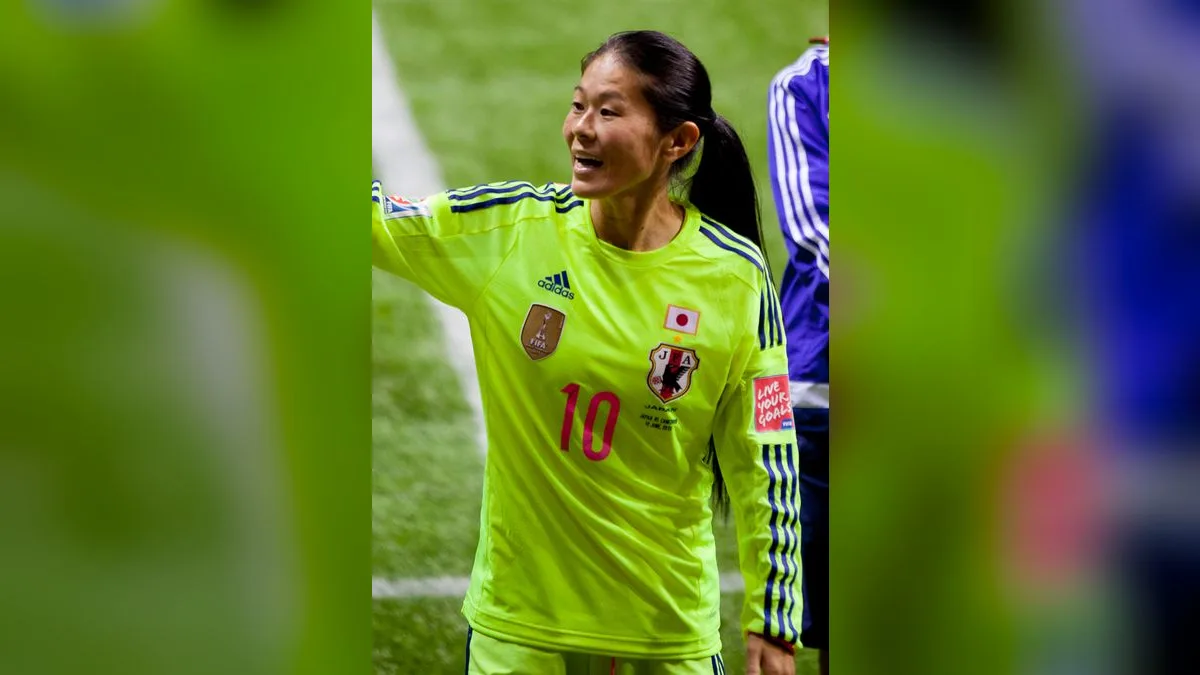
Homare Sawa’s career maps directly onto the modern growth of women’s football in Japan. A technically gifted midfielder with a deep understanding of the game, she combined creativity, composure and leadership across a club career split between Japan and the United States, and an international run that culminated in Japan’s 2011 World Cup triumph. Her influence extends beyond trophies: she became a model of professionalism and tactical intelligence for a generation of Japanese players.
| Born | 6 September 1978 |
|---|---|
| Nationality | Japan |
| Position | Midfielder |
| Height | 1.65 m |
| National team | Japan (1993–2015) — 204 caps, 83 goals |
Origins and domestic breakthrough
Sawa emerged from Japan’s domestic system at a time when the women’s game there was professionalising its structures. She came through youth pathways and established herself in the top domestic league, where her talents as a playmaker and goal threat became apparent. In the Japanese league she combined technical proficiency with an unusual tactical awareness for a player still at a youthful stage, earning recognition and regular selection for club and country.
Her early domestic years were defined by steady development rather than sudden stardom. Coaches used her in roles that took advantage of passing range and set-piece ability, and she learned to influence matches not only through individual skill but by directing team tempo. That balance between individual quality and collective understanding became a hallmark of her game.
Stints abroad and return to Japan
Sawa spent parts of her career in the United States, where she tested herself in a different professional environment and against varied opposition. Those spells exposed her to a more physical and direct style of play and demanded adaptability. The experience broadened her game and helped her refine aspects like movement off the ball and finishing in high-tempo matches. On returning to Japan she brought back a more complete skill set that benefited both her club side and the national team.
Back in Japan she became a central figure at one of the country’s leading clubs. Her leadership grew alongside her on-field responsibilities. At club level she was often the player teams built around in attack: a creator in possession and a finisher in the box. Her presence raised standards in training and match preparation, and younger players benefited from her example.
International arc and the 2011 World Cup
Sawa’s international career spanned multiple World Cups and Olympic tournaments. She was a consistent selection through eras of transition for the national team, combining longevity with a capacity to adapt to new tactical demands. That adaptability was crucial as Japan evolved a distinct national style: short passing, positional interchange and disciplined pressing.
The peak of her international career came when she captained Japan to the World Cup title in 2011. In that tournament she was both leader and principal attacking outlet, guiding a team that combined technical daring with tactical discipline. Her performances earned her the tournament’s highest individual honour, cementing her status among the game’s elite players. The World Cup victory and her role in it transformed perceptions of Japanese women’s football globally and provided a defining moment for the national programme.
What she did on the pitch
Sawa was a central midfielder whose influence came from her reading of the game as much as from technical skill. She occupied pockets of space between opposition lines and used short, precise passing to link midfield and attack. When teams pressed or tightened midfields, she found ways to pull players out of position and open channels for teammates. Her set-piece delivery was consistently dangerous; free kicks and corners frequently created goal opportunities.
She combined that creative brain with a pronounced eye for goal. Late runs into the box, intelligent positioning and clinical finishing made her a scoring threat from midfield. That dual capacity — to create as a playmaker and to score as a late-arriving attacker — gave coaches tactical flexibility in how teams used her. She also brought a calmness under pressure that allowed her side to manage periods of the game where control was contested.
Why she matters to the game
Sawa matters for multiple reasons. On the pitch, she demonstrated that midfielders from smaller footballing nations could dominate the sport’s biggest stages through intelligence and technique rather than pure physicality. Off the pitch, she became a symbol of the progress of women’s football in Asia. Her World Cup success offered a template for organising, coaching and developing players in a way that fit Japan’s culture and strengths.
Her longevity also stands out. She remained an elite player across different generations, adapting to new teammates and tactical trends without losing the core attributes that made her effective. That adaptability set a standard for professionalism in Japan’s women’s game and elsewhere in the region.
Finally, Sawa’s career had ripple effects beyond trophies. The visibility of her achievements widened interest in the women’s game in Japan and helped create conditions for greater investment, improved youth pathways and a deeper talent pool. Players who followed her grew up with a domestic example of what was possible at the highest level.
In sum, Homare Sawa combined creative excellence with leadership and longevity. She remains a key figure in the history of Japanese football and a benchmark for midfielders who aim to pair technique with tactical intelligence.
Club career
| Years | Club | Apps | Goals |
|---|---|---|---|
| 1991–1998 | Nippon TV Tokyo Verdy Beleza | 136 | 79 |
| 1999–2000 | Denver Diamonds | — | — |
| 2001–2003 | Atlanta Beat | 55 | 13 |
| 2004–2010 | Nippon TV Tokyo Verdy Beleza | 85 | 47 |
| 2009–2010 | Washington Freedom | 41 | 6 |
| 2011–2015 | INAC Kobe Leonessa | 94 | 12 |
Frequently asked questions
What position did Homare Sawa play and what were her main strengths?
Sawa was a central midfielder known for her technical ability and reading of the game. She linked midfield and attack with crisp short passing, found space between lines, executed dangerous set pieces, and also posed a goal threat through late runs and clinical finishing.
What was Homare Sawa’s role in Japan’s 2011 World Cup victory?
She captained the national team and acted as the main attacking outlet while leading the side on the field. Her performances combined leadership and creative influence, and she received the tournament’s top individual honour for her contributions.
How did Sawa’s time playing in the United States influence her development?
Spells in the U.S. exposed her to a more physical, direct style and pushed her to adapt aspects like off-the-ball movement and finishing in faster matches. Returning to Japan she applied those refinements, becoming a more rounded player who strengthened both her club and the national team.
