
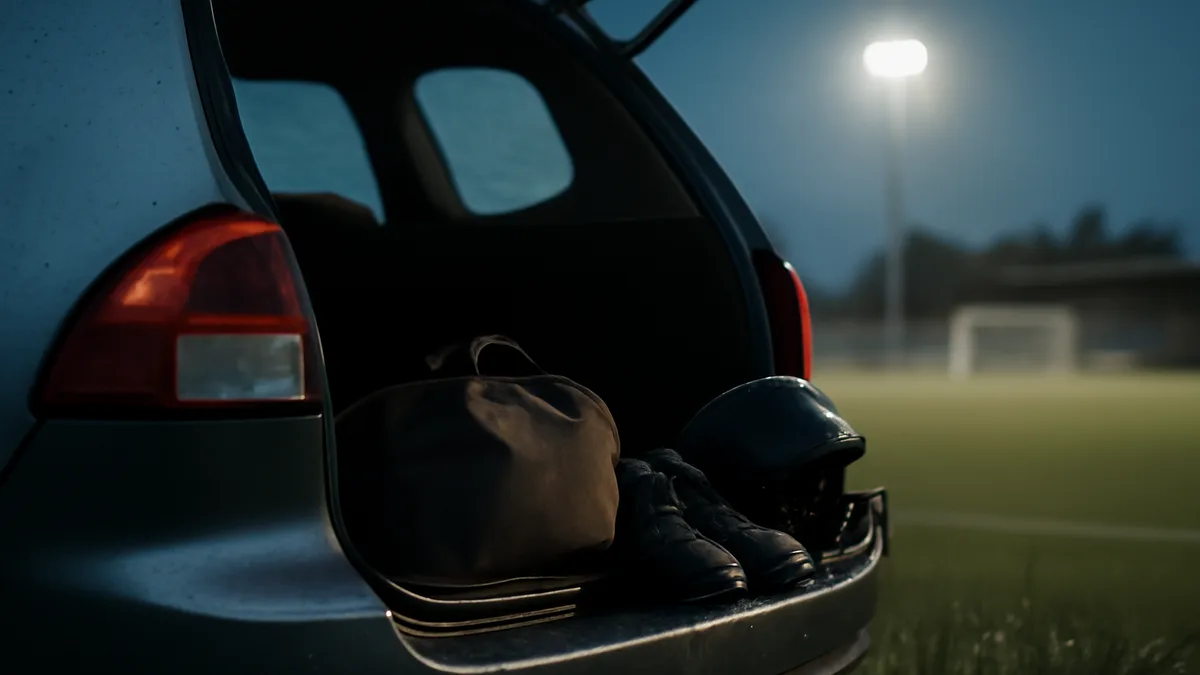
Sporting gear is a mixture of everyday items and high-value kit. The insurance decision turns on location, frequency of use away from the property, and whether receipts or serial numbers can be provided.
This guide walks through the practical checks that decide whether to add cover to an existing home policy, buy a specialist policy, or rely on a different product such as travel or sports-specific insurance.
How to decide
Begin by matching the risk to the policy type. Items kept at home are different risks from items carried to training or events. For expensive, regularly transported items—bikes, race wheels, electronic devices—away-from-home limits and theft cover are the decisive features to compare, not the brand of the insurer.
Seven priority checks
Location of risk
Start by naming where the equipment will be stored most of the time and where it will be while in use. Policies draw clear lines between items kept inside the insured dwelling, items in locked outbuildings or garages, and kit left in vehicles; those locations usually attract different limits or exclusions.
Cover type: home contents or personal possessions
Decide whether the items should be listed under the main household policy or moved to a portable personal possessions section. The phrase home contents appears in many policies to denote items normally inside the house and may carry higher automatic limits than possessions taken away from the property.
Away-from-home cover
Check whether the policy includes away-from-home cover for items taken to training, events or commuting. Some insurers provide limited cover for personal possessions away from the home, while others exclude loss or theft from unsecured locations and vehicles.
Single-item limits
Look for single-item limits and whether the policy lets these be increased. Many household policies have a default per-item cap that is lower than the overall contents sum insured; bikes, power meters and high-end watches often exceed those caps and need a specific endorsement.
Proof and condition requirements
Understand what evidence will be required for a claim. Receipts, serial numbers, photos and professional valuations are commonly asked for; without them the insurer may restrict recovery to a replacement-value calculation or refuse higher-value claims.
Exclusions and excesses
Confirm common exclusions and the excess structure. Policies frequently exclude loss from unattended items in public places or from unlocked vehicles, and they usually apply an excess for each claim; that combination can make small-value items uneconomic to insure under some covers.
Specialist versus generalist cover
Decide whether a specialist policy is needed. Specialist sports insurance or dedicated bike policies often include cover for competition use, crash damage, and spare parts; household policies rarely do. When items are used professionally or hired out, a bespoke policy is generally required.
Common exclusions and how to read them
- Unattended items: Items left unattended in public are often excluded unless in a locked compartment, which matters for equipment left at transport hubs.
- Use and activity: Competitive or professional use can be excluded; check definitions of “competition” or “professional” in the policy wording.
- Vehicle theft rules: Theft from a vehicle may be covered only if the item was out of sight and the vehicle was locked, so storing a bike in the back of a van overnight usually needs specific cover.
- Wear and tear: Damage from regular use — wear and tear — is commonly excluded, which affects items like boots or protective equipment.
Table: comparing common policy types
| Policy type | Typical away-from-home cover | Best for | Proof required |
|---|---|---|---|
| Household contents policy | Limited or time‑restricted; lower single‑item caps | Items kept mainly at home | Receipts or photos usually sufficient for low-value claims |
| Personal possessions extension | Broader portable cover but with per‑item limits | Phones, tablets, and moderate-value kit taken out regularly | Receipts and serial numbers commonly requested |
| Specialist sports/bike policy | Designed for regular away use, competitions and transit | High-value bikes, race kit, and frequently transported equipment | Detailed proof: valuations, receipts and service history often required |
| Travel insurance (personal possessions) | Limited to travel period and often excludes certain sports use | Short trips and temporary cover abroad | Proof of ownership and incident reports commonly required |
Where people go wrong
Buyers often assume a single policy covers all situations. That is rarely true. A single-item high-value purchase can be uninsured or only partially covered because it exceeds a per-item cap or because it is regularly left away from the home. Another common mistake is not checking vehicle-theft wording: many claims fail because the insurer judged the item to have been left in an unlocked compartment.
What differs for beginners and experienced owners
Beginners should prioritise simple evidence and an adequate single-item limit; a basic household policy plus an increased single-item endorsement often suffices. Experienced owners who travel with kit regularly should prioritise specialist policies that cover competition use, transit damage and hire replacement, and they should keep detailed service records and valuations to support higher-value claims.
What to do next
Inventory the kit, noting serial numbers and taking dated photos. Check existing policies for single-item limits and exclusions, then get written confirmation if widening cover is needed. For expensive or high-use items, request a quotation from a specialist insurer and ask specifically about competition, transit and theft-from-vehicle wording.
For an overview of content-type policies consult the contents insurance guidance, and for general insurance practice see the Association of British Insurers for industry standards.
Frequently asked questions
When should sports kit be added to home contents?
Add kit to a home contents policy when items are kept primarily inside the insured dwelling and not regularly taken away. If a single item exceeds the policy’s per-item cap, ask for an endorsement or consider specialist cover instead.
Is travel insurance good for sporting equipment?
Travel insurance can cover equipment for a trip but it is limited to the travel period and often excludes competitive use or professional activity. For regular travel with high-value kit, a specialist policy or an extended personal possessions cover is usually more reliable.
What proof is needed for a claim?
Insurers typically want receipts, serial numbers, photos and valuations for high-value items; incident reports or police reports are often required for theft claims. Keeping maintenance records and dated images reduces disputes and speeds up settlements.
