
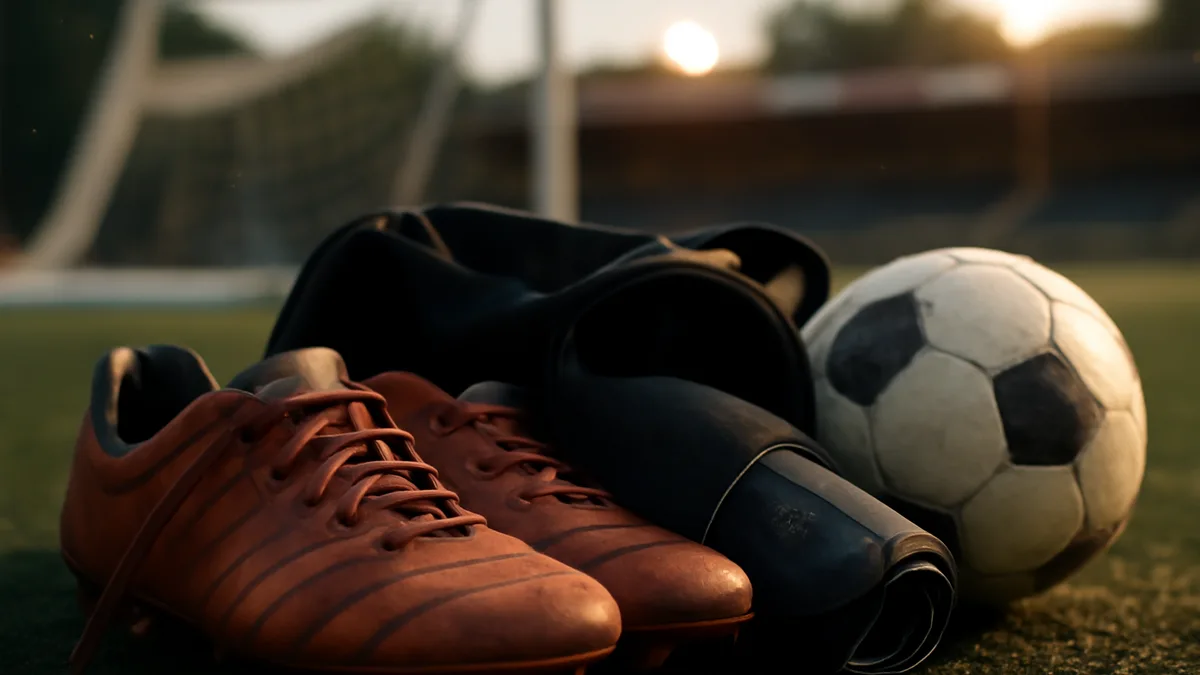
Starting football as an adult should begin with a small, practical shopping list. The decision comes down to safety, compatibility with the playing surface, and what will be used most often.
Buy the essentials first; defer specialist or vanity items until after a few weeks of training. This guide puts items in order of priority and explains why each matters for an adult beginner.
Priority checklist: essentials ranked for adult beginners
The numbered sequence below shows what to buy first and why the order matters. Each heading states the item and the immediate buying rule. The list assumes only casual training at first: weekend sessions, mixed-ability kickabouts or a beginner programme at a local club.
Boots matched to the surface
Choose boots for the surface you will play on; that choice matters more than brand. For firm natural grass pick a moulded soleplate that disperses pressure evenly; for artificial grass choose boots designed for 3G or longer pile turf with more studs or short rubber-coned soles; for indoor five-a-side use flat, non-marking soles. If unsure, a boot aimed at artificial grass is the safer all-round option for beginners who will try different pitches.
Shin guards that fit under training socks
Buy properly sized shin guards that stay in place under socks; protecting the shin is a safety priority. Look for guards with a curved shape and straps or a sleeve to prevent rotation, and avoid models that rely solely on tape or loose fits. A correctly fitted pair reduces the chance of a stoppage or injury that would kill training momentum for a newcomer.
Training socks long enough for your shin guards
Socks are a functional purchase: they must cover the shin guards, fit snugly and resist slipping. Choose breathable, reinforced fabric that keeps the guard in contact with the skin and tolerates regular washing. A second pair makes rotations between sessions easy and keeps hygiene simple.
A ball that suits the session
Buy one playable ball rather than many gadgets. A durable training ball for outdoor work and an indoor ball for five-a-side are the two useful alternatives; size 5 for adults is the standard. A single, decent ball lets a beginner practice control, passing and first touch outside team sessions without spending on specialist match balls.
Light training kit and a waterproof layer
Basic technical tops and shorts made from lightweight, quick-dry fabric are the practical core of a kit. Add a lightweight waterproof that packs small for rainy days. Avoid fashion or heavy cotton; breathable, fast-drying materials keep focus on training and reduce time off-field for laundry.
Hydration and a decent bag
A reusable water bottle and a simple kitbag are small buys that make sessions run smoother. Hydration helps performance and recovery, while a bag organises boots, socks and a spare top. These items are cheap relative to footwear but they remove friction around attendance and preparation.
Optional: position-specific extras
Delay specialist purchases until the position settles. Goalkeepers need gloves chosen for grip and fit; defenders or midfielders may later prefer sturdier boots or ankle support. Until a player knows their preferred role, money is best kept for flexible items that serve any position.
Comparing boot sole types for common surfaces
The table below compares the usual soleplate choices against the criteria most important to beginners: grip on the surface, resistance to wear, comfort for long sessions and how commonly the sole is recommended for mixed-use players.
| Surface / sole | Grip | Durability | Comfort | Suitability for beginners |
|---|---|---|---|---|
| Firm ground moulded | High on natural grass | Good on grass, poor on hard artificial | Generally comfortable for running | Good if sessions are mainly grass |
| Artificial grass specific | High on 3G/4G turf | Designed to resist turf abrasion | Comfortable on mixed surfaces | Best all-round choice for beginners |
| Firm rubber / turf trainers | Moderate; good for short-pile surfaces | Very durable on artificial surfaces | Flat feel can be comfortable indoors | Useful for mixed, casual play |
| Indoor non-marking | High on indoor courts | Durable on indoor courts, not outdoors | Often the most cushioned option | Essential for indoor sessions |
How to decide before spending
Decisions should be driven by where training will happen and how often. Check the pitch surface used by the club or the local sessions first: frequency on that surface multiplies the value of a matching boot type. Next, set a short trial period for four to eight sessions and buy only what gets used during that time; specialist items can wait until habits have formed.
Also factor in comfort and fit over brand alone. For footwear, comfort on a test run matters far more than a label. For protective equipment, certification and correct sizing come first; for clothing, fabric that wicks and dries quickly will be used more often than heavier, trendier pieces.
Where people usually go wrong
Beginner players commonly overbuy boots and accessories before they know what they need. A common mistake is buying a boot for fashion, not function, which leads to poor comfort or inappropriate sole selection for the pitches actually played. Another frequent error is skimping on shin protection because it seems minor; a low-cost pair that fits correctly is worth more than an expensive pair that is uncomfortable and left at home.
People also buy multiple pieces of clothing in the wrong fabric. Heavy cotton or non-breathable layers are less useful than one good technical top. Finally, delaying a simple, correct purchase such as an artificial-grass-capable boot often costs more in replacements and frustration than choosing a sensible, generalist option at the start.
What differs for a beginner and for someone experienced
A beginner benefits from fewer, versatile purchases: one pair of boots that copes with most surfaces, a single training ball and basic protective gear. Experienced players buy multiple pairs tailored to conditions, invest in branded performance clothing, and add position-specific items. Experience reduces the risk of wasted spend because the player can predict surfaces, roles and preferences before buying.
Skill level also changes priorities. A beginner’s primary need is consistency — regular attendance and practice — which is best served by comfortable, low-friction equipment choices. An experienced player prioritises marginal gains: boot feel, bespoke insoles, or gloves with a specific cut. That shift explains why specialists don’t matter at the outset.
What to do next
Make three straightforward purchases this week: a pair of boots suited to the most common surface, a set of correctly sized shin guards and two pairs of training socks. Carry a ball and a spare top to the next session so practice can continue outside club time. After four training sessions, re-evaluate: if position or surface changes, adjust the next buys to reflect that experience.
Finally, register the chosen kit so it becomes routine: pack the bag the night before, keep a dedicated bottle in the bag, and schedule a brief gear check after each session. Small habits reduce wasteful replacements and make steady improvement the real priority.
The Football Association and the FIFA Laws of the Game set the playing and safety standards that underpin sensible purchases for amateur players.
Frequently asked questions
Which boots suit mixed surfaces best
For mixed or unknown surfaces, choose boots designed specifically for artificial grass; they offer a balance of grip and durability across turf and short natural grass, reducing the need for multiple pairs early on.
How should shin guards fit an adult beginner
Shin guards should cover from just above the ankle bone to below the knee and sit flush against the shin; straps or a compression sleeve help prevent rotation and ensure protection during practice.
Is a dedicated training ball necessary
A single, durable training ball is a practical first buy because it allows extra practice off the pitch and replaces improvised alternatives that hamper control work; an indoor-specific ball is the only common exception.
