
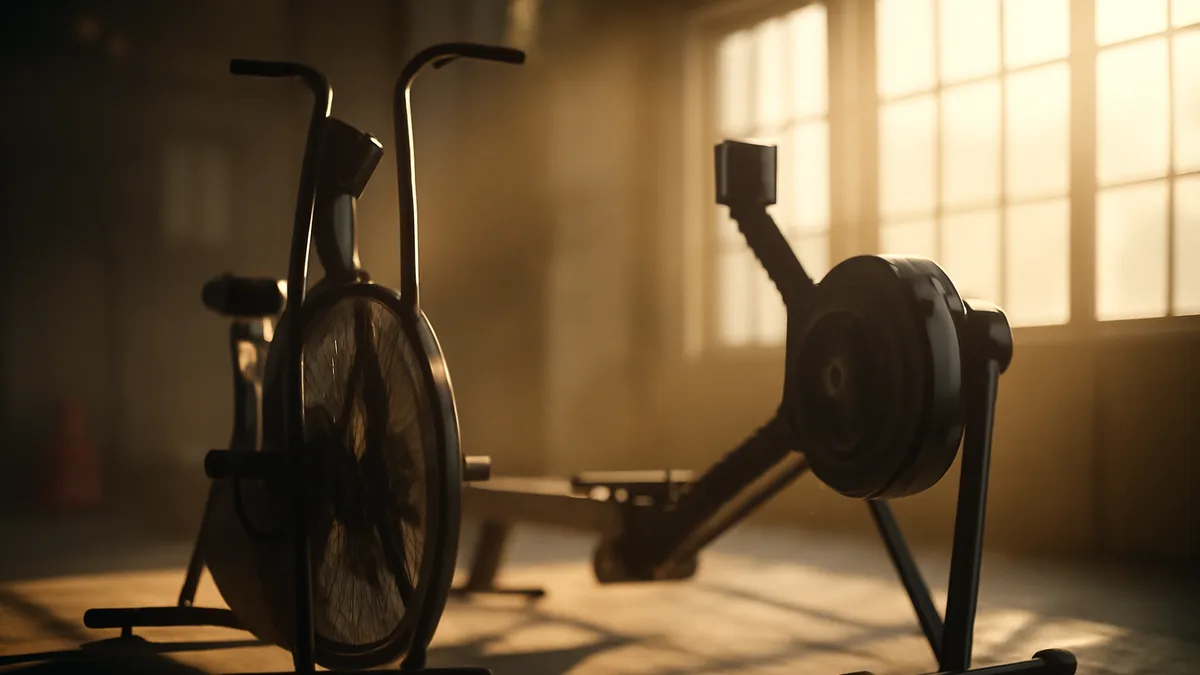
Deciding whether to buy a stationary bike or a rowing machine for off‑season conditioning comes down to four things: how the exercise transfers to a field sport, the way each machine loads joints, the space and maintenance required, and how the training fits an individual player’s stage of development.
The list that follows ranks the factors most likely to change the decision. Each point is standalone: land on any heading and it gives a practical answer. After the list are short sections on common mistakes, how to decide between options, differences for beginners and experienced players, and a clear next step.
Priority checklist for the buy
Transfer to field sport
Choose the machine that best reproduces the movement patterns and energy systems most used in the sport. Rowing produces a coordinated hip‑drive and posterior chain demand that helps sprint acceleration and power development; cycling isolates the legs and is closer to repeated submaximal efforts such as long tempo rides and recovery-based aerobic work. Pick the modality that mirrors the movement quality a coach wants the player to carry back to the pitch.
Joint load
Prioritise how much compressive or bending force the player can tolerate. Cycling is low impact with little axial load through the spine and knees, making it safer for athletes with joint complaints. Rowing is lower impact than running but places repeated lumbar flexion and extension under load; that is excellent for posterior chain strength if technique is good, but it can aggravate back problems if not managed.
Muscle emphasis and strength carryover
Decide whether the goal is leg isolation, core and posterior chain, or balanced whole‑body work. A bike focuses on quadriceps and glute endurance and is simple to programme for cadence and power. A rower demands coordinated leg drive plus hip hinge and trunk stability, giving more direct stimulus to hamstrings, glutes and low back and better crossover to explosive ground actions when paired with strength work.
Training variety and session types
Match the machine to the sessions planned. Cycling easily accommodates long steady states, threshold intervals and high‑cadence spin work. Rowing gives efficient full‑body high‑intensity intervals and short power bouts that resemble repeated accelerations. For clubs that need one piece of equipment to cover every session, weigh which session types will appear most often.
Space and footprint
Check the physical space available and how the device will be stored. Bikes usually have a smaller footprint and some models fold vertically or roll away, which suits shared facilities. Rowers require a longer length for the stroke and need clearance behind and in front; they commonly store on end but still need a larger storage space when compared on the same floor area.
Maintenance and durability
Plan for daily use and simple upkeep. Mechanical and magnetic bikes have few moving parts and typically need regular tightening and occasional lubrication; heavy use still requires periodic servicing. Rowing machines combine sliding rails, straps and resistance mechanisms; they demand rail cleaning and attention to the chain or cord and handle attachments to stay reliable in high‑use environments.
Cost of ownership
Consider not only the purchase price but service intervals, replacement parts and potential downtime. Bikes tend to have inexpensive consumables such as brake pads or belts and commonly available replacement parts. Rowers can need specific components for their resistance systems; factor in shipping and availability of parts when buying for a team base where quick turnaround matters.
User accessibility and learning curve
Assess how quickly athletes can use the machine correctly and safely. Cycling has a shallow learning curve: most players know how to pedal and require only bike fit for comfort. Rowing requires brief technical coaching to get an efficient stroke and protect the lower back; investing in a short technique session reduces injury risk and improves training effect.
Programming and monitoring
Decide how the machine will integrate with the team’s training monitoring tools. Many bikes sync cadence, power and heart rate with common platforms and are straightforward to prescribe. Rowers provide distance, split times and power metrics but need an understanding of stroke rate and split relationships to transfer data into run‑based or pitch demands.
Quick comparison
| Joint load | Primary muscle emphasis | Space & storage | Maintenance | |
|---|---|---|---|---|
| Stationary bike | Low impact; minimal spinal loading | Legs (quads, glutes), limited core | Compact; some fold/roll options | Simple; occasional tightening and lubrication |
| Rowing machine | Low impact but repeated spine movement | Whole body with posterior chain emphasis | Longer footprint; stores upright on end | More parts; rails and straps need care |
Where teams typically go wrong
Teams buy the most compact or cheapest option without matching the purchase to the training plan. That usually means having a machine that covers only recovery rides while the coach needs power intervals or posterior chain stimulus. Another common mistake is neglecting technique for rowing; athletes treated the rower like a leg press increase injury risk and miss transfer benefits. Finally, underestimate maintenance: a machine out of action on a heavy week forces awkward training substitutions.
How to decide in practice
Start from the training plan. If the off‑season will prioritise long aerobic base and controlled leg loading for injured players, a bike is the simpler, lower‑risk choice. If the aim is to build coordinated power, posterior chain strength and simulate whole‑body short intervals that resemble match accelerations, a rower is the better single purchase. Factor in space and whether the device needs to serve multiple players at once; a compact fleet of bikes fits smaller gyms, a few rowers suit larger spaces with technical supervision.
Beginners versus experienced players
Beginners benefit from the low cognitive load of a bike and can gain aerobic capacity quickly with minimal coaching. For players who already have strength work and technical competence, rowing provides a high‑value stimulus that recruits the posterior chain and core in a way that transfers well when combined with resisted sprinting and plyometrics. For all levels, pair either machine with some land‑based strength and mobility work to maximise transfer to the pitch.
What to do next
List the sessions the machine must cover for one month of your off‑season plan. Measure the intended space and note how often the machine will be used per day. If back problems are present, prioritise low spinal load and consult physiotherapy before buying; if the goal is posterior chain power, budget for coaching on rowing technique. Finally, contact suppliers about service agreements so the chosen machine stays available through the busiest weeks.
Cycling
Frequently asked questions
Which machine is better for recovering from knee pain?
A stationary bike is generally the safer first choice because it keeps impact and axial load low while allowing controlled knee range of motion. It permits gradual load increases and easy monitoring of cadence and resistance without repeated spinal flexion.
Can rowing replace strength training for power?
Rowing provides significant posterior chain and core stimulus and can complement strength work, but it does not fully replace targeted heavy loads such as barbell hip hinges or weighted squats needed for maximal strength. Use rowing to add volume and power endurance alongside a resistance programme.
How much space does a rower need compared with a bike?
Rowing machines require a longer footprint to accommodate the full stroke and need clearance fore and aft, though many store upright when not in use. Bikes take up less floor length and are easier to place in compact or multi‑use rooms.
