
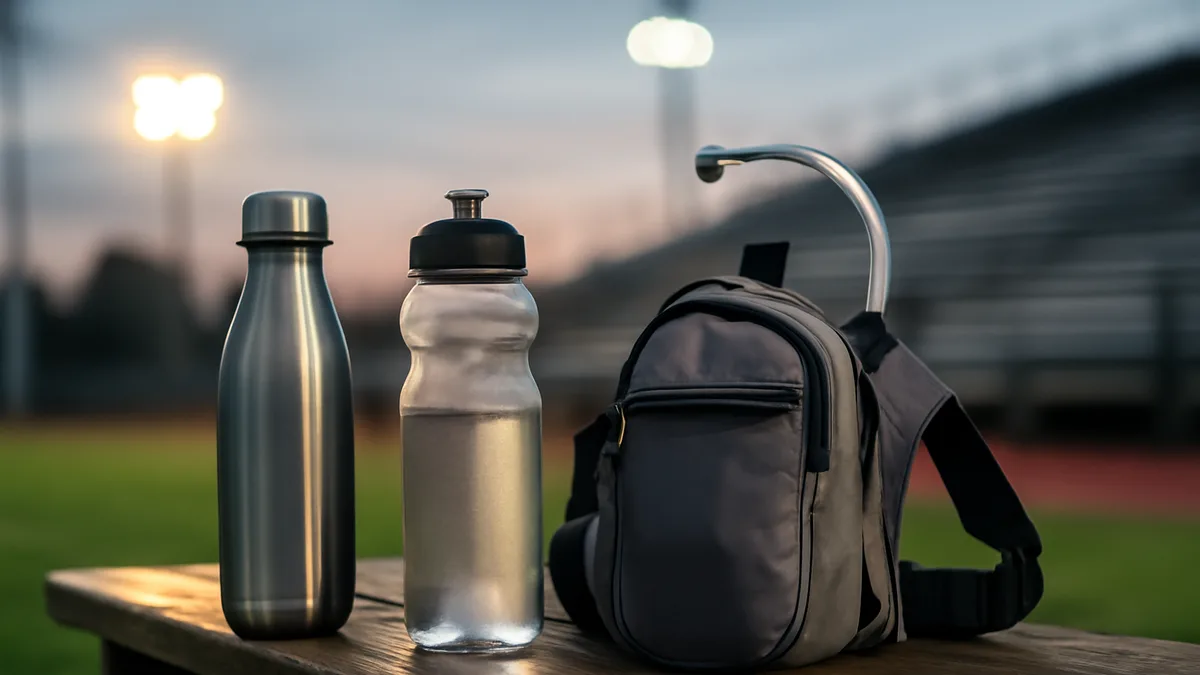
Choosing the right drinking vessel is mostly about two questions: how much liquid is needed between refills, and how easy the container is to keep clean. Secondary questions — insulation, weight and how it behaves in team settings — change which option is best.
This guide sets priorities in order. The numbered sequence names the decision points that matter most and explains what to look for in each, so a choice can be made quickly and sensibly for training, match-day or travel.
How to decide
Start by matching the intended use to a primary requirement: short sessions require light, quick-access bottles; long efforts need volume and stable flow; travel and cold conditions demand insulation. Once use is fixed, check cleaning and material preferences because these determine hygiene and longevity. The process is: pick the right capacity, ensure it can be cleaned, confirm the material suits the situation, then add features such as insulation, hands-free carry or a bite valve if those are necessary.
Common mistakes buyers make
People often buy by appearance, then discover the bottle leaks, smells or is hard to clean. Another frequent error is underestimating team hygiene — identical, refillable communal containers are a quick route to cross-contamination. Finally, buyers sometimes over-prioritise niche features (colour, logos, an odd cap) and neglect basic performance: how fast it pours, whether the mouthpiece traps grit, and whether the item survives being dropped.
Beginners versus experienced users
Beginners benefit from simplicity: wide-mouth bottles that tolerate ice, simple screw caps and designs that are dishwasher-safe make upkeep painless and reduce excuses for not drinking. Experienced users choose by marginal gains: lighter weight for long runs, insulated bottles that keep feed mixes cool, and hydration packs with replacable bladders and secure straps. Experience mainly changes tolerance for cleaning chores and willingness to carry extra weight for benefits like insulation.
The six decision points
Volume and refill frequency
Volume is the primary limiter of how far one can go without topping up. Pick the smallest container that meets the longest stretch between reliable refills; smaller bottles are lighter and quicker to handle, larger bottles or packs reduce the need to stop but add weight and bulk.
Cleaning access and design
Cleaning should be measurable: choose designs that allow reaching every surface. Wide mouths, removable straws and simple valve designs make hand-washing possible and reduce microbial build-up; anything with a narrow tube or permanently fixed bite valve will need a brush or dedicated cleaning tablets to stay hygienic.
Material and taste transfer
Material determines flavour retention, durability and maintenance. Stainless steel resists flavour transfer and dents, while softer polymers can trap odours; look for materials that match whether the container will hold water only or mixes and electrolytes.
Insulation and temperature control
Insulation is about how long cold or hot fluids must remain at a useful temperature. Vacuum-insulated bottles are the standard for keeping drinks cool for hours, whereas single-walled bottles are lighter and better for brief, high-movement sessions where condensation and extra weight matter.
Hygiene in team and shared environments
Team hygiene is a social decision as much as a product one: opt for personal, labelled bottles or packs instead of communal containers, and choose caps that prevent accidental contact. Rigid bottles with screw caps are easier to disinfect between sessions than soft-sided bottles with fixed bite valves.
Carry system and activity fit
How the bottle or pack is carried changes comfort and availability. Slim bottles fit cage holders on bikes and sit comfortably in stadium seat pockets; hydration packs free the hands and carry larger volumes but add back and shoulder load that may be unwanted for short, intense efforts.
Practical checklist
- Primary use: Decide whether the container is for short training, long travel, or matchside refills.
- Cleaning method: Verify whether it survives dishwasher cycles or needs brush and tablets.
- Material choice: Prefer metals for durability and polymers for low weight, depending on taste concerns.
- Valve type: Pick screw caps for hygiene, bite valves for hands-free sipping if cleaned regularly.
- Labelling: Use durable labels or colour codes to prevent mix-ups in team settings.
Comparison table: common alternatives
| Type | Typical volume range | Cleaning ease | Best for |
|---|---|---|---|
| Single bottle | Small to medium | Simple; wide-mouth models easiest | Short sessions, gyms, pitch-side |
| Insulated bottle | Medium | Moderate; some have narrow necks | Cold drinks on long days, travel |
| Collapsible bottle | Small to medium | Variable; soft sides can trap residue | Packing light, occasional use |
| Hydration pack | Large | Harder; bladders need thorough cleaning | Long runs, rides, events without refills |
Where brands fit
Certain maker families are best known for particular traits: some lines are long-associated with wide mouths and durable metal construction, while others focus on low weight and soft polymers. Use brand reputation as a shorthand for these characteristics rather than a guarantee of a specific model’s features.
What to do next
Decide the single most important factor for the main use — volume, cleaning or insulation — then filter products by that feature. Inspect the cap and mouthpiece in person where possible; if buying online, confirm that the mouth is dishwasher-safe or that removable parts are available. Finally, label the container and set a cleaning routine: even the best material fails if it is not maintained.
The phrase stainless steel appears above to mark material that resists flavour transfer, and the term BPA marks the common polymer concern to avoid in liners and soft plastics.
Frequently asked questions
What bottle volume should I choose?
Choose the smallest volume that lasts the longest expected gap between refills. For short training choose lighter, smaller bottles; for long sessions or travel pick larger capacity or a hydration pack.
How do I keep a hydration bladder clean?
Rinse thoroughly after each use and dry fully to prevent mould. Use a dedicated cleaning brush and, periodically, a disinfecting tablet or mild bleach solution following manufacturer guidelines.
Are stainless steel bottles safe for sports drinks?
Stainless steel resists taste transfer and is durable, but check whether the interior has a food-safe lining suitable for acidic drinks. Some stainless options are better for plain water, while others are specified as compatible with mixes and electrolytes.
