
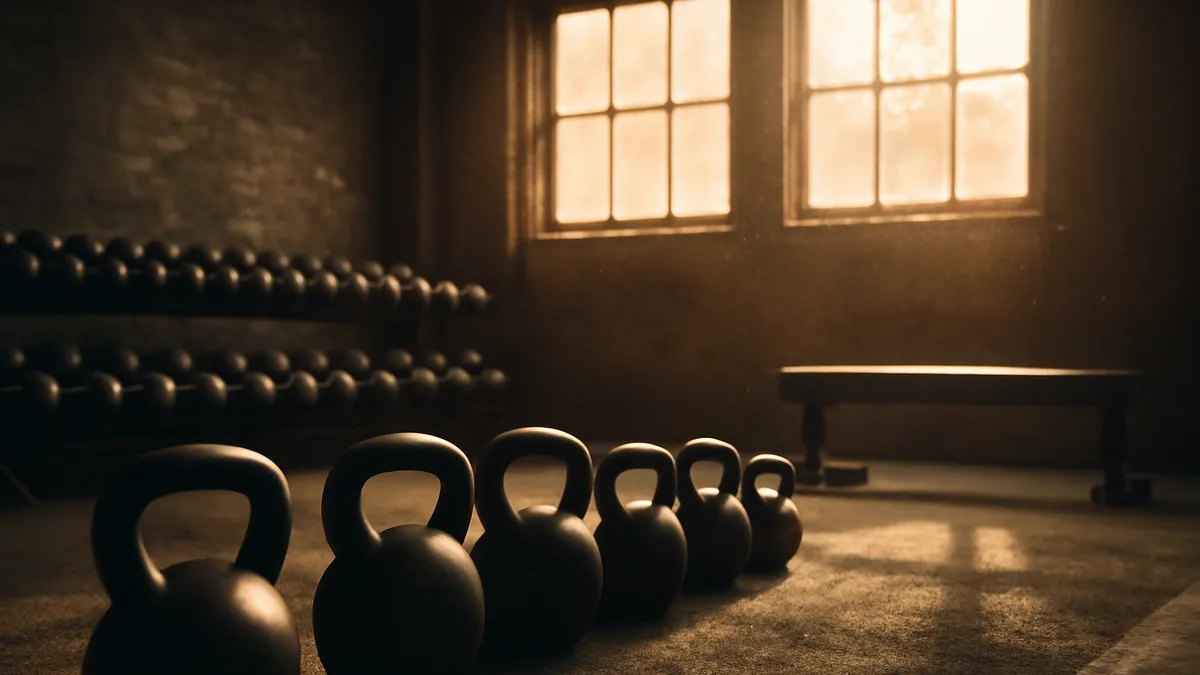
Choosing kettlebells or dumbbells for a sport-specific gym comes down to two things: the movement patterns athletes must practise, and the space and budget available per kilogram of iron. Both tools build strength and power, but they do so in different ways and slot into training plans differently.
This guide lists the buying and gym-design priorities in the order they matter for coaches and athletes. Each point is standalone so it can be read in isolation. The body also covers where people typically go wrong and how choices differ for beginners and experienced lifters.
Priority checks to make before buying
Movement transfer to sport
Kettlebells favour dynamic, unilateral and ballistic patterns that translate well to sports requiring hip hinge power, rotational force and carry/endurance. Use kettlebells when the programme emphasises swings, cleans, carries and rotational chops because their offset handle and compact mass create a loading profile similar to many on-field actions.
Control and isolation demands
Dumbbells allow cleaner bilateral and single-joint control and suit programmes that emphasise strict pressing, rows and progressive loading with small increments. Choose dumbbells when the priority is controlled hypertrophy work, symmetrical strength development or exercises that require very precise loading increments.
Space and storage
Space constraints push the decision. Kettlebells occupy less floor footprint per kilogram because they stack compactly or sit on small racks. Dumbbells require longer racks and more linear bench space. If training areas double as conditioning or skills space, favour the option that fits your rack and aisle layout.
Budget per kilogram
Budget per kilogram is often decisive for facility planning. Cast-iron kettlebells give high mass in a small package, while quality hex or urethane dumbbells need more rack capacity and benching to make full use. Prioritise the tool that gives the needed weight range within budget and complements the rest of the equipment stock.
Progression and increments
Progression needs differ by athlete. Dumbbells commonly provide smaller incremental jumps in weight especially when fixed-head pairs are available in closer steps; that helps linear progression in single-limb strength. Kettlebells jump more between sizes, which suits power and conditioning blocks where large spikes in stimulus are acceptable.
Technique supervision and safety
Technique risk changes the choice. Kettlebell swings and snatches are high-skill movements that require coaching bandwidth to teach safely at scale. Dumbbell work is generally lower technical risk and easier to coach to a large group of athletes with variable lifting backgrounds.
Durability and brand characteristics
Certain manufacturers have stable reputations for specific attributes and are sensible to name when those attributes matter. For kettlebells, fixed cast-iron designs from established suppliers are known for hardwearing handles and consistent mass. For dumbbells, hex-head or solid-head fixed pairs from commercial suppliers are known for robust coating and uniform handles that suit heavy daily gym use. Pick a supplier with clear commercial-gym warranties and replace-part policies.
Quick comparison table
| Movement profile | Storage footprint | Progression granularity | Sport transfer | |
|---|---|---|---|---|
| Kettlebell | Ballistic, unilateral, rotational | Compact, small racks or stacking | Wider jumps between sizes | High for hinge, carry, rotation |
| Dumbbell | Controlled, bilateral, isolation | Requires longer racks and bench area | Finer increments available | High for pressing, rowing, single-limb work |
Where people go wrong (common buying mistakes)
- Buying every weight: Purchasing full ranges of both tools before testing programming often wastes budget and space.
- Ignoring coaching needs: Underestimating the teaching time for kettlebell skills leads to injuries or underused kit.
- Overlooking accessory needs: Neglecting racks, bumper plates or benches that match the chosen tool creates bottlenecks in daily sessions.
- Choosing on brand alone: Buying the most visible brand without checking handle feel, finish and warranty can leave the gym with ill-fitting equipment.
How to decide for a given sport
Start from the sport-specific movement demands. For field sports that depend on hip extension, changes of direction and repeated carries, kettlebells often provide higher direct transfer because of the unilateral, offset load and ballistic options. For sports that prioritise bilateral strength, precise pressing or controlled hypertrophy—such as some combat sports, gymnastics cross-training or position-specific strength work—dumbbells give cleaner options.
Consider the training cycle. Use kettlebells in power and conditioning blocks where movement speed and core integration are the priority. Use dumbbells in strength, hypertrophy or rehabilitation phases where incremental loading and symmetry are important. A mixed approach is common: a compact set of kettlebells for swings and carries plus a graduated dumbbell rack for pressing and rows covers most needs.
Beginner versus experienced athletes
Beginners benefit from dumbbells for their low technical threshold and fine progression. They allow safe introduction to pressing, unilateral work and sequential overload. Kettlebells demand time to learn safe hip-hinge patterns and receive more value once the athlete has basic posterior chain competency and coaching supervision.
Experienced athletes gain more immediate transfer from kettlebells when the programme needs high-velocity hip extension, rotational power or conditioning with complex carries. Experienced lifters also exploit kettlebell loading quirks for sport-specific drills and metabolic work; they still use dumbbells for precision work and accessory strength.
What to do next
Audit the programme and floor plan. List the sport movements that must be trained, the weekly coaching hours available for teaching technique, and the rack or floor space dedicated to free weights. From that audit, decide whether to prioritise compact mass (kettlebells) or granular progression and isolation (dumbbells).
Buy a starter kit that reflects that priority rather than a full inventory of both. If space and budget allow, plan to add the other tool later: a modest kettlebell set pairs with a basic dumbbell rack to cover nearly all sport-specific needs. Finally, set a schedule for coaching time so technical movements deliver the expected return on investment.
Frequently asked questions
Which tool is better for explosive hip power?
Kettlebells are better suited to explosive hip power because their offset handle and compact mass favour ballistic swings, cleans and snatches that mimic hip-hinge drives used in many sports. They also support repeated high-velocity repetitions and carries that train power endurance.
How should limited space affect my choice?
Limited space favours kettlebells since they store compactly and need smaller racks, allowing more mass per square metre than a long dumbbell rack. If benching and controlled pressing are central, plan layout changes or choose a shorter dumbbell set that matches available bench space.
Can beginners start with kettlebells safely?
Beginners can use kettlebells safely with adequate coaching focused on hip-hinge mechanics and load management, but dumbbells usually offer an easier, lower-risk path to build initial strength and movement control before introducing ballistic kettlebell work.
