
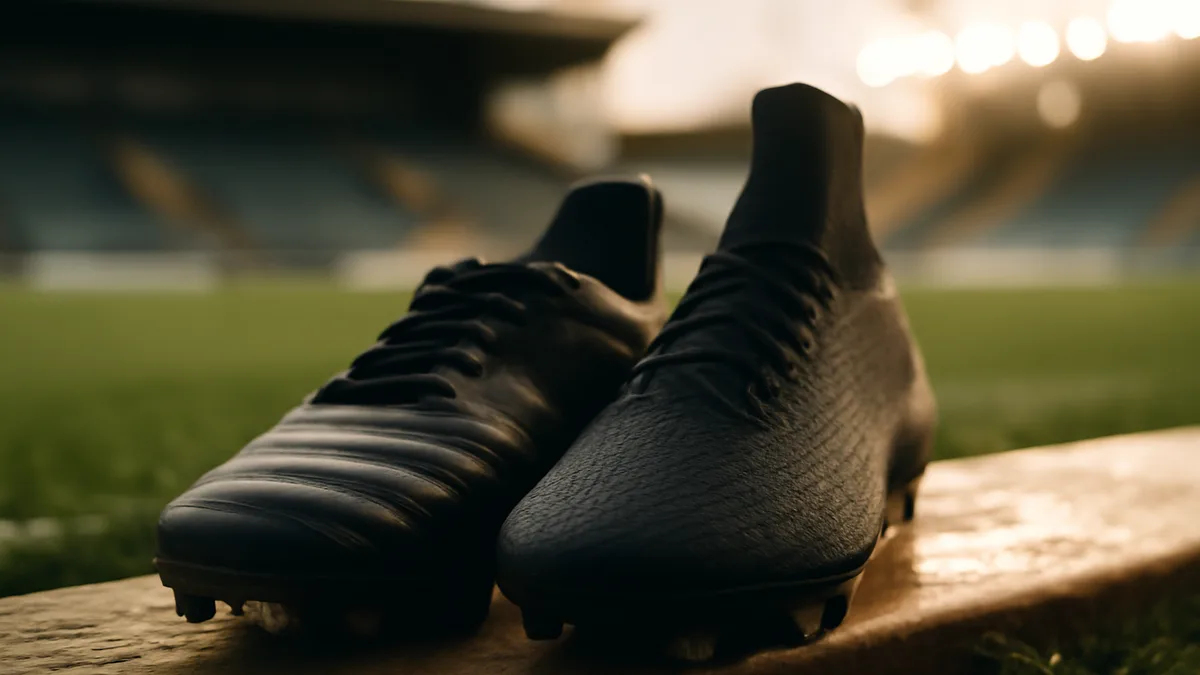
Buying boots for wide or narrow feet is about shape, not just size. The crucial decision is whether the boot’s last matches the foot’s volume and pressure points.
This guide lays out the priority checks in order, explains the differences that matter, and shows the signs a boot is the wrong shape rather than merely the wrong length.
How to decide before trying boots on
Measure foot volume as well as length. Length sets the size but volume — width plus instep height — determines how the boot will feel in play. Players with higher insteps often need lines cut on a roomier last even if their foot across the forefoot is not especially wide.
Think about intended use. Stretchy knit uppers will accommodate more volume than stiff leather; moulded low-cut boots suit narrow, low-volume feet better than broad, high-volume feet. Surface matters too: boots that flex and wrap help narrow feet lock in; boots with rigid uppers need a closer match to avoid slipping or pressure points.
Priority checks when choosing for wide or narrow feet
Shoe last
The shoe last determines the overall internal shape of a boot and whether it runs narrow or wide. Lasts are a maker’s template: some are deliberately broad to suit higher-volume feet while others are narrow and tapered for a close feel. Try to identify a brand’s typical last family — that gives a consistent starting point across models.
Toe box width
The toe box must allow toes to splay under load; this is non-negotiable for wide feet. A cramped toe box produces numbness and blisters; a slightly roomier one for wide feet preserves comfort without sacrificing control. For narrow feet, a slimmer toe box reduces heel lift and improves responsiveness.
Forefoot volume
Forefoot volume is the internal space across the ball of the foot and the instep height combined. Wide-footed players need higher forefoot volume to prevent pressure on the bunion or metatarsal heads, while narrow feet often want low volume so the boot wraps the foot. Knit or mesh uppers add volume tolerance compared with unyielding leather.
Heel cup shape
The heel cup controls rear-foot lockdown and must match heel width and Achilles shape. A shallow, narrow heel cup can cause slipping for wide-footed players; a deep, narrow cup helps a narrow heel stay locked. If heel slip is present despite correct length, the cup shape is the likely mismatch.
Upper material and stretch
Upper material changes how much a boot will adapt to foot shape. Natural leather traditionally stretches and moulds to a wider foot over time. Synthetic skins and knit uppers stretch little in spots but may offer engineered give; pick materials that compensate for the foot’s volume needs rather than contradict them.
Lacing and closure systems
Lacing pattern and closure let players fine-tune fit across the instep and forefoot. Wide feet benefit from lacing that allows the vamp to open fully and avoid pinching, while narrow feet gain from fastenings that pull the upper snugly over the instep. Consider boots with additional straps or internal tensioning for granular adjustment.
Sole and last interaction
The soleplate must sit under the foot where the last expects it to. A boot with a broad last but a narrow internal sole can misplace pressure points. Evaluate whether the sole and last produce a stable base for the foot’s width; instability often arises when these elements are not in harmony.
Try-on protocol
Try boots with the socks and insoles intended for match use and test both standing and moving. Walk, change direction and jog to reveal slipping, pinching or hot spots. A correct-fit boot will allow a small amount of toe room while preventing lateral movement and maintaining heel lockdown.
Common signals a boot is the wrong shape (not just the wrong size)
These signs point to a shape mismatch rather than an incorrect length. They help decide whether to try a different last or a different model.
- Pinching in the same spot: Localised pressure on the instep or bunion that persists despite correct length indicates the vamp or last is too narrow in that region.
- Heel slip with correct toe gap: If there is appropriate toe room but the heel lifts, the heel cup or midfoot volume is wrong, not the length.
- Toes hitting the sidewalls: Lateral compression of toes when bearing weight shows an overly narrow toe box rather than a need to go up a size.
- Excess internal volume: A boot that feels baggy across the forefoot and midfoot even with a snug heel is a broad last issue, not length.
Where people go wrong
Buyers often fixate on length because it’s the most visible measurement. Length matters, but many problems come from volume and pressure distribution. Another common mistake is assuming “one brand fits me”: brands use multiple lasts and can vary between lines. Finally, testing only while standing misses dynamic problems; a boot that seems fine standing can produce sliding, blisters or numbness on the move.
What differs for beginners and experienced players
Beginners should prioritise comfort and injury prevention. A forgiving last and stretch-capable upper reduce early-season pain and let technique develop without distraction. Experienced players may prioritise closer contact for touch and agility, accepting a tighter close-fitting last if it improves control. Experience also helps identify subtle mismatches: an experienced player can judge heel lockdown and midfoot pressure more precisely during short testing sprints.
Comparing broad and narrow lasts
| Characteristic | Broad last | Narrow last |
|---|---|---|
| Primary advantage | Room for toe splay and high insteps | Close contact and reduced heel lift |
| Typical uppers that suit it | Soft leather, knit with engineered give | Thin synthetic skins, low-stretch knit |
| Common fit problems | Perceived sloppiness if foot is low-volume | Pinching and pressure if foot is wide |
| Best use cases | Players needing comfort over long matches | Players needing precision and quick touch |
What to do next
Measure both feet for length and volume, then narrow choices by last characteristic before trying boots on. Take match socks and the preferred insole when testing. If a shop can’t identify the last family, try multiple brands known for different lasts and focus on how the boot behaves when moving, not just when standing.
If buying online, insist on a return policy that allows movement testing and keep original packaging until confident the boot’s shape matches the foot. When in doubt between two lasts, choose the one that avoids lasting pressure on bone prominences; small compensations can be made with lacing and thin insoles but bone pain is not.
Frequently asked questions
How can I tell if a boot is too narrow?
A boot that is too narrow typically produces pinching on the instep or sides of the forefoot when standing and pain or numbness when moving. To confirm, check whether toes contact the sidewalls under load and whether pressure remains in the same spot despite correct length.
Can I change a boot’s shape with laces or insoles?
Laces and insoles can adjust fit at the instep and alter internal volume slightly, but they cannot change the last’s width or toe-box shape. They are effective for small compensations but not for correcting fundamental mismatches such as a narrow last on a wide foot.
Are certain materials better for wide feet?
Soft, stretch-capable uppers such as natural leather or engineered knit generally accommodate wider or higher-volume feet better than stiff synthetics. Those materials can mould or offer give where rigid skins would cause pressure points.
