
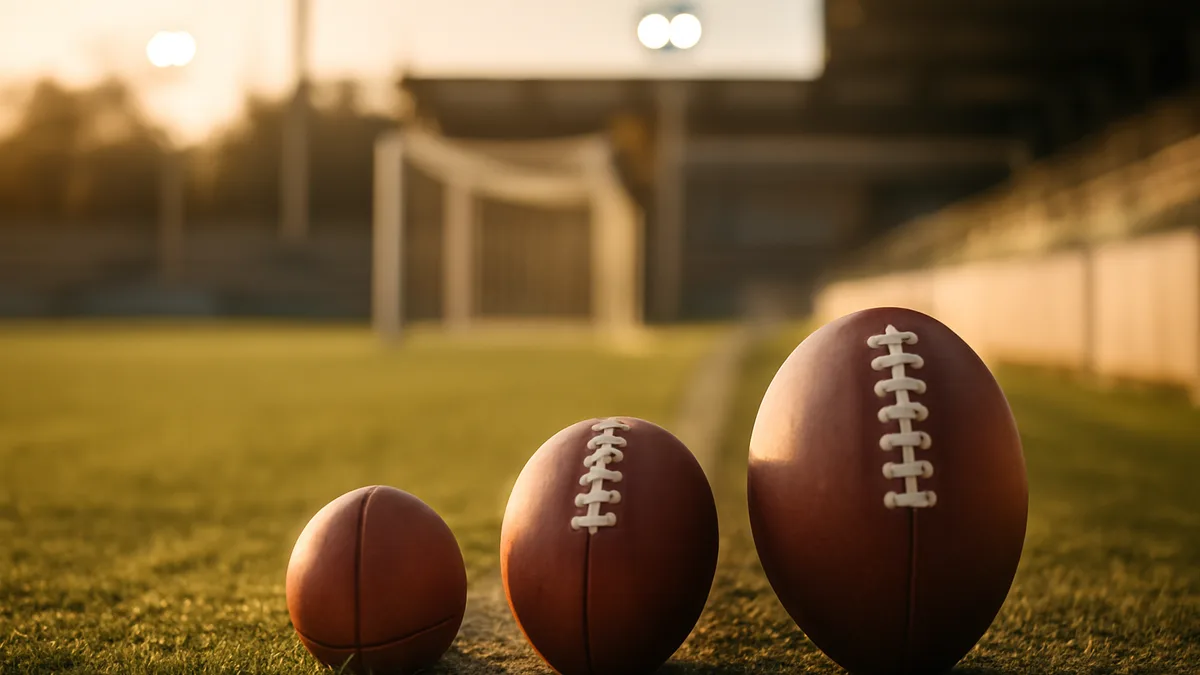
Choosing the correct ball comes down to three practical factors: the player’s age and physical development, the surface they will play on, and the type of control or bounce desired. Use those factors to narrow choices first, then check the ball’s official size and construction before buying.
This guide lists the priority checks to make when selecting a ball for training, match play or indoor use. It covers the common youth sizes, the standard adult size, and the ball made for hard indoor courts, and explains typical trade-offs between weight, circumference and surface suitability.
How to decide before the checklist
Decide whether the ball will be used mainly for development, competition or casual play. For younger players, lighter and smaller balls speed technique development because they travel slower and sit under the foot more predictably. For match play at adult age, choose the full-size ball specified by competition rules. For indoor court work, select a ball built for low bounce and quick control.
Also confirm the playing surface. Grass, 3G artificial turf and hard indoor courts all change how a ball behaves. Artificial surfaces often require a more durable outer casing; indoor courts benefit from a lower-bounce bladder and different paneling. Knowing the surface narrows acceptable models before considering brand or price.
Priority list: seven checks in order
Age and competition rules
Choose the ball size mandated by the competition or academy first. Official competitions set the size for each age group, and using the required size avoids later adaptations and ensures consistency across training and matches.
Player strength and coordination
Match the ball’s mass and circumference to players’ physical development. Younger or less strong players benefit from smaller, lower-mass balls because they reduce joint strain and make passing and shooting form easier to learn.
Playing surface
Pick a ball constructed for the surface where most sessions take place. Grass and 3G suit standard outdoor balls with durable outer covers; indoor courts require a ball with lower bounce and often a felted or microfibre finish to control skid and rebound.
Ball size and specifications
Confirm the size by circumference and weight rather than model names. Size 3, size 4, size 5 and futsal size 4 differ in both dimensions; check the printed specification on the ball or the product listing to ensure it falls within the expected ranges for the intended age group and surface.
Practice versus match construction
Decide whether the ball is for long-term training or match use. Training balls are often stitched or thermally bonded for durability and may have reinforced panels. Match balls prioritise consistent flight and feel. Selecting the right construction reduces replacement cost or avoids giving players a misleading feel during practice.
Grip, surface and inflation behaviour
Consider the outer texture and the bladder type because they change control and bounce. A textured finish improves grip and predictability on wet grass, while a low-bounce bladder reduces rebound on hard courts. Check product descriptions for the intended surface and feel.
Size transition plan
Plan when players should move to the next size. Transition when players can control the current size comfortably at full pace and when competition rules require it. A staged approach — introducing the next size in training before switching in matches — eases the change.
Table: how the common alternatives compare
| Ball | Circumference | Typical mass | Age group | Surface |
|---|---|---|---|---|
| Size 3 | Smaller circumference for young players | Lighter mass for easier handling | Under-8s and early development | Grass and short indoor sessions |
| Size 4 | Intermediate circumference used by youth players | Moderate mass balancing control and momentum | Approximately U9–U12 age groups | Grass and 3G; some indoor use |
| Size 5 | Full adult circumference | Standard adult mass for match play | Teenagers and adults | Outdoor grass and 3G |
| Futsal size 4 | Smaller circumference than outdoor size 4 | Similar to adult ball mass but with low bounce | Indoor youth and adult futsal players | Hard indoor courts and futsal courts |
Where people commonly go wrong
Buyers often pick balls by colour or brand without checking size specs. Brands reuse model names across sizes; the picture alone is not reliable. Another common mistake is assuming all indoor balls behave the same — futsal balls are engineered specifically to reduce bounce and improve control on hard courts.
Two practical checks prevent regret: read the printed circumference and mass on the ball or product page, and confirm the intended surface in the item description. If the product copy is vague about surface or bladder type, choose a different model that provides clear specifications.
- Wrong model: Picking an outdoor match ball for indoor court sessions increases bounce and slip.
- Wrong size: Using too large a ball for young players slows skill acquisition.
- Wrong construction: Buying a fragile ball for heavy coaching use raises replacement costs.
What differs for beginners and experienced players
Beginners gain faster technical progress with smaller, lighter balls that make passing and shooting mechanics easier to repeat correctly. Coaches working with beginners often keep a supply of size 3 and size 4 balls to match developmental stages within a single session.
Experienced players and teams prioritise balls that mirror match conditions. They choose the full-size ball used in competition and focus on construction details that affect flight and touch. Indoor specialists use dedicated futsal balls to replicate the feel and rebound of competitive futsal courts.
What to do next
Check the competition rules or academy guidance for the required size. If none exist, match the ball to the youngest players who will use it most often. Inspect product listings for circumference, mass and stated surface suitability, and prefer models that declare bladder type and outer material. When in doubt, buy one training ball of the intended size and practise transition over several sessions before committing to match use.
Frequently asked questions
What ball size for 10-year-olds?
Most 10-year-olds use a size 4 ball because it balances control with developing power. Confirm competition rules and consider a size 3 only for younger or less coordinated players to speed technique development.
Which ball for hard indoor courts?
Use a futsal-specific ball designed for hard courts; it has a smaller circumference and a low-bounce bladder to improve control and reduce rebound. An outdoor ball will typically bounce more and slide on indoor floors.
When should players move to size 5?
Move to size 5 when players consistently control the smaller size at full training pace and when competition rules require it; introduce the full-size ball in training before using it in matches to allow gradual adaptation.
