
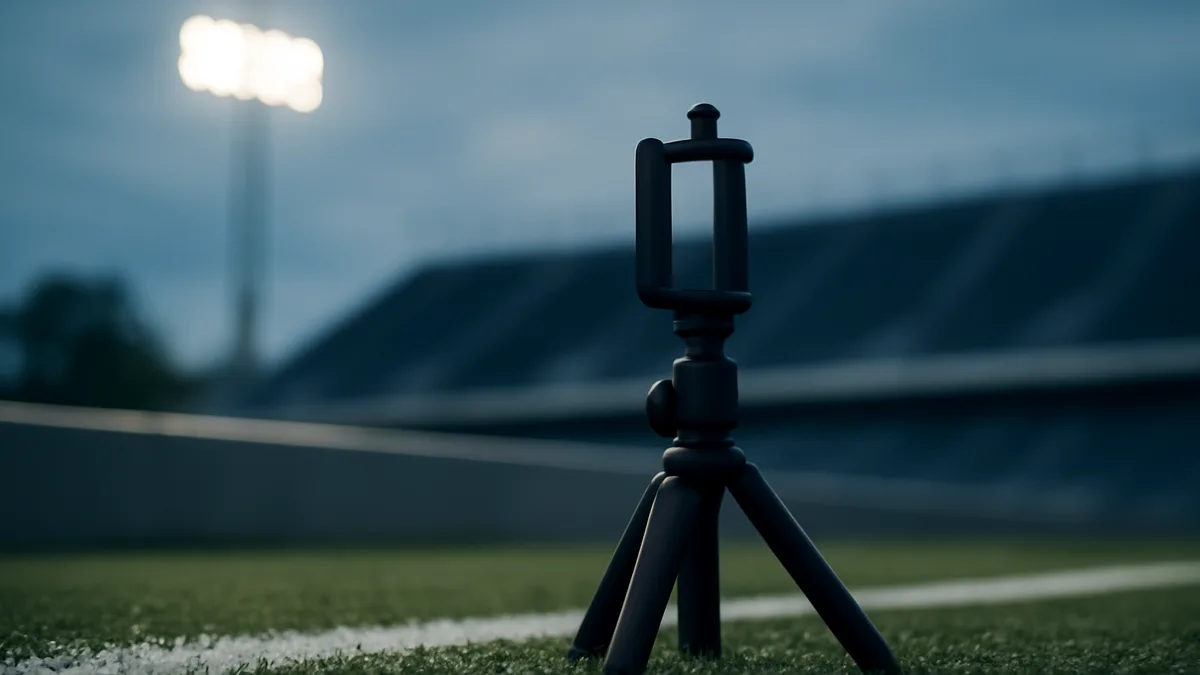
Choosing the right tripod and phone mount for pitch-side filming turns on three things: how high the camera must be, how windy the venue gets, and which rules apply at the ground. Practical choices reduce wobble, speed setup and keep the operator inside the permissions the club or competition sets.
This guide sets priorities in the order they matter. It names durable design traits and longstanding product lines where those traits are reliably associated with a brand. No prices or model names are given; the aim is a clear checklist to follow at a shop or when comparing product specs.
How to decide before shopping
Decide where the tripod will stand and what it will hold. A corner of the technical area beside dugouts needs different kit than the sideline behind advertising boards or a high press box. Note whether the filmer will travel with the tripod on public transport and whether the ground enforces any filming restrictions or requires accreditation.
Measure the minimum and maximum height required for the angle planned. If the image must clear low barriers, add that clearance to the camera or phone mount height. If the operator cares about carry weight and quick setup between matches, prioritise lightweight materials and a robust quick-release plate.
Common mistakes buyers make
Buyers often choose the tallest tripod without checking for wind resistance, or they assume a cheap clamp will fit every phone. Another frequent error is neglecting quick-release compatibility: a plate or clamp that works for one head may not fit a different tripod, adding friction when the game demands fast repositioning.
Failing to check the ground’s rules is an operational mistake. Many clubs and competitions limit where tripods may be placed or require prior approval. Confirm whether a visible operator is allowed on the touchline and whether any equipment must be left unmanned or removed during play.
Tripod and mount priorities (ordered)
Maximum and working height
Choose a tripod whose working height matches the filming position, not just its marketed maximum. The working height is the usable top height once a head and phone mount are attached; some tripods list maximum height including a removable centre column used for studio work, which is less stable outdoors. Ensure the phone mount can attach without adding excessive stack height.
Stability in wind
Stability matters more on exposed pitches than in a sheltered stand. Look for tripods with a low centre of gravity, heavy-duty legs and a hook on the centre column for adding a weight or sandbag. Carbon-fibre legs reduce weight but check leg diameter and locking mechanism: thicker legs with robust locks usually resist gusts better than slim legs with twist locks.
Quick-release system
Prioritise a quick-release plate that is widely used and has a positive locking action. A reliable quick-release lets a phone or small camera be mounted and dismounted in seconds, which is essential for swapping devices between matches or moving to film a close-up. Also verify the plate’s security: a plate that slides accidentally or has a poor locking catch is a safety risk at a busy pitch-side.
Head type: fluid vs ball
A fluid head gives smoother pans and tilt control for following play; a ball head is faster to reposition but can be harder to control smoothly. Choose a heavier fluid head if the main use is tracking runs and passes. For multi-use with quick framing changes and handheld-style moves, a well-damped ball head with a secure clamp is an acceptable compromise.
Phone clamp and mounting standard
Ensure the clamp uses a secure thread or proprietary plate that matches the tripod head. Modern clamps commonly use a screw thread and a cold-shoe adapter or a small quick-release plate; some lines like Joby are known for flexible, low-profile mounts, while others like Manfrotto are associated with more substantial clamps and standardised quick-release plates. Check that the clamp won’t obstruct charging ports or microphones.
Portability and materials
Decide whether weight or compactness is the priority when travelling. Aluminium tripods are heavier but often cheaper and quite stable; carbon-fibre offers a superior strength-to-weight ratio and fewer vibrations when filming, making it a good choice for someone who carries kit regularly. Match the material choice to how often the tripod will be transported and how much carrying comfort matters.
Mounting extras and adaptability
Look for features that increase utility: reversible legs to allow low-angle shots, detachable centre columns that become monopods, and accessory mounting points for microphones or lights. A tripod that accepts a wide range of heads and accessory arms will adapt to future needs without forcing a full replacement.
Table: comparing tripod types
| Type | Stability | Portability | Wind performance |
|---|---|---|---|
| Studio-style aluminium | High when spread fully and using heavy legs. | Low — heavier and bulkier to carry. | Good with added weight; centre-column use reduces performance. |
| Carbon-fibre travel | Moderate to high depending on leg diameter. | High — lighter and compact for transport. | Reasonable, but narrower legs can be more affected by gusts. |
| Flexible-leg mounts (GorillaPod style) | Low when used as a free-standing support. | Very high — folds small and is light. | Poor on open sidelines; best when wrapped to a fixed structure. |
| Monopod | Low alone; moderate with a base plate or monopod shoe. | Very high — quick to carry and set up. | Vulnerable unless braced; useful for follow shots with an operator. |
What differs for beginners and experienced users
Beginners should favour simplicity: a tripod that locks solidly, a basic fluid or ball head, and a phone clamp that attaches with a single screw. An easy quick-release system reduces the chance of dropped phones and saves time between matches. Beginners will also benefit from a clear marking of leg-angle stops and an included carry case to protect kit.
Experienced users often pick adaptable kit: a carbon-fibre tripod with interchangeable heads, a professional fluid head for controlled pans, and clamps that support external gimbals or lens adapters. They also plan for wind control—tripod hooks plus sandbags—and for rapid reconfiguration when filming multiple angles or moving between sites.
What to do next
Measure the filming positions and list the maximum height and the likely wind exposure for each. Take that list to a shop or compare online spec sheets, prioritising leg diameter, head type and the quick-release standard. Finally, contact the club or competition organiser to confirm any restrictions on equipment placement and to check whether accreditation is needed before arriving with a tripod.
The Football Association is one place to check for guidance on matchday operations; confirm stadium policies in advance to avoid surprises at the ground.
Frequently asked questions
What tripod height works pitch-side?
Choose the tripod’s working height so the phone lens clears barriers and sightlines once the head and mount are attached. A maximum height figure that includes an extended centre column is less useful than the practical working height with the phone mounted.
How to stop a tripod blowing over?
Use a tripod with a low centre of gravity, thicker leg sections and a centre-column hook for a sandbag or weight. Adding ground anchors or wrapping a leg around a fixed structure helps on exposed sidelines where gusts are common.
Do grounds allow tripods pitch-side?
Many clubs restrict where tripods can be placed and may require prior permission or accreditation for pitch-side equipment. Contact the club or competition organiser before filming to confirm their specific policies.
