
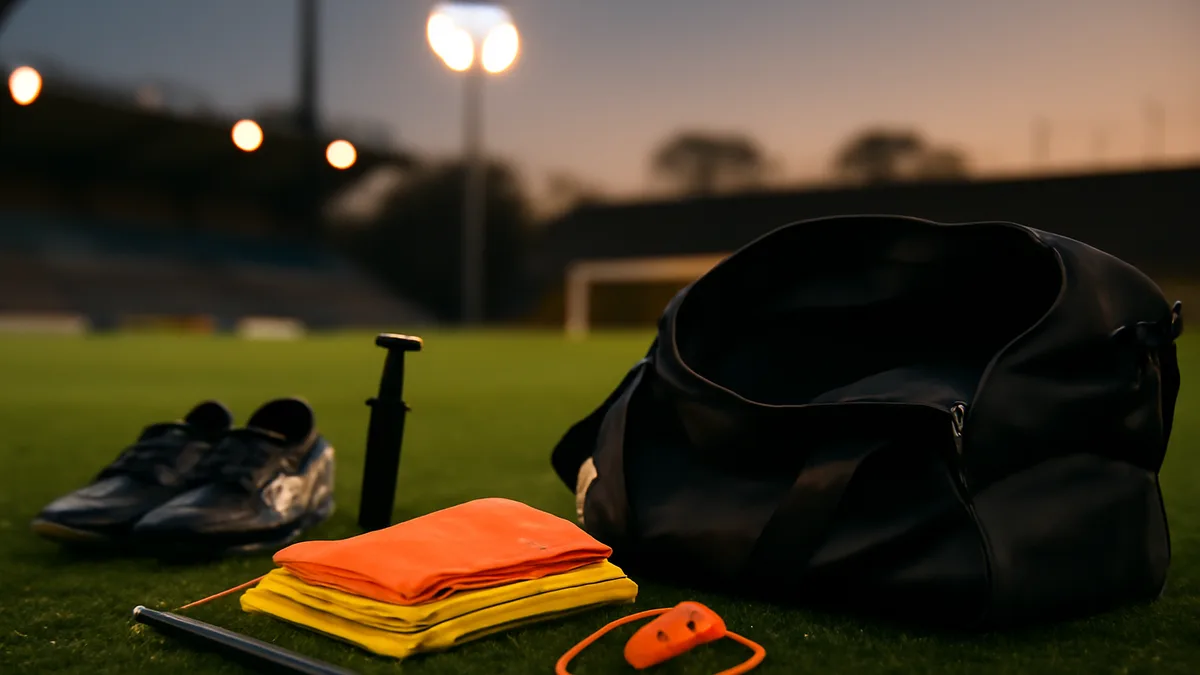
Picking kit for a coach’s bag comes down to three things: the players being coached, the surfaces used and the coach’s style of session management. Prioritise items that solve predictable problems quickly — wet balls, lost bibs, a minor injury, or the need to change a drill on the fly.
This guide lists the pieces a bag actually needs and explains how to choose between common alternatives. The advice names product characteristics and established makers where those traits are long-standing, but it avoids model or price claims.
How to decide what belongs in the bag
Decide with two questions. First, what demands does the pitch place on kit — artificial turf, grass, indoor hall or street? Second, what is the squad profile — age groups, number of players and whether sessions include competitive small‑sided games. Those answers set the minimum counts (how many bibs, how many balls) and the specific options (pump and needle for footballs, turf‑specific studs for footwear, a robust whistle for noisy outdoor spaces).
Where coaches commonly go wrong
One frequent mistake is packing too much of the flashy and too little of the functional. Training planners often prioritise specialist items for one drill and forget the basics that recur every session: a working whistle, spares for lost items, a basic first aid kit and a reliable watch or stop‑clock. Another error is ignoring the environment: synthetic pitches and hall floors require different balls and footwear considerations to natural grass.
Bag spine: the ordered kit list
Below are the items listed in the order they should influence purchasing and packing decisions. The order reflects how often each item matters in a typical session and how quickly its absence halts work.
Bibs for team management
Bibs are the most-used visual tool in a session and should be durable and reversible. Choose mesh bibs for breathability in warm weather and heavier woven or numbered bibs when visibility and durability matter; reversible styles give the flexibility to run different sided games without swapping garments. Have at least two colours plus a neutral (white or black) and enough spare bibs so a single missing garment does not reduce the planned numbers.
Balls: training, match and surface choice
A coach should carry a minimum of three to six balls depending on squad size, split between match-type balls and softer training balls for keeps-on-play drills. Match balls are designed for consistent flight and control, while softer training balls reduce fatigue in high-repetition drills and are kinder on indoor floors. Established ball-makers such as Nike and Adidas have long histories of producing both match and training ball lines, and many coaches use the presence of a recognised manufacturer as a shorthand for predictable durability and feel.
First aid kit and emergency items
A compact first aid kit is essential and should be organised for quick access to plasters, wound dressings, a CPR face shield, cooling packs and disposable gloves. Include items specific to sport: taping or strapping material, elastic bandage, and a basic splint or triangular bandage for suspected fractures or dislocations. Keep the kit in a waterproof pouch; also carry a simple incident form or notebook to record injuries and actions taken, and refresh contents after any use.
Whistle and session control tools
A whistle is the single most reliable way to regain attention outdoors and should be a robust, non-metallic design with a lanyard and a spare in a separate pocket. Coaches who prefer a quieter or indoor environment sometimes add a clicker or a hand-held bell, but a coach should not rely on only one signalling method. Test any whistle against the typical background noise of the venue before using it in a session.
Board and planning materials
A dry‑wipe tactic board sized for the coach’s usual proximity to players makes explaining patterns faster than verbal instruction alone. Choose a board with clear pitch markings and magnetic markers if the coach relies on concrete, visible shapes for positioning; a paper notebook or printed session sheets work as a backup. Carry at least three different marker colours and a small cloth for quick erasure during breaks.
Footwear and ancillary gear
Include a pump and needle, spare laces, goalkeeper gloves for loan, and an extra pair of studs suitable for the most common surface coached; these items prevent session stoppages from small equipment failures. Cones and mini‑goals should be durable — soft cones for indoor use and heavier bases for windy days outdoors — and a set of poles improves movement and dribbling drills. Keep batteries for any electronic devices in a sealed pocket and rotate them out regularly.
Communication and documentation
Maintain a printed contact list and parental consent forms for junior players, and carry a simple pen and clipboard for immediate notes. A small phone powerbank helps keep timing devices or apps running throughout a long session. Where regulations require, bring proof of coaching qualifications and safeguarding documents to produce on request.
Practical checklist (common mistakes as a quick list)
- Missing spares: Always carry duplicates of items that commonly go missing — extra bibs, whistles and laces to avoid reducing drill size.
- Wrong balls: Match and indoor surfaces need different balls; pack both rather than assuming one ball fits all surfaces.
- Unchecked first aid: Replace used or expired items after every incident and keep the kit waterproofed against damp weather.
- Insufficient visibility tools: Bring a magnetic or coloured board and multiple marker colours to explain tactics clearly to mixed‑ability groups.
Comparing ball types
| Type | Durability | Control | Best surface |
|---|---|---|---|
| Match ball | High under careful use | Designed for predictable flight and touch | Natural grass and well‑maintained turf |
| Training ball | Very high — built for repetition | Softer feel to reduce fatigue | Outdoor and mixed surfaces |
| Futsal/indoor ball | High on hard floors | Low bounce, tight control | Indoor halls and hard court surfaces |
What differs for beginners and experienced coaches
Beginner coaches should err on the side of redundancy: more balls, more bibs, clearer session sheets and an elemental first aid kit. That reduces the chance that a single missing item ruins a planned activity. Experienced coaches often travel lighter but carry specialised extras that match their preferred coaching style — for example, a larger tactical board, a wider range of marker cones, or additional goalkeeper equipment — because they anticipate how sessions typically evolve and can adapt quickly.
What to do next
Empty the bag now and check against the ordered list in this guide. Replace any used first‑aid items, test the whistle in the usual venue, and inflate or inspect all balls for wear. Finally, make a single checklist card to keep inside the lid of the bag and update it after every session; that habit prevents last‑minute improvisation and keeps sessions running on time.
Frequently asked questions
What first aid items should a coach carry?
A coach should carry dressings, adhesive plasters, disposable gloves, cooling packs, elastic bandages, tape and a CPR face shield. Include sport-specific supplies such as strapping tape and a small splint, and replace items after any use.
How many bibs and balls should a coach bring?
Bring enough bibs for two full teams plus several spares so one lost or damaged bib does not shrink the planned numbers. Carry a mix of three to six balls depending on squad size, splitting between match-type and softer training balls for repetitive drills.
Which ball types suit artificial turf or indoor halls?
Use futsal or indoor balls on hard halls because they have low bounce and tight control, and choose training balls or turf‑specific constructions for synthetic pitches to withstand abrasive surfaces. Match balls are fine on well‑maintained grass but wear faster on abrasive turf.
