
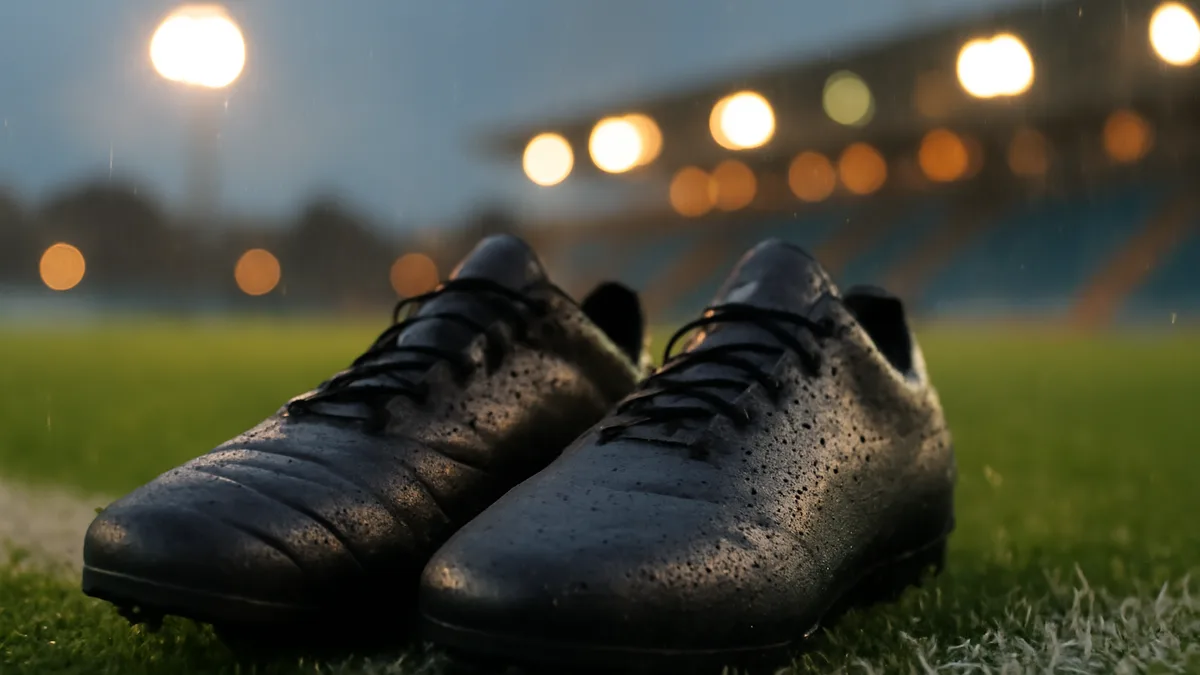
Choosing between leather and synthetic uppers is a trade-off between how a boot changes with use and how much care it requires. The decision turns on five practical realities: how much the upper will stretch, how it handles wet weather, the weight of the boot, the break-in time, and what ownership costs look like over a season.
This guide lists the priorities in the order they matter for most buyers, then explains where people typically go wrong and how the choice differs for beginners and experienced players.
Priority checklist: ordered decisions
Fit and stretch
Leather uppers will stretch and mould to the foot, so initial tightness often becomes a custom fit after a few weeks of use. Synthetic uppers stretch far less; they keep their original shape and therefore demand a closer match to the wearer’s true size from the first day.
Weight and mobility
Synthetic materials are generally lighter than leather, which makes them an obvious choice for players prioritising speed and minimal weight. Leather tends to be heavier, especially thicker calf or kangaroo leathers, and the extra mass is felt most on longer runs and during quick directional changes.
Weather performance
Leather absorbs water unless treated and can become heavier and less responsive in wet conditions, requiring regular waterproofing and drying. Synthetic uppers shed water and retain performance in rain, so they are the lower-maintenance option for pitches that stay wet or for players who don’t want to care for boots after every session.
Break-in and comfort over time
Leather needs a longer break-in: it softens, develops creases and forms a personalised last with use. Synthetics deliver consistent comfort from day one with no waiting period, which suits players who cannot tolerate initial discomfort or need immediate, reliable fit.
Durability and wear patterns
Durability depends on the leather type and the synthetic compound, but patterns differ: leather often wears where the foot flexes and can sustain a season of heavy use if cared for, while synthetics resist abrasion and hold up to artificial surfaces but can fail suddenly if the laminate separates. Consider the playing surface when judging which failure mode is preferable.
Touch and ball feel
Leather — particularly soft varieties such as calf or historic kangaroo leather — provides a more tactile, dampened touch that many players prefer for first touches and passes. Synthetics can be engineered for consistent texture and grip but often feel firmer and less yielding on the ball.
Maintenance and aftercare
Leather demands a routine: cleaning, conditioning and careful drying to avoid stiffness or rot. Synthetic uppers require far less maintenance; a wipe-down and air-dry are usually sufficient, which lowers the time and recurring cost of ownership across a season.
Price of ownership over a season
Upfront price varies widely in both camps, but over a season leather can involve added hidden costs: waterproofing products, conditioners and slower drying routines after rainy matches. Synthetics usually avoid those recurring expenses but may need replacement earlier if used heavily on abrasive surfaces.
How to decide
Start by ranking what matters most: immediate comfort, long-term fit, weather resilience or weight. If the priority is a custom moulded fit and superior touch, lean toward leather; if the priority is low maintenance and dry-weather reliability, choose synthetic. For players who split time between wet pitches and artificial turf, place weather and durability higher in the list than marginal touch differences.
Where buyers go wrong
A common mistake is buying leather in the wrong size because buyers expect stretch that not all leathers provide. Another error is assuming lighter always means faster: a boot that is ultralight but poorly supported can cost energy through inefficient footwork. Finally, underestimating maintenance turns a high-quality leather boot into an expensive seasonal write-off.
Differences for beginners and experienced players
Beginners benefit from synthetics because ready comfort and low upkeep encourage consistent use without the hassle of break-in routines. Experienced players who value nuanced touch and a tailored fit are more likely to prefer leather and accept the finishing work that comes with it. Squad players who rotate many boots should prioritise low-maintenance synthetics to reduce cumulative care time.
Practical comparisons
| Stretch / Fit | Weather | Weight | Maintenance | |
|---|---|---|---|---|
| Leather | Moulds to foot over weeks | Requires waterproofing; absorbs water | Typically heavier | Regular cleaning and conditioning |
| Synthetic | Holds original shape; little stretch | Repels water; performs consistently in rain | Generally lighter | Minimal care: wipe and air-dry |
Buying checklist: what to inspect in the shop
- Initial fit: Try both boots with the socks intended for matches and test forward lacing tension to assess immediate comfort.
- Upper type: Press the material to sense suppleness; leather should show initial give, synthetics should feel firm and uniform.
- Sole and last: Check for a last shape that matches foot width; a wide last suits broader feet regardless of upper material.
- Weight feel: Walk and jog in the boots to judge perceived weight and heel balance rather than trusting the label.
- Care plan: Decide whether there is time for leather maintenance during the season or if a low-care synthetic better fits the schedule.
What to do next
Choose the priority that will be hardest to change later. If fit and touch top the list, buy leather in a snug but non-painful fit and plan a conditioning routine. If weather resistance and low upkeep matter more, buy synthetic and accept the trade-off in long-term moulding. Try both materials on with match socks and move in them before purchase; an hour of testing beats a season of regret.
Frequently asked questions
Do leather football boots stretch over time?
Yes. Most natural leathers will stretch and mould to the foot over weeks of regular use, producing a more personalised fit than synthetics. The amount of stretch depends on the leather type and thickness, so initial snugness is normal when choosing leather.
Are synthetic uppers better in the rain?
Generally yes. Synthetic uppers shed water and keep their shape when wet, so they perform more consistently in rainy conditions without the need for waterproofing. That makes them the lower-maintenance option for damp climates or frequent wet-pitch play.
Which is cheaper to own across a season, leather or synthetic?
Synthetic uppers tend to be cheaper to own because they require less aftercare and retain performance without conditioning. Leather can last a long time if properly maintained, but that maintenance—waterproofing, cleaning and careful drying—adds time and cost over a season.
