
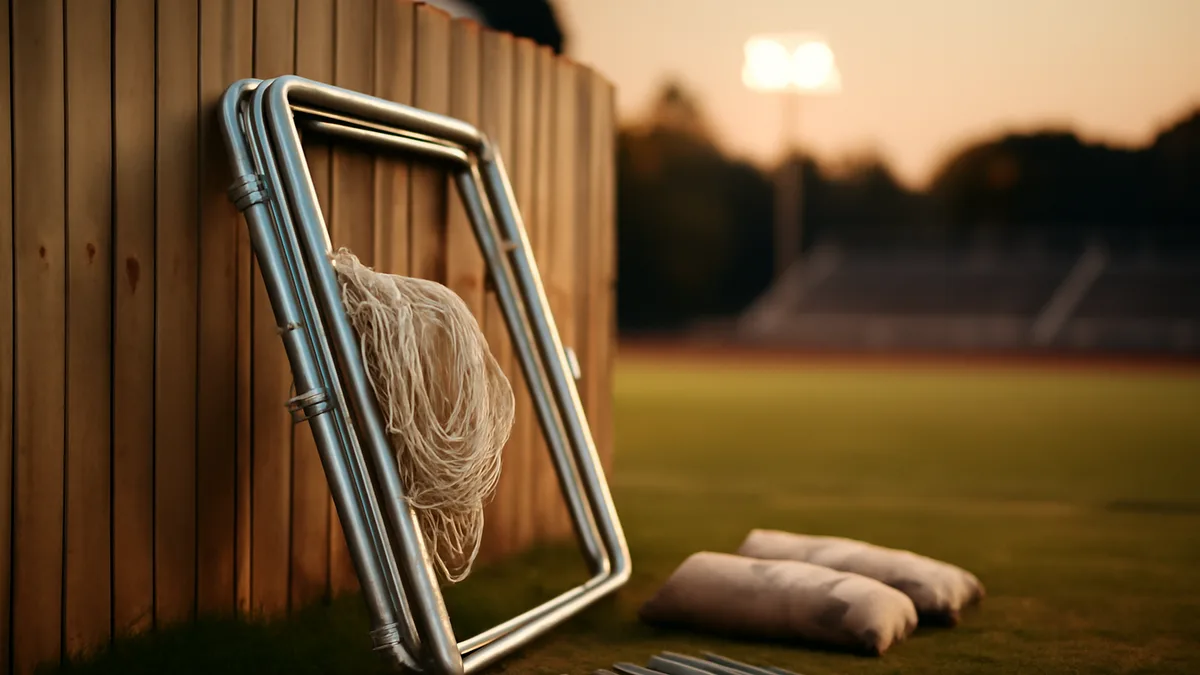
Buying a portable football goal is mainly about three things: who will use it, where it will be used, and how it will be secured. Safety and the right size matter more than brand names; a poorly chosen goal creates a hazard as soon as players run into it.
This guide sets priorities in order. Each numbered point is a decision the purchaser will actually make, from size and materials to anchoring and storage. Read the table to compare typical alternatives, then use the final section for immediate next steps.
How to decide before shopping
Start by matching the goal to the primary use: backyard kickabouts, club training, or organised youth match play. For club or academy use check competition and local safety rules first — a goal that’s fine for training may not meet match requirements. Also examine the surface: soft turf, artificial grass or hard municipal courts each change anchoring and material needs.
Common mistakes buyers make
The most frequent errors are underestimating anchoring needs, buying a frame that’s too heavy to move safely, and ignoring net attachment methods. Many tipping accidents happen when a goal is lightweight and inadequately anchored or when users attempt to lift or drag it alone. Purchase choices should reduce handling risk as well as playing risk.
What differs for beginners and experienced users
Beginners and parents usually prioritise ease of setup, portability and cost. Experienced coaches prioritise durability, consistent rebound characteristics and safe anchoring for repeated training use. Multi-context clubs often need a compromise: a goal robust enough for training but foldable enough for regular storage and transport.
Materials and frame construction
Aluminium frames are common where weight and corrosion resistance are priorities; steel frames give higher rigidity and are common for fixed or semi-permanent goals. Plastic components are useful for corner fittings and quick-assembly sections but check their thickness and reinforcement where loads concentrate. Powder-coated finishes improve corrosion resistance on steel frames, and welded joints are stronger than push-fit couplers for long-term use.
Size and age suitability
Pick the size that matches the players. Small pop-up goals suit toddlers and backyard kickabouts; larger freestanding goals are necessary for organised junior matches. Competition organisers or governing bodies often specify permitted sizes by age group, so verify the required dimensions before purchasing a goal intended for official use.
Anchoring and anti-tip measures
Anchoring is the single most important safety feature. Stakes or ground anchors are effective on soft ground; weighted ballast or purpose-built weighted feet suit artificial surfaces and hard courts. Anti-tip designs include rear ballast pockets and wider base footprints. Whatever system is used, the anchoring method should be straightforward to apply and inspect before each session.
Net attachment and retention
Net attachment matters for player safety and net longevity. Look for built-in net hooks or channels that keep the net away from the goal frame and prevent entanglement. Quick-release clips can speed assembly but must lock securely; rope-tied nets are reliable but slower to fit and may require tensioning after each session.
Portability and storage
Portability affects where the goal can be used and who should move it. Foldable or telescopic frames minimise storage space, while lightweight designs are easier to position but may need stronger anchoring. Consider how many people will lift and move the goal; designs with handles or quick-fold mechanisms reduce the risk of incorrect manual handling.
Durability and maintenance
Durability depends on frame material, joint design and net quality. UV-stabilised nets resist sunlight degradation on exposed pitches, while thicker frames and welded joints extend service life under heavy use. Maintenance should include regular checks of joints, anchor points and net fixings; replace worn nets or corroded parts promptly to prevent accidents.
Appropriate goal type for the surface
Select the goal type to match the playing surface. On artificial grass avoid anchors that damage the pile and prefer weighted or clamp systems designed for synthetic turf. On hard courts, freestanding frames with ballast or specialist court anchors are the practical options. Portable goals designed for natural turf often assume the use of ground stakes; using those on a hard surface will not be safe.
Regulatory and safety standards
Check whether a product is described as meeting recognised standards and whether the seller supplies guidance on safe use and anchoring. For club or school purchases, insist on documentation and an assembly guide. The phrase FIFA equipment rules and national standards documents exist to guide what is acceptable for competition and public use; use them where relevant to confirm a product’s suitability.
Side-by-side comparison
| Type | Weight | Anchoring options | Best surface |
|---|---|---|---|
| Pop-up/folding | Low | Minimal (stakes or light ballast) | Soft turf, temporary backyard use |
| Aluminium tubular | Moderate | Stakes, ballast pockets, clamp systems | Grass and synthetic turf |
| Steel welded | High | Permanent anchoring, heavy ballast | Club pitches, permanent installations |
Practical checklist before buying
- Primary use: Confirm whether the goal is for training, match play or casual use and buy to that specification.
- Surface type: Identify the playing surface and choose anchoring compatible with that surface.
- Handling plan: Decide who will move and set up the goal and ensure the design matches available manpower and equipment.
- Safety controls: Require clear assembly and anchoring instructions and a means to inspect anchor points quickly.
What to do next
Measure the intended pitch area and list the typical users by age and ability. Compare products that match that profile, focusing on anchoring options and net attachment rather than model names. If the goal is for organised football, request documentation that it meets applicable standards and that the seller includes anchoring hardware. Finally, plan for storage and a short induction for anyone who will set up or move the goal to reduce handling errors and tipping risks.
For purchases on club budgets, factor in a simple maintenance schedule and budget for replacement nets and anchor parts rather than only the initial cost. Prioritise choices that reduce routine handling and make safe anchoring quick and repeatable.
Frequently asked questions
What size goal for each age group
Sizes vary by governing body and competition, but the right choice depends on organised rules and the players’ physical development. For informal use, pick a smaller goal for younger children to keep play appropriate; for organised matches check the competition’s permitted dimensions before buying.
How should portable goals be anchored
Anchoring must match the surface: ground stakes or peg anchors for natural turf, weighted ballast or clamp systems for artificial turf and hard courts. Always use the manufacturer’s recommended anchors and inspect them before each session to minimise tipping risk.
How often inspect portable goals for safety
Inspect frames, joints, anchors and net fixings before every session for signs of wear or loosening. Perform a more thorough check monthly, looking for corroded parts, frayed nets or damaged anchor points and replace any compromised component promptly.
