
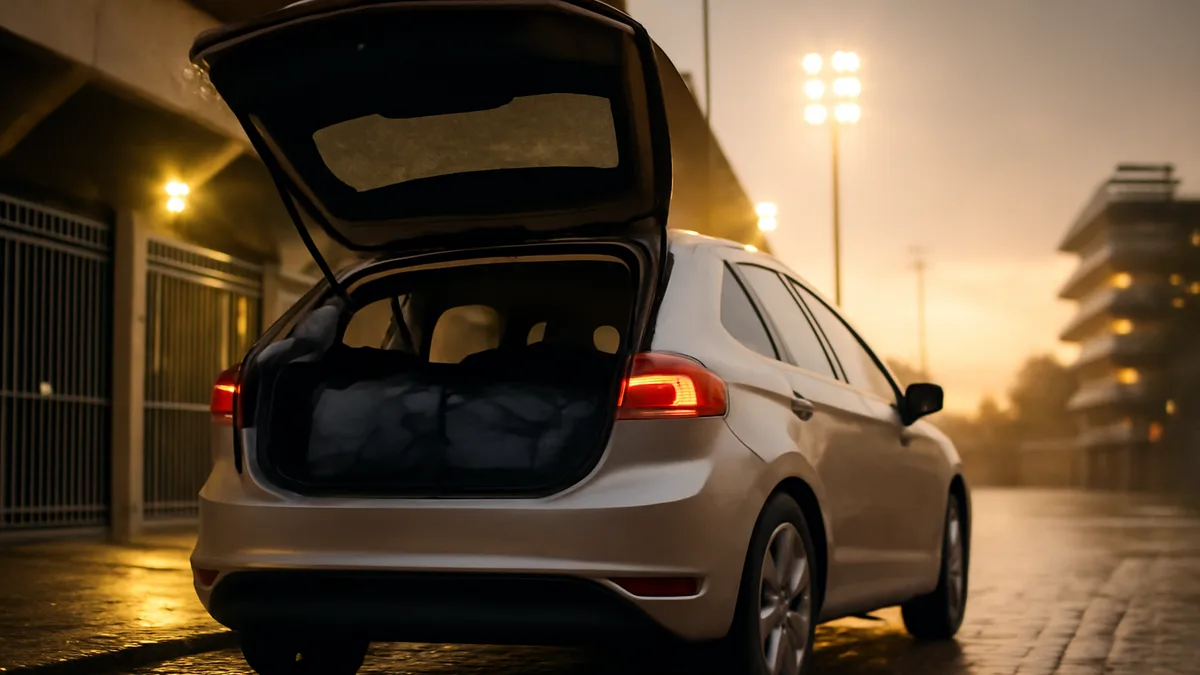
Choosing a hire car for a match weekend turns on four things: how far the ground is from the airport or station, the size of the travelling party, the matchday parking situation and how much time is spent off the clock en route to other plans. Decide those first and the vehicle category, insurance and fuel questions fall into place.
This guide lists the priorities in the order they matter on most match trips. Each point reads on its own so it can be used as a quick checklist when comparing suppliers or making the booking.
How to decide before booking
Start by mapping the journey: where flights or trains arrive, the stadium location and any overnight stops. Convert that into three practical requirements — passenger capacity, luggage space and surface access for the stadium (tight lanes, cobbles, multi‑storey ramps). These concrete needs should rule out whole vehicle classes before price or brand becomes relevant.
Common mistakes people make
Buyers often lock the cheapest rate without checking the fuel policy, assume insurance covers all damage, or ignore one‑way fees when the itinerary finishes at a different airport. Those mistakes are cheap when everything goes to plan and expensive when something goes wrong; treat those items as essential checks, not optional extras.
Renting for a beginner versus an experienced traveller
Beginner renters should prioritise full‑cover insurance options, simple fuel policies and a well‑known supplier with dense branch coverage such as Avis, Enterprise or Sixt. Experienced renters can shop around for better rates, accept higher excess with a separate excess waiver, and consider smaller, local firms when their reputation is verifiable.
Vehicle category and luggage space
Pick the vehicle class that fits people and bags comfortably because matchday schedules leave little margin for repacking. If seats must fold for equipment or more than two sizeable bags are coming, choose a midsize SUV or estate rather than a compact hatchback; these classes routinely offer extra boot volume and roof‑rack options if needed.
Insurance excess and cover type
The visible excess is the immediate cash exposure if damage occurs and should be confirmed before booking. Major suppliers often advertise low headline prices with a high excess; an optional excess‑waiver reduces that exposure but check whether the waiver covers glass, underbody and tyre damage — some do not.
Fuel policy and how returns actually work
Fuel rules change the effective cost and convenience of a rental. Full‑to‑full is the simplest and fairest for short match trips because it avoids prepayment premiums and reconciliation fees. If choosing pre‑purchase or full‑to‑empty policies, calculate likely return fuel vs charged volumes to avoid an unexpected bill after the final whistle.
One‑way rentals and drop charges
One‑way fees can outweigh any savings on a cheap rate when finishing the trip at a different airport or city. Treat the drop charge as part of the route cost and compare round‑trip and one‑way totals before committing; sometimes returning to the original depot is cheaper once the fee is included.
Stadium parking and access
Confirm official stadium parking availability and any event‑day restrictions because some grounds close off nearby streets or require prebooked permits. If the club only offers remote park‑and‑ride sites, factor in the walking time and shuttle frequency; tight arrival windows for kick‑off make guaranteed stadium parking a worthwhile premium for many groups.
Supplier network and roadside assistance
Choose a supplier with a local service network and clear roadside assistance terms to reduce delays from flat batteries, punctures or key issues. Large international brands tend to have predictable procedures for replacements and roadside callouts, while local companies can be flexible but vary in response time; check which is more important for the trip.
Driver restrictions and additional drivers
Check the policy on young drivers, age limits and additional driver fees because match squads often rotate driving duties. Some companies include one supplementary driver in the price; others charge per name added and require both drivers to present licences at collection, so factor that into the booking process.
Quick comparison table: common vehicle choices
| Vehicle type | Passenger capacity | Luggage flexibility | Best for |
|---|---|---|---|
| Compact hatchback | 2–4 | Limited boot; not ideal for large equipment | Single travellers or light luggage |
| Midsize estate / SUV | 4–5 | Large boot; seats often fold for kit | Groups with bags or match equipment |
| MPV / People carrier | 6–8 | High flexibility; roof options available | Large squads or families |
| Premium saloon / SUV | 4–5 | Good boot, higher comfort | Comfort and safety focus for longer trips |
Where to pay attention on collection
Inspect the vehicle with a methodical walkaround and photograph existing marks, then ensure all documented pre‑existing damage is recorded on the rental agreement. Verify the fuel level, check tyre condition and confirm the contact process for reporting damage; firms differ on whether roadside assistance requires toll numbers or an app call.
What to do next
Run the trip route with the rental options, add any supplier drop fees and parking charges, and then choose the offer that balances convenience against financial exposure. If the matchday plan has tight timings, prioritise suppliers that offer guaranteed stadium parking or reliable on‑route recovery. Book with a clear record of the insurance excess, fuel policy and named drivers so the arrangements are simple to execute on collection day.
Frequently asked questions
What does insurance excess cover in rentals?
Insurance excess is the amount retained by the renter if the car is damaged; it applies to collision and often to theft. Some excess waivers reduce that exposure but check whether items like tyres, windscreen and underbody are excluded from the waiver.
How does fuel policy affect total cost?
Fuel policy determines whether the renter refills to the same level or pays a pre‑purchased amount on pick‑up or return. Full‑to‑full is usually the clearest for short trips because it avoids administration fees and charged‑back fuel reconciliations.
Are one‑way rental fees avoidable?
One‑way fees are avoidable only by returning the car to the original depot or choosing suppliers that include free one‑way drops on specific routes. Always add the drop charge into the itinerary cost comparison before choosing between round‑trip and one‑way bookings.
