
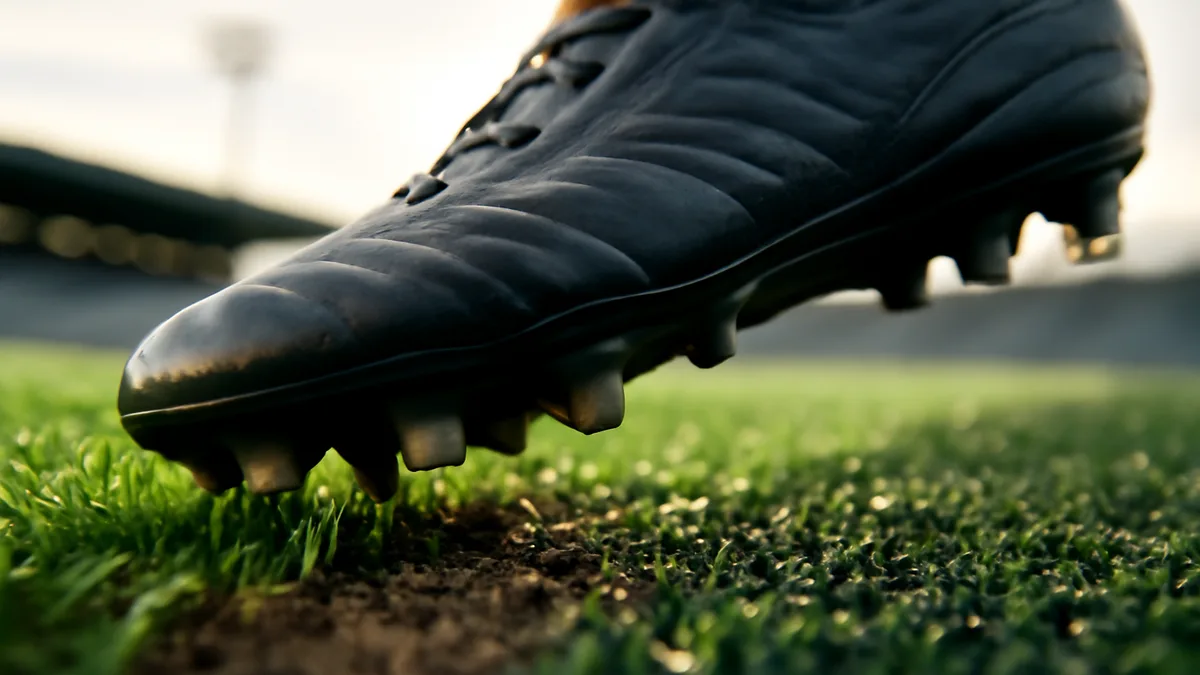
Buying boots often starts with a price or a brand, but the decision that matters most is the surface those studs were made for. The wrong soleplate reduces traction, damages pitches and raises injury risk; the right one preserves performance and keeps a player moving confidently.
This guide breaks the choice down into the surfaces and the stud patterns — what each pattern does best and the practical consequences of getting it wrong. Use the ordered list below to prioritise what matters when selecting boots for training, matches or different pitches.
- Firm-ground (FG): natural grass, normal wetness. FG soles have conical or bladed studs positioned to give grip on standard natural grass pitches. They are the default choice for well-kept outdoor grass. FG studs dig into soil and provide rotational release; this balance reduces slipping while allowing joints to twist free instead of locking when planted. FG boots are not a catch-all: on soft mud they can sink too deep and on very short or artificial surfaces they won’t bite securely.
- Artificial-ground (AG): modern turf systems. AG soles are designed for third-generation synthetic surfaces and hybrid systems. They typically use more and shorter studs, often a mix of shapes, spread across a wider area to distribute pressure and avoid stud overload at any one point. AG soles reduce stud penetration into the rubber infill used on many synthetic pitches, lowering the chance of stud breakage and excessive traction. Using AG on dense natural grass can feel unstable, while using FG on artificial turf risks rapid stud wear and less predictable footing.
- Soft-ground (SG): wet, muddy fields. SG soles use longer, sometimes replaceable, metal or hard plastic studs to reach firmer layers beneath the mud. They are necessary where the topsoil gives way and traction requires deeper penetration. The trade-off is that SG studs can be dangerous on hard or synthetic surfaces because they concentrate force in small points, increasing pressure on the foot and on the pitch; they also damage grass surfaces when used inappropriately.
- Turf (TF): short, heavily used artificial lawns. TF soles have many tiny, rubbery nubs across the entire sole to provide grip on very short pile or hard training areas. They give immediate traction on compact surfaces without penetrating the material. Turf soles are fine for casual play or training on older synthetic fields, but they offer insufficient grip on long grass and can feel unstable on very soft ground because they don’t penetrate at all.
- Indoor/Court (IC): hard, flat indoor floors. IC soles are flat, low-profile and non-marking, optimised for smooth indoor courts. They prioritise lateral grip and quick direction changes rather than penetration. Using IC on outdoor grass or turf removes almost all traction and accelerates soleplate wear; conversely, taking studs meant for turf or soft ground into an indoor facility can damage the floor and may be forbidden by venue rules.
- Hybrid and multi-surface trade-offs. Some soles are marketed as multi-surface or hybrid. These aim to compromise between grip, pressure distribution and durability. The practical effect is a middle ground: acceptable on several surfaces but not ideal on any single one. Hybrids are useful when a player regularly moves between surfaces and cannot maintain multiple pairs, but the buyer should accept that a hybrid will neither match a dedicated SG in mud nor an IC sole on a wooden court.
Quick comparison table
| Surface | Typical stud design | Best use | Risk if used wrong |
|---|---|---|---|
| Firm ground | Medium-length conical/bladed studs | Natural grass pitches with normal drainage | Poor grip on short/tough surfaces; sinking in mud |
| Artificial ground | Multiple shorter studs spread evenly | Modern synthetic turf and hybrid systems | Faster wear on grass; unstable on very hard surfaces |
| Soft ground | Longer replaceable studs, sometimes metal | Very wet or muddy natural fields | Pitches and players injured on hard or synthetic surfaces |
| Turf | Many small rubber nubs | Short-pile artificial lawns and training areas | No penetration on long grass; low high-speed stability |
| Indoor/Court | Flat, non-marking soles | Hard indoor courts | Almost no traction outdoors; damage to indoor floors if studded |
How to decide before spending
Start by listing where most play will happen and, second, the surfaces that matter for matches rather than training. If the majority of game time is on a single surface, favour a dedicated sole for that surface. If travel or club rotation means switching between very different surfaces during a season, decide whether to buy two pairs or accept a hybrid compromise. Consider practicalities: venue rules (some indoor halls ban studs), coach instructions and whether the pitch owner is strict about stud damage. Finally, think about how often the boots will be used in competition: paying for a purpose-built sole matters more for match footwear than for casual training shoes.
Where people most often go wrong
The common errors are predictable. Players buy what looks fashionable rather than what matches the pitch and then wonder why they slip or why their boots wear out fast. Another mistake is treating AG and FG as interchangeable: they look similar but distribute force differently and respond differently to infill and soil. Using SG studs on hard or synthetic surfaces is one of the clearest errors; it concentrates force, can damage surfaces and raises the chance of lower-limb injury. Finally, relying on a single pair because it is convenient ignores that stud wear and soleplate stiffness change performance; rotating pairs lengthens lifespan and keeps traction consistent.
Beginners versus experienced players
Beginners should prioritise versatility and safety: a TF or an AG-style sole can be acceptable if most training happens on mixed synthetic surfaces, but the priority should be predictable traction and a comfortable fit. Experienced players should make a sharper choice based on match demands and pitch quality. They will notice subtle differences in rotational release, stud pressure and responsiveness, so choosing between FG and AG becomes a performance decision rather than merely practical. Both groups benefit from inspecting studs regularly and swapping to match-day footwear when the surface differs from training.
What to do next
Check where the next block of games and training sessions will be held and plan for the surface that appears most. If possible, keep at least two pairs: one for hard or indoor work and one for outdoor natural or high-quality synthetic pitches. Always inspect studs before play: replace worn or damaged studs and avoid using metal studs indoors. If unsure about a venue’s surface type, ask the grounds staff or coach; identifying whether a pitch is natural, hybrid or a third-generation artificial surface solves most selection problems.
Frequently asked questions
What is the difference between FG and AG boots?
FG soles are for standard natural grass and use medium-length studs to dig into soil; AG soles have more, shorter studs spread broadly to suit synthetic turf and infill. Using the wrong one affects grip, stud wear and how the foot releases during turns.
Can I use SG studs on artificial turf?
SG studs are designed to penetrate mud and reach firmer layers, so they concentrate force and can damage artificial surfaces while increasing injury risk. They should be reserved for genuinely soft, natural fields and not used on synthetic turf.
Are TF and IC soles interchangeable for indoor and short-pile turf?
IC soles are made for smooth indoor floors and prioritise lateral grip without studs, while TF soles use many small nubs for short-pile artificial lawns. Using IC on turf removes traction, while using TF indoors may mark or damage floors and generally offers poorer performance on a court.
