
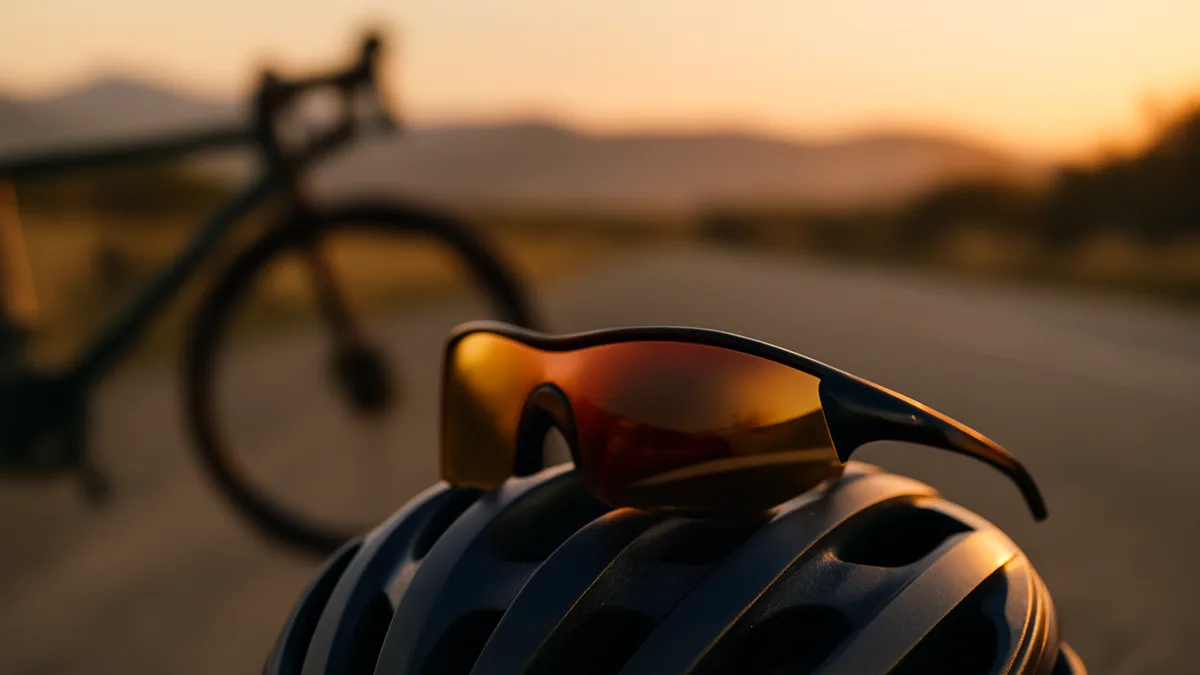
Choosing sunglasses for outdoor sport turns on three things: the optical role of the lenses, how the frames sit with other kit, and whether the glasses will survive an impact. Prioritise the one that matters most for the intended activity and wind conditions; the rest follows from that decision.
This guide sets out a clear buying sequence in six to nine ordered checks. Each heading gives a single decisive claim and the reasoning a buyer needs to act on it. Read the short prose sections before the list if a quicker overall approach is needed.
How to decide before starting the list
Decide the primary threat the sunglasses must manage. For cyclists that is wind, for mountaineers it is glare and UV at high altitude, for water sports it is reflected glare and splash. When one problem dominates, choose the lens category and frame shape to solve that first; choose lens tint and extras like anti-fog or polarisation afterwards.
Set realistic constraints: a pair that offers maximum coverage may be heavier or will not fit under a ventilated helmet, while very light running glasses can sacrifice peripheral protection. Budget the trade-off between optical quality and frame features rather than chasing a single specification.
Priority checks for buying sport sunglasses
Lens category
Lens category is the first choice: it defines visible light transmission and therefore where the glasses can be used safely. Photochromic and variable tints suit mixed conditions, high-category (low VLT) lenses are for bright sun, and low-category (high VLT) or clear lenses are for low light and overcast days; pick the category that matches the most time the glasses will be worn.
Lens material and impact resistance
Polycarbonate and Trivex lenses are standard for sport because they combine light weight with high impact resistance; glass gives better optics but is heavier and less impact-tolerant. If a sport has higher risk of collisions or projectiles, favour lenses and frames that meet a recognised impact standard.
Frame shape and coverage
Choose a wrap or shield shape for broad coverage and protection from wind and peripheral glare, and lower-profile frames if helmet or cap clearance is required. Coverage affects airflow and fogging: more wrap reduces side exposure but can trap heat near the face.
Fit with helmet or cap
Test fit under the actual helmet or cap to be used, because temple length and arm profile determine clearance and pressure points; thin, curved arms tend to sit better under aerodynamic helmets while shorter, straight temples usually work with baseball caps. Never assume the same frame will suit both — test them with the headgear before buying.
Optical quality and prescription options
For contacts or unaided vision, check for minimal distortion and clear peripheral optics; monocular imbalance or prism can matter on long rides. If prescription lenses are needed, verify the vendor supplies sport-ready prescription inserts or direct prescription lenses in the preferred lens material.
Polarisation and anti-glare treatment
Polarised lenses cut reflected glare from flat surfaces and improve comfort on water and tarmac, but they can impair the visibility of LCD displays such as cycle computers and some car windscreen polarisation. Decide whether glare reduction or screen readability is the higher priority for the sport.
Ventilation and anti-fog measures
Active ventilation, vented noses, and hydrophobic or anti-fog coatings reduce misting during exertion. For stop-start sports or cold-weather use, prioritise physical vents and frame spacing over coatings alone, because coatings degrade with time and cleaning.
Interchangeable lenses and tints
Frames with interchangeable lenses increase versatility across conditions but add mechanical complexity and sometimes weight. If the activity spans a wide range of light, choose a reliable interchange system and a set of lenses that cover the needed VLT range rather than a single all-purpose lens.
Retention and stability
Secure fit matters more than style: rubberised nose pads, non-slip temple tips and adjustable components keep the glasses stable during sudden movement. For high-intensity or contact sports, combine a close wrap with a retention strap or cord that does not interfere with helmets.
Where people go wrong
Buyers often overvalue brand names and under-test fit with the kit they actually use. Another common mistake is assuming polarisation is always desirable; it can hinder device readouts and mask sheen on some wet surfaces. Finally, many treat anti-fog coatings as permanent — they need careful cleaning and will wear out, so physical ventilation should be relied on too.
What differs for a beginner and an experienced user
Beginners benefit from a single versatile pair: medium coverage, photochromic or medium-category lenses, and comfortable, forgiving fit. Experienced users optimise: specialised lens categories for specific times of day, lighter high-performance frames, and tailored prescription options. Experience also favours modularity: several lens options and familiarity with how tints change perception.
Comparing common alternatives
| Type | Coverage | Best for | Main drawback |
|---|---|---|---|
| Shield/wrap | High | Road cycling, skiing, wind protection | Can fog or hit helmet shells |
| Sport frame | Medium | Running, trail running, general use | Less side protection |
| Casual frames | Low | Low-risk outdoor use, walking | Not optimised for impact or coverage |
Impact standards to check
Look for frames and lenses that reference a recognised impact standard where projectiles or collisions are plausible. In the United States the ANSI Z87.1 impact standard is the common claim for high-impact eyewear and in international commerce the ISO 12312-1 sunglasses standard covers basic UV and transmission requirements. Sellers should name the standard and the marked compliance level.
What to do next
Try at least two frame shapes while wearing the helmet, cap or hood to be used, and view replacement lens options for the frame. If prescription lenses are required, confirm whether the company fits them into sport-grade polycarbonate or Trivex. Finally, inspect how ventilation and anti-fog measures are implemented, and prioritise a secure fit over style when making the final purchase.
Frequently asked questions
Which lens category for bright sun?
For bright sun choose a high-category lens with low visible light transmission; it reduces glare and improves comfort during prolonged exposure. High-category lenses are not suitable for low-light or dawn/dusk conditions because they reduce visibility.
Do polarised lenses work for cycling?
Polarised lenses cut reflected glare from wet roads and water, improving comfort and contrast in many conditions. They can make LCD displays harder to read and may reduce visibility of sheen that signals slippery surfaces, so consider whether device readability or glare reduction is the priority.
How to verify impact protection?
Check the product labelling or technical sheet for a named impact standard and the claimed compliance class rather than vague phrases. Standards such as ANSI Z87.1 or ISO 12312-1 identify specific impact or transmission tests that the frames and lenses have passed.
