
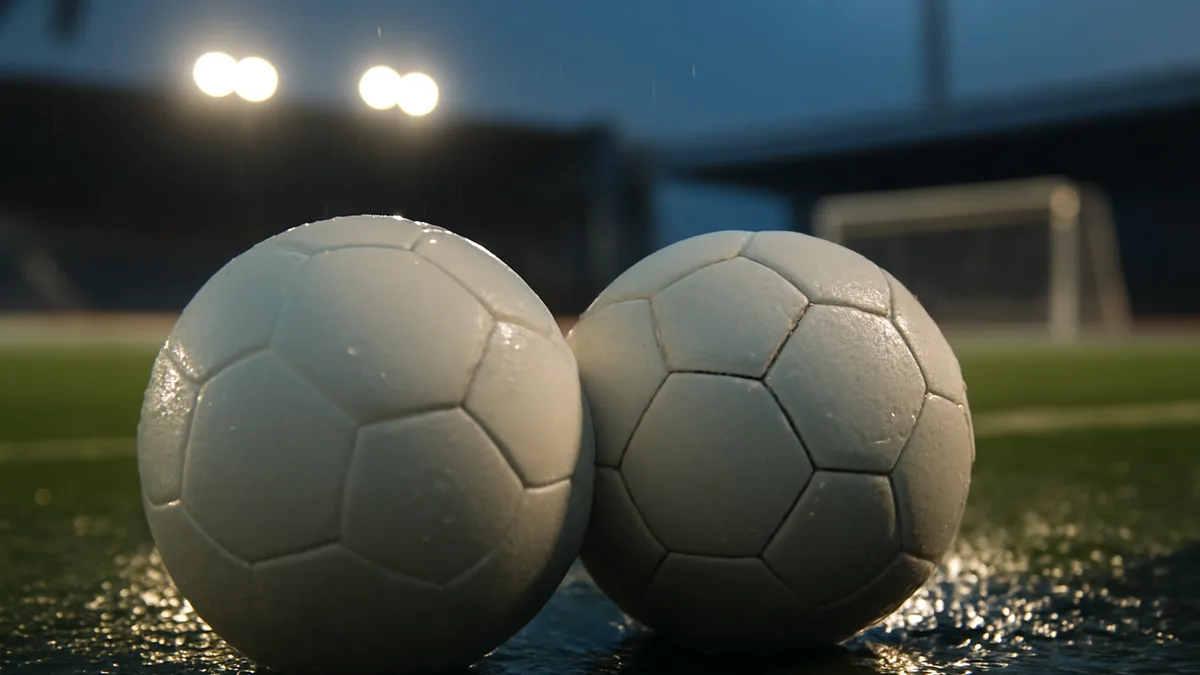
Choosing between a thermally bonded football and a stitched ball turns on four things: how the panels are joined, how the ball behaves when wet, the most likely failure mode over a season, and the running cost for a club or individual. This guide breaks those issues down so a buyer can decide by use case rather than marketing copy.
The spine of the decision is simple. Thermally bonded panels are fused with heat and adhesives; stitched balls use thread through panel edges. Each method produces reliably different trade-offs for touch, durability, and how much maintenance or replacement a budget needs to allow for.
How to decide
Start by matching the ball to surface and frequency of use. For heavy weekly training on wet natural turf, water uptake and seam wear matter more than marginal differences in flight. For occasional match play on well-drained pitches, feel and consistent flight will weigh higher. The rest of this guide lists the specific checks to run through in order of importance.
Primary decision checklist
Sole construction method
Thermally bonded balls are joined by heat and adhesive rather than by thread. That produces a smoother shell and a more uniform aerodynamic profile, while stitched balls keep a traditional thread-and-panel edge that can flex more at each seam.
Water absorption on wet surfaces
Thermally bonded balls generally absorb less water because there are no needle holes at the seams. Stitched balls, especially those with exposed stitching or older cotton-style threads, can take on more water and therefore become heavier and slower in prolonged wet use.
Seam failure modes
Stitched balls most commonly fail by thread abrasion or seam splitting at high-impact points, while thermally bonded balls fail when the bond layer delaminates or the outer casing develops cracks. The failure mechanism affects repairability: a seam split on a stitched ball can sometimes be resewn; a delaminating thermally bonded ball usually requires replacement.
Feel and flight consistency
Thermal bonding usually produces a more consistent panel shape and therefore steadier flight characteristics across a batch of balls. Stitched balls can vary slightly from ball to ball because hand or machine stitching alters panel tension, which some players prefer for added grip and a different touch.
Repairability and service life
Stitched balls are often easier to repair at club level because seam work is a standard skill; thermal bonds require factory re-bonding or specialist adhesives that are rarely a cost-effective fix. That difference matters when the decision is between repairing several older stitched balls or replacing a single bonded match ball.
Cost across a season
Calculate season cost by combining purchase price, expected lifespan under local conditions, and repair options. Thermally bonded match balls may cost more up front but can keep shape and flight longer in dry conditions; stitched balls with a reputation for ruggedness may stretch a smaller budget on rough, wet pitches because they are repairable.
Surface and competition matching
Choose the construction that suits the dominant playing surface and level of competition. Artificial-turf sessions that generate abrasive contact will stress stitches; a thermally bonded ball with a tougher outer casing can resist abrasion better, while grassroots natural-turf leagues may prioritise easy repair and tolerance of heavy boots.
Brand and line characteristics
Certain manufacturers make thermally bonded construction a feature of their premium match lines and reserve stitched builds for training or retro-style balls. Brands such as Adidas and Nike often use bonding on their higher-end match balls, while other makers keep stitched construction for training ranges because of its repairability and cost control.
Sustainability and waste
Consider end-of-life and replacement frequency. A ball that resists water and retains shape may avoid frequent replacement, reducing waste even if its up-front footprint is higher; conversely, a lower-cost stitched ball that is repaired and used longer can reduce the number of new balls purchased across a season.
Where buyers commonly go wrong
Buyers often pick on appearance or marketing instead of matching construction to use. A glossy thermally bonded match ball looks and flies nicely in dry friendlies but will feel heavy on a sodden training pitch. Clubs also underestimate repair time and skill: assuming a thermally bonded ball can be easily fixed at the kit room leads to surprise replacement bills.
- Buying for looks: Choosing a ball because it looks like a professional match ball ignores surface and usage demands which determine lifespan.
- Ignoring repair paths: Overlooking whether local kit staff can resew seams or access adhesive repairs underestimates true seasonal cost.
- One-size-fits-all: Assuming a single ball suits match, training on artificial turf and winter practice often increases replacement frequency.
What differs for beginners and experienced players
Beginners and grassroots clubs typically prioritise durability and low running cost. Stitched or robust training balls that tolerate rough handling, can be resewn and are easy to source spares usually make more sense. Experienced players and organised clubs often prefer thermally bonded balls for their consistent flight and touch at match intensity, accepting higher upfront cost for a ball that behaves predictably in passing and shooting drills.
Comparing the two constructions
| Thermally bonded | Stitched | |
|---|---|---|
| Durability | High resistance to seam abrasion but vulnerable to delamination under heavy repeated impact. | Durable in rugged use; threads can wear but are often repairable. |
| Water absorption | Low absorption due to welded seams and no needle holes. | Higher absorption risk where stitching is exposed or thread is natural fibre. |
| Seam failure risk | Bond delamination or casing cracking; usually irreparable at club level. | Thread abrasion or seam split; can be resewn or patched by kit staff. |
| Seasonal cost drivers | Upfront quality and replacement frequency if used in wet, high-impact conditions. | Lower unit cost and potential repairability lower ongoing spend if maintenance is applied. |
What to do next
Decide which problem matters most: water uptake, repairability, consistent flight or upfront expense. If water and abrasion are the primary threat, lean toward a thermally bonded ball with a reputation for low absorption. If repairability and stretching budget across a season matter more, prioritise a well-stitched training ball and set up a simple resewing routine with local kit staff.
When cataloguing options for purchase, note the listed construction method and ask suppliers about expected lifespan under the local pitch and weather. Also check whether the supplier will supply a small batch so the club can field-test a few before committing to a full season’s purchase. The “FIFA quality programme” gives useful objective checks used by manufacturers and governing bodies when they test balls.
Finally, label balls for purpose at the club: reserve thermally bonded match balls for fixtures and keep repairable stitched balls for everyday training; that simple policy lowers season cost and extends usable life across the fleet. One final place to check technical notes is the general discussion of “ball construction” which explains the mechanics of seams and bonding in more detail.
Frequently asked questions
Do thermally bonded balls resist water?
Yes. Thermally bonded constructions remove needle holes at seams, so they generally take on less water than stitched balls and remain lighter in prolonged wet play.
Can a stitched ball be repaired easily?
Often yes. Stitched balls can usually be resewn or patched by kit staff, which can extend usable life and reduce replacement spend over a season.
Which ball suits abrasive artificial turf?
Balls with tougher outer casings and welded seams typically resist abrasion better on artificial turf, whereas stitched balls may show faster thread wear under heavy abrasive contact.
