
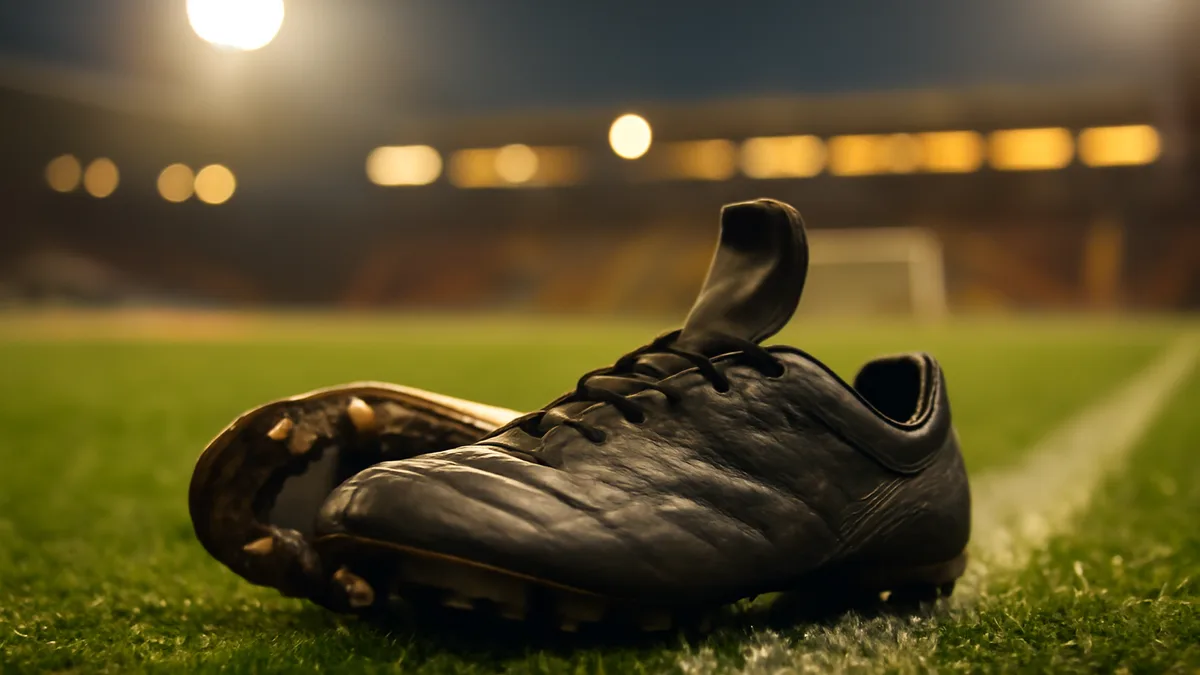
Deciding when to retire football boots turns on safety, fit and performance. Minor cosmetic damage is irrelevant; structural faults that change how the boot sits or grips the ground are not.
This guide sets out the inspection checks and the priority order for faults, explains common mistakes and how different players should treat wear, and finishes with concrete next steps so money is spent on the right replacement.
Priority checklist: the order that matters
Soleplate flex and cracks
Soleplate cracks, splits or unusual flex are immediate red flags because they change how the boot transmits force and protect the foot. If the soleplate flexes in a place that should be rigid, or a crack passes across a load-bearing rib, replacement is the safest option rather than temporary repair.
Stud wear and profile
Uneven stud wear or studs that are ground down below their original profile reduce traction and increase the risk of slipping or twisting an ankle. For fixed-stud designs, worn studs usually mean replacement; for interchangeable studs, renewing studs can extend boot life if the soleplate itself is intact.
Upper cracking and delamination
Cracks in leather or splits where the upper peels from the sole change fit and water resistance and can create pressure points on the foot. Small surface scuffs are cosmetic; splits along seams or visible delamination are a reason to retire the pair.
Insole collapse and arch support loss
When the removable or bonded insole loses shape or compacts, the boot will feel looser and the sole will transmit shock differently, increasing fatigue and injury risk. A collapsed insole can sometimes be replaced, but repeated collapse suggests overall material fatigue and a need for new boots.
Midsole compression and cushioning loss
Compression of the midsole foam causes the boot to sit lower and alters stride and stability. If heel cushioning no longer rebounds and the player notices increased joint ache, the cushioning has degraded enough to justify replacement.
Stitching failure and structural seams
Broken stitching at heel counters, eyestays or toe caps undermines the structural integrity of the boot and alters fit. While local stitching can be repaired professionally, failure at more than one structural seam usually means the boot is beyond practical repair.
Traction pattern damage for specific surfaces
Cuts, missing cleats or excessive abrasion on the sole that change the traction pattern for a given surface require attention. Boots used regularly on artificial turf should be inspected more often because the surface accelerates wear on certain soleplates.
Waterlogging and persistent odour
Excessive water absorption through the upper or an insole that retains dampness can degrade materials and comfort. Persistent odour that cleaning cannot remove often indicates internal material breakdown and is a prompt to replace rather than continue using the pair.
Inspection checklist (what to check before buying a replacement)
- Soleplate: Run the boot through a full flex with hands and look for cracks or soft spots that were not there before.
- Studs: Measure visual profile and look for uneven wear; compare left and right.
- Uppers: Open seams, creasing that breaks the surface and any peeling at the sole junction.
- Insole: Remove and press to test rebound; note any permanent impressions.
- Stitching: Check heel counter, eyestays and toe cap for loose threads or missing stitches.
- Flex pattern: Compare the boot’s bending point with how it felt when new; a shifted bend is a sign of soleplate fatigue.
Materials compared: leather, synthetic and knit uppers
| Durability | Water resistance | Break-in | |
|---|---|---|---|
| Leather | High when cared for, but prone to surface cracking if neglected. | Lower unless treated regularly with waterproofing products. | Requires longer break-in but forms to the foot. |
| Synthetic | Generally more consistent wear and less prone to cracking. | Better natural water resistance than untreated leather. | Shorter break-in and stable fit from early use. |
| Knit | Varies by reinforcement; vulnerable where thin overlays exist. | Most water-permeable unless treated or backed. | Conforms quickly to the foot but may lose structure over time. |
How to decide: repair, rotate or replace
First, match the fault to the cost and availability of repair. Replace studs and resoles where parts are serviceable and inexpensive relative to buying new. Second, consider how often the boots are used and on what surfaces: boots used daily on abrasive artificial turf wear faster and are less worth major repair. Finally, prioritise safety and consistent performance over sentimental attachment; an otherwise well-fitting boot with a single minor fault can be rotated into training use while a structurally compromised pair should be retired entirely.
Where people go wrong
Many players delay replacement because of a familiar look or fit, not realising that structural wear changes performance invisibly. Another common error is over-relying on cosmetic repair: re-gluing an upper that continues to peel will only postpone an inevitable failure and can give a false sense of security. Finally, treating all surfaces the same ignores that some soleplates wear far faster on artificial turf; consult the FIFA artificial turf guidelines when choosing a soleplate for frequent turf use.
Beginner versus experienced players
Beginners benefit from prioritising fit and a forgiving soleplate; a trainer-quality pair that is cheap to replace can be better than an ageing precision boot. Experienced players should focus on maintaining the exact fit and stiffness they rely on and replace boots earlier when soleplate or insole changes start to alter feel. Everyone should keep a clear inspection routine: what looks small from one angle can be critical in play.
What to do next
Carry out the inspection checklist now and decide whether faults are cosmetic, repairable or structural. If the soleplate or studs fail the checks, budget for replacement rather than repair. If the problem is limited to the insole or studs and the upper and soleplate are sound, source the correct replacement parts or a professional repair service and keep the current pair for training only once fixed.
Frequently asked questions
How often should boots be inspected?
Inspect boots weekly if training more than twice a week and before every match. Focus inspections on the soleplate, studs and insole because these components show wear most quickly and affect safety.
Can studs be replaced to extend life?
Interchangeable studs can be replaced and often extend usable life if the soleplate is intact. If the soleplate shows cracks or unusual flex, replacing studs will not restore structural integrity and a new pair is safer.
When is a repair a false economy?
A repair is a false economy when multiple structural seams fail or the soleplate has cracks, because those faults change fit and force transmission. Cosmetic fixes and single-stitch repairs can be worthwhile, but repeated fixes on load-bearing parts usually mean replacement is the better investment.
