
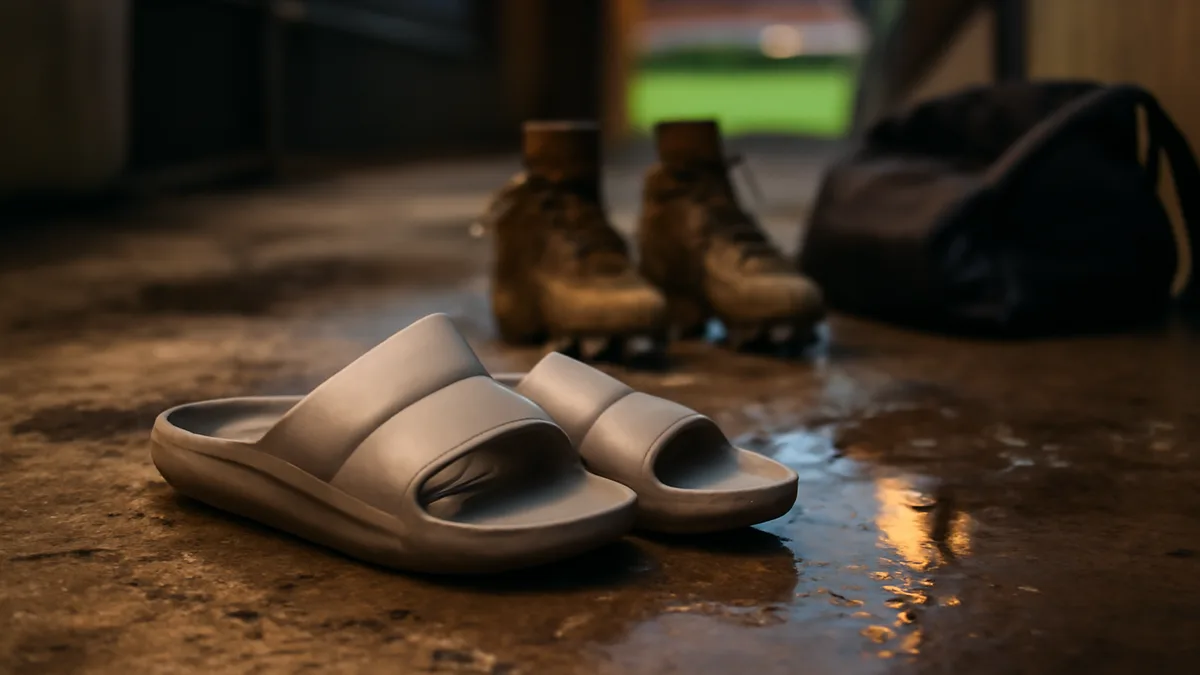
Recovery footwear is for the hours after exercise, not a substitute for rehabilitation or for on-pitch footwear. Its purpose is to reduce immediate discomfort, encourage circulation and let sore feet rest while moving around off the field.
This guide explains the decision points that matter, lists the trade-offs between common types and names durable product traits and brands where those traits are long-standing. It also covers sizing, arch support and common mistakes people make when buying.
How to decide before spending
Decide what the footwear must achieve on matchday and afterwards: quick comfort for showers and travel, passive recovery while sitting, or active recovery for short walks and gentle movement. Also set practical limits: must it work outdoors in wet weather, fit inside a kit bag, or be light enough for travel? Those constraints change which features matter most.
Where people go wrong
Buyers often choose by looks or celebrity endorsement rather than by function. Recovery footwear that looks like trainers is sometimes offered with little structural support. Another common mistake is trusting terms such as “recovery” or “comfort” without checking the sole stiffness, heel-to-toe drop and arch shape. Finally, many pick a model in the same size as their match boots; that can produce either too-tight or too-loose fit because recovery ranges fit differently.
What differs for beginners and experienced players
Beginners benefit from stable, obvious features: a contoured footbed, moderate cushioning and a secure strap or heel cup. Experienced players can prioritise a narrower set of needs: maximal cushioning for flight or long post-match travel, a low-profile slide to allow quick on/off, or a firmer orthotic-friendly footbed to support bespoke insoles they already use. Experience also informs how much off-foot activity the player will do; that guides outdoor-capable models versus indoor-only slippers.
Essential decision points (in order of priority)
Sizing and fit
Sizing is the single most important choice. Recovery footwear often fits differently from regular trainers and boots: some ranges run long with generous toe boxes, while others are narrow and compact. Try models on with the socks intended for use and allow space for slight swelling after matches; if buying unseen, choose the size that matches the brand’s stated recommendation for bigger last shapes rather than the footwear size used for tight-fitting boots.
Sole firmness and cushioning
Sole behaviour defines how the shoe feels during short walks. Soft, highly compressible soles reduce immediate impact but can feel unstable for long walks. Firmer sole platforms offer better ground feedback and can be more suitable if movement and balance are required around the training ground. Look for a balance between a thick midsole for shock absorption and a stable base that prevents the foot from rolling.
Arch support
Arch support matters when a player has flat feet, high arches or a history of plantar discomfort. Some recovery lines use a moulded, contoured footbed to hold the arch; others are deliberately flat to encourage minimal muscle engagement. If orthotics are already used, prioritise models with removable footbeds or roomy insides that accept a custom insert without raising the foot too much.
Heel containment and straps
A heel cup or adjustable strap keeps the foot from sliding forward, which reduces friction and blister risk after long runs or a hot shower. Slides without any heel restraint are quicker on and off but can encourage the foot to move inside the shoe; choose a secure strap or a deeper heel cup if there’s a need to walk briskly or for longer distances.
Breathability and water management
Materials that wick moisture are useful when moving between sweaty kit, showers and cold stands. Mesh and engineered knit dry faster than dense foams. Conversely, closed-cell foams repel water and are simple to hose off, which makes them practical for muddy training environments. Decide whether drying speed or ease of cleaning is more important for regular use.
Weight and packability
For players who travel, weight and how compact the shoe packs are practical limits. Bulky, heavily cushioned recovery trainers give comfort but take space. Lightweight slides and foldable slippers are easier to store in a kit bag, though they typically offer less structural support. Match the choice to how often the footwear will be carried versus worn.
Durability and outdoor use
Not all recovery footwear is meant for outdoor surfaces. Thin-foam slippers wear quickly if used on grit or concrete. Models designed for outdoor use have tougher outsole rubber and sealed foam which extend life but add weight. If the routine includes walking across car parks or to public transport, pick a model with an outsole rated for outdoor use.
Compatibility with orthotics and medical needs
Some recovery ranges have removable insoles and a roomy toe box specifically to accept medical orthotics. If a physiotherapist or podiatrist has prescribed an insole, choose shoes whose insole lifts out cleanly and whose internal volume will not press the orthotic excessively against the upper.
Brand traits worth knowing
- Maximal cushioning: Some marques are known for very thick, responsive midsoles that prioritise cushioning for travel and flight recovery.
- Contoured footbeds: A few brands have long used pronounced footbed shaping for arch support and foot alignment.
- Wide lasts: Certain lines are traditionally roomy and suit players with wider forefeet who need more toe-box space.
- Closed-cell foams: Makers of molded foam sandals favour materials that shed water and are easy to clean after muddy use.
Comparing the common alternatives
| Type | Support | Cushioning | Outdoor suitability |
|---|---|---|---|
| Slippers | Low; flat footbed with minimal arch shaping | Soft; designed for passive comfort | Indoor use only; not durable on rough surfaces |
| Slide sandals | Variable; some have contoured footbeds, others are flat | Medium to high; foam layers provide impact absorption | Suitable for short outdoor use if outsole is robust |
| Recovery trainers | High; built on trainer-like platforms with better heel cups | High; engineered midsoles balance cushioning and stability | Generally designed for outdoor and travel use |
What to do next
Decide which of the decision points above is non-negotiable for matchdays and purchases: sizing, arch support or outdoor durability. If sizing or orthotic compatibility is critical, try models in person or choose brands that publish internal volume guidance and offer free returns. For convenience, keep a modest shortlist of two types: one compact, easy-to-pack pair and one sturdier pair for travel and longer walks.
Finally, once a pair is chosen, break it in during training days and short walks rather than on long trips immediately after an important match. That prevents surprises and confirms the choice before committing to a second purchase or a replacement.
Frequently asked questions
Should recovery footwear be one size larger?
Not always; recovery ranges fit differently, so size decisions depend on the model’s last and internal volume. Try with the socks intended for use and allow a little extra space for post-match swelling, or check the brand’s fit guidance when buying unseen.
Can recovery footwear replace orthotics?
Most recovery footwear is not a substitute for prescribed orthotics, but some models accept removable insoles and will accommodate custom inserts. If orthotics are used, prioritise shoes with removable footbeds and sufficient internal volume.
Do slides aid circulation after matches?
Slides can support passive recovery by reducing pressure on sore feet and allowing easy movement, but they do not actively increase circulation like compression garments or exercise. Choose slides with a secure heel cup if walking is needed to help maintain comfortable circulation.
