
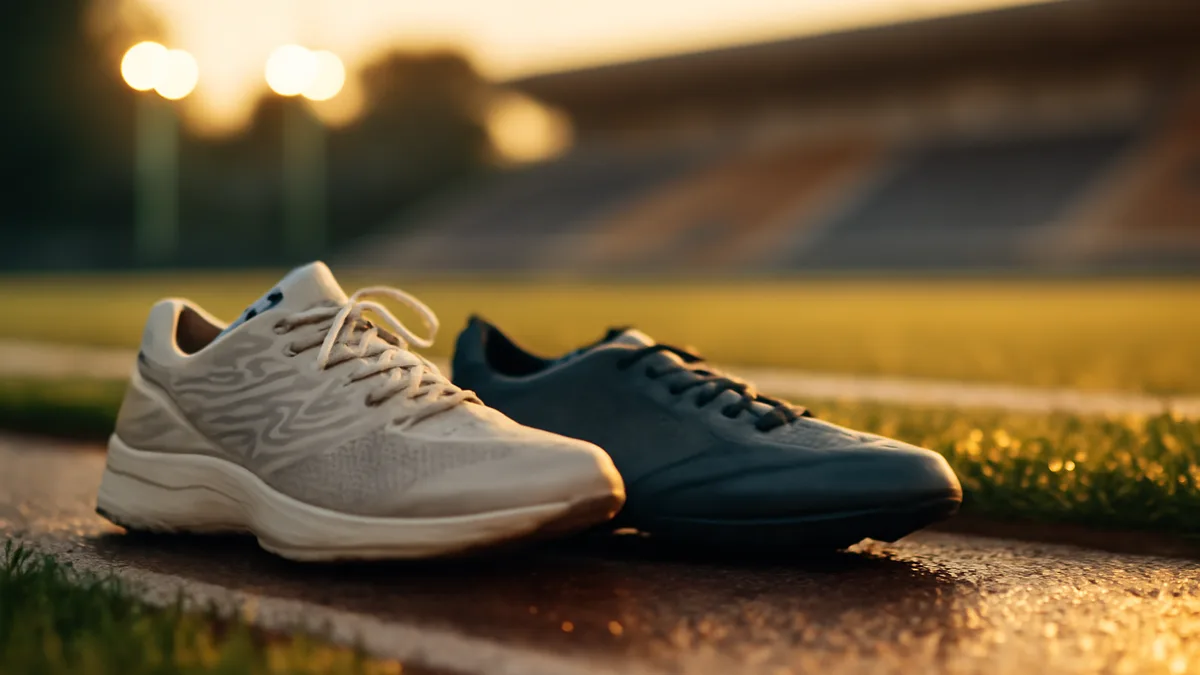
Footballers spend time running on three different surfaces: the road or track for conditioning, the training pitch for ball work and gym or indoor courts for strength. The decision about which running shoe to buy turns on those uses more than on brand names or colourways.
This guide lists the priorities in order, explains common mistakes and shows how buying choices differ for a beginner and an experienced player. It finishes with a clear next step so money is spent on the right item.
How to decide
Decide first what proportion of running will be off the pitch. If most mileage is on road or track, pick a shoe optimised for road running; if most sessions are pitch-based interval work, choose something with a firmer, lower-profile sole that translates better to artificial grass. For mixed use, plan a rotation: at least two pairs that cover road cushioning and pitch responsiveness.
Common buying mistakes
Players often buy the flashiest shoe or the same pair they use for matchday boots and expect it to do everything. That sacrifices cushioning, longevity and injury prevention. Another frequent error is ignoring fit: a trainer that pinches on the forefoot or lets the heel slip will cause blisters and change running mechanics, which is worse than wearing an older, well-fitting pair.
For beginners versus experienced players
Beginners should prioritise fit and basic cushioning and buy one reliable road trainer and one cross-training or low-profile shoe for pitch sessions. Experienced players can fine-tune: they may choose a plush, high-energy road shoe for tempo runs, a firmer shoe for high-intensity pitch drills and possibly a lightweight racing trainer for time trials. Experience allows more specialised rotation and closer attention to wear patterns.
Key priorities in order
Surface compatibility
Choose the shoe for the surface it will see most. Road trainers are designed for smooth, repetitive impact and have thicker midsole cushioning, while cross-trainers and low-profile shoes have firmer midsoles and flatter outsoles that feel more stable on grass and artificial turf. Using a road-only trainer for repeated pitch work sacrifices traction and lateral control.
Fit and last
Fit is the single most important factor. A correct last matches the foot’s shape — narrow, regular or wide — and the shoe must allow a thumb’s width at the toe and secure heel lock. Brands known for wider lasts include New Balance and certain models from Brooks, which make them safer starting points for broad feet.
Cushioning and midsole feel
Select cushioning by function, not by label. Plush, thick-cushion midsoles reduce impact for high-mileage road sessions and suit players building aerobic fitness. Firmer, lower-volume midsoles give better ground feel for pitch intervals and change of direction. Brands such as ASICS are widely known for gel or soft cushioning, while Brooks and New Balance are known for stable, structured cushioning; Nike and some other makers are known for more responsive foams.
Stability and control
Stability features matter for athletes who do a lot of cutting or have overpronation. Look for a structured midsole or guidance technology that prevents excessive inward roll. A stable shoe will reduce compensatory muscle use during drills and lower the risk of repetitive strain; however, stability should not come at the cost of an ill-fitting shoe.
Traction and outsole profile for pitch work
Outsole pattern and rubber compound determine grip on artificial turf and wet grass. A shallow, patterned tread or a flatter outsole designed for court work translates better to short sprints and direction changes on turf than a deep, road-specific lug pattern. If most sessions are on 3G/4G turf, choose a cross-trainer or turf-specific training shoe rather than a trail or road racer.
Rotation strategy
Rotate at least two pairs and match them to session type. Use a cushioned road shoe for distance or tempo runs, and a firmer, lower-profile trainer for pitch drills and gym circuits. Rotation spreads wear across different midsole constructions and can delay the need to replace any single pair.
When to replace a pair
Replace shoes when cushioning or structure has degraded, not on a fixed calendar. Signs are a sudden increase in soreness after runs, visible midsole creasing, outsole wear that reveals midsole layers, or a loss of heel cushioning. For players who rotate, inspect each pair every few weeks and retire any shoe that no longer provides the expected support or comfort.
Comparing the main alternatives
| Cushioning | Sole stiffness | Tread grip | Best use | |
|---|---|---|---|---|
| Road trainers | High, plush cushioning for impact absorption. | Moderate flexibility to support long runs. | Shallow tread for paved surfaces. | Long runs, tempo sessions and recovery miles. |
| Cross-trainers / turf trainers | Lower-profile, firmer cushioning for responsiveness. | Lower flexibility with a stable platform. | Patterned flat outsole for artificial turf and indoor courts. | Pitch drills, interval work and gym-based strength sessions. |
| Trail shoes | Variable cushioning, often protective underfoot. | Stiffer sole for uneven ground. | Aggressive lugs for soft or muddy terrain. | Off-road conditioning only; not recommended for pitch work. |
What to do next
Decide the primary surface and choose two shoes that cover the two main demands: cushion for mileage and responsiveness for pitch drills. Try both in the evening when feet are slightly swollen, test the heel lock by accelerating and cutting in the shop if allowed, and walk for at least five minutes. Start rotation immediately: use the cushioned shoe for steady runs and the firmer trainer for intervals and gym sessions. Mark calendar reminders to inspect midsole compression and outsole wear every six to eight weeks during heavy training blocks. If pain or unusual fatigue appears, stop using the affected pair and consult a podiatrist or physiotherapist before buying replacements.
Frequently asked questions
How often should footballers rotate shoes?
Rotate at least two pairs and match each to session type. Using one cushioned trainer for long runs and a firmer trainer for pitch work spreads wear and delays replacement.
What are signs a running shoe needs replacing?
Replace when cushioning or structure degrades, such as increased post-run soreness, visible midsole creasing, worn outsole revealing midsole, or loss of heel cushioning. These signs mean the shoe no longer offers intended support.
Can road running shoes be used for pitch training?
Road shoes are fine for occasional pitch work but are not ideal for repeated sessions because their thicker, softer midsoles and road-specific outsoles reduce lateral control and traction on turf. For frequent pitch drills, choose a firmer, lower-profile trainer.
