
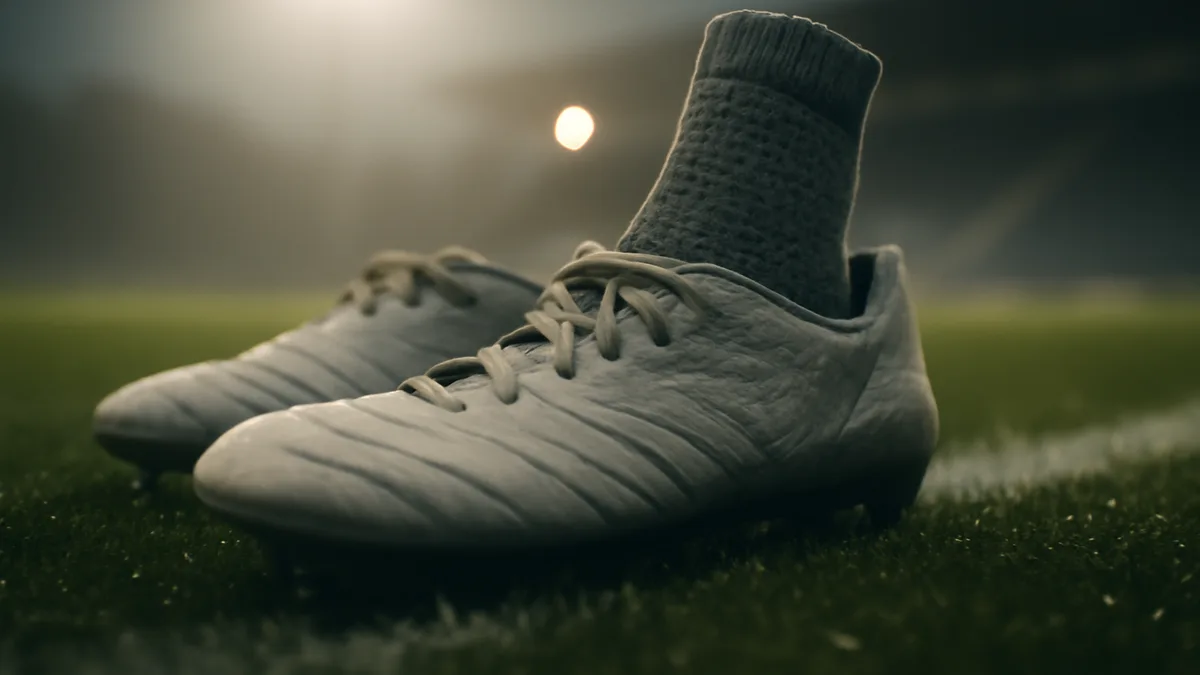
Grip socks are a small piece of equipment with an outsized reputation. They change the way the foot moves inside a boot and can reduce slippage, but they do not change traction between stud and turf or a player’s contact with the ball.
This guide focuses on mechanism, realistic benefits, common wasteful choices and the narrow rules on sock colour in organised matches. The spine is a ranked sequence of priority checks to use when deciding whether to buy a pair.
How to decide before buying
Decide by problem: what exactly needs fixing? If boots slip on the foot inside the last, a grip sock can help. If studs slide on wet grass, a different solution is required. Check what causes the loss of control in training or matches before spending money.
Also consider fit and comfort first. A grip sock that bunches or rubs is worse than having no grip aid at all. Test them with the boots intended for match use when possible; interaction between sock, insole and boot is what matters.
The list: priority checks when choosing grip socks
Grip pattern and placement
The primary feature is where the rubberised or silicone elements sit. Look for patterns that cover the heel and midfoot rather than only the toes, because heel slip causes the most instability. Continuous strips under the arch add lateral control while dotted patterns improve general slip resistance.
Thickness and cushioning
Grip socks change internal fit as much by material thickness as by tack. Thin grips preserve boot feel and ball contact; thicker, padded versions cushion and can alter how the boot fits on the foot. Choose thin if preserving touch matters; choose thicker only to compensate for pressure points or large gaps in the boot last.
Material and breathability
Materials that wick moisture reduce the loss of tack over 90 minutes. Natural fibres mixed with technical synthetics are common because they balance sweat management with structure. Avoid fully rubberised socks that trap heat; persistent moisture buildup reduces grip and increases blister risk.
Fit and sizing
Correct sizing is the most important purchase detail. A grip sock that is too small constricts circulation and can lift at the heel; one too large slides and defeats its purpose. Buy by the sock size rather than shoe size when brands provide both measurements, and check that the sock lies flat inside the boot when worn.
Compatibility with boot last
Grip socks do not change a boot’s last. If a boot is already narrow or wide for the wearer, a sock modifies fit only slightly. Players with wide feet should seek socks with a stretchier knit; players on narrow lasts should prefer thinner, lower-volume options to avoid overstretching the boot.
Surface suitability
Grip socks affect internal foot-to-boot slip and are surface-agnostic for pitches: they help the foot within the boot on grass, artificial grass and indoor courts alike. They do not improve stud purchase on wet natural turf or traction on rubberised indoor floors; those require appropriate boots or soleplates.
Durability and maintenance
Grip elements wear with use and repeated washing. Choose socks where the grip material is integrated into the knit rather than glued onto the outside. Follow care guidance to preserve adhesion and elasticity; failing to do so is the most common reason grip performance falls off after a few weeks.
Rules on sock colour
Sock colour rules are set by competition organisers and generally require socks to match team kit. Match officials enforce uniformity; substitution or under-sock colour that shows beyond the team sock is typically not permitted. For international and league play consult the competition’s kit regulations before making a purchase, and in training prefer neutral colours where club rules are not strict.
When grip socks are wasted
They are wasted when the problem is soleplate slip, stud choice or surface condition. If studs are blunt, the wrong length for the turf or the pitch is waterlogged, a grip sock will not help. They are also wasted if a player already wears a tightly fitted boot with a secure heel hold; adding more tack can only increase heat and the risk of blisters.
Where players commonly go wrong
Players often buy grip socks to fix poor boot fit or to avoid replacing worn studs. That misdiagnosis leads to disappointment. Another common error is choosing the most aggressive grip pattern without testing it in the intended boot; excessive tack can alter the natural roll of the foot, affecting agility and touch.
Overlooking wash and care instructions is another frequent mistake. Grip prints are the part most likely to delaminate under heat or harsh detergents, so treating the sock like any other athletic garment preserves performance far longer than more aggressive maintenance.
Beginner versus experienced player needs
Beginners benefit most from simple, thin grip socks that stabilise heel slide and make movement feel more secure; they remove a small but distracting variable while developing technique. Experience players should be more selective: preservation of ball feel and micro-adjustments matter, so thin, breathable options that do not change boot volume are generally preferable.
Goalkeepers may prefer different constructions around the toes and forefoot because diving and friction patterns differ from outfield running. Similarly, futsal players often need lightweight, low-profile grips to maintain touch on a small, heavy ball.
Practical checks before spending money
- Test with match boots: Try the socks with the actual boots intended for match use to check heel hold and in-boot feel.
- Inspect grip placement: Ensure rubberised elements align with heel and midfoot contact points.
- Check breathability: Rub the fabric under a lamp or in-hand to judge weave openness and expected moisture transfer.
- Confirm colour rules: Ensure the visible sock colour matches team kit regulations for the competition.
Table: comparing common grip-sock types
| Traction inside boot | Ball feel | Suitability for close control | |
|---|---|---|---|
| No grip sock | None | Maximum, unaltered | Best for players prioritising pure touch |
| Thin grip sock | Moderate, prevents heel slip | High, minimal change | Good balance for most outfield players |
| Padded grip sock | High, adds cushioning | Reduced, more insulated | Better for players needing pressure relief or extra padding |
What to do next
If the issue is internal slippage, try a thin grip sock with the match boots during a training session to assess heel control and ball feel. If studs or soleplates are suspected, test alternative boots or consult a kit manager before buying socks. Finally, check competition kit rules on visible sock colour and, where possible, choose a neutral colour option that fits both training and match requirements.
For formal kit regulations consult the governing text used by organisers; some competitions publish authoritative equipment guidance under the phrase FIFA equipment rules and others treat kit in their own manual for association football kit.
Frequently asked questions
Do grip socks improve traction on wet grass?
No. Grip socks improve foot-to-boot contact only; they do not affect stud purchase on wet natural turf. Traction on wet grass must be addressed with the correct studs or soleplate for the conditions.
Can grip socks reduce blisters?
They can if the main cause is foot movement inside the boot, because less slip reduces friction hotspots. However, if blisters come from seams, ill-fitting boots or sweaty feet, different solutions are needed.
Are bright-coloured grip socks allowed in matches?
Allowability depends on competition kit rules and match officials; most competitions require socks to match team colours and visible under-sock elements may be disallowed. Confirm the organiser’s kit regulations before wearing them in a match.
