
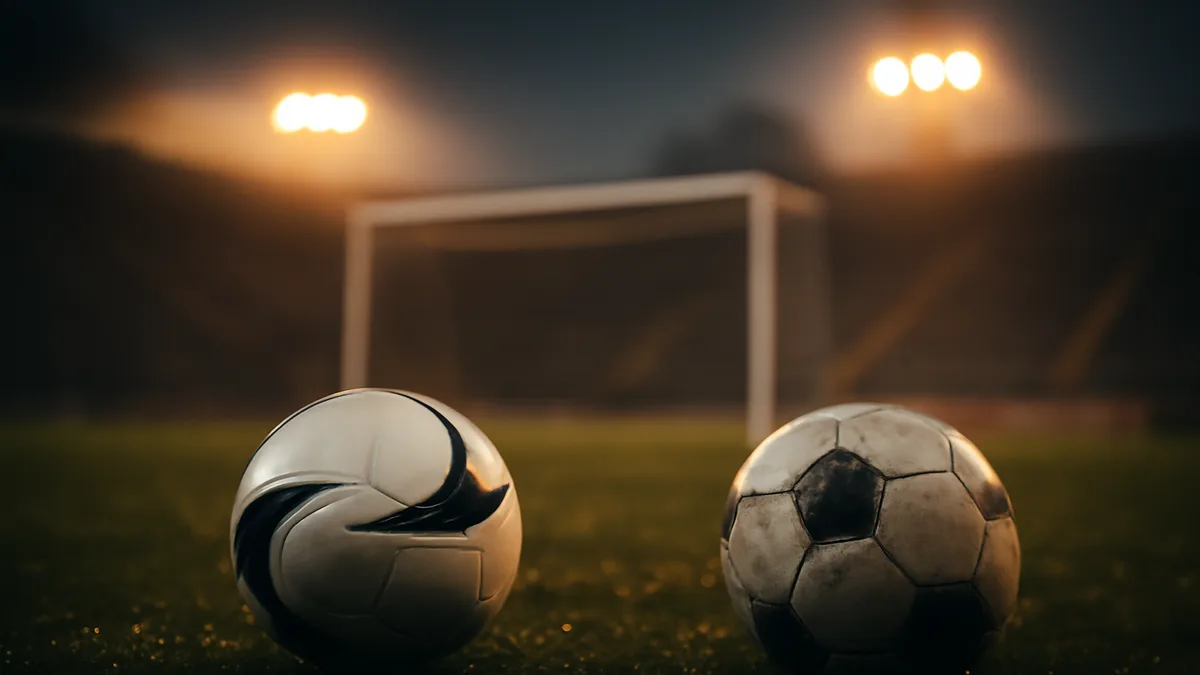
Choosing between a match ball and a training ball is about balancing performance against durability and running costs. The decision depends on how the ball will be used, how often, and what qualities actually affect play: shape retention, water uptake, touch and consistency.
This guide lists the criteria that matter and the questions to ask when spending money on a football. It explains what the price difference typically buys — notably the bladder construction, panel build, water resistance and shape retention — and where spending more rarely makes a meaningful difference for most players and teams.
Key criteria in order of importance
- Intended use — Decide first whether the ball is for match play, daily team training or casual sessions, because that determines which trade-offs matter most. Match balls prioritise consistent flight, predictable rebound and a stable surface; training balls prioritise durability and cost per hour of use.
- Bladder construction — The bladder affects how the ball holds air and how predictable the touch is. Higher-tier balls often use more stable or layered bladders that retain pressure and shape longer, while cheaper training balls use simpler bladders that need more frequent inflation and can lose shape faster.
- Panel design and bonding — Panels and how they are joined change flight and water behaviour. Thermally bonded panels and fewer seams tend to give a smoother surface and more consistent flight in higher-end match balls. Stitched panels on training balls increase durability but can deliver a slightly less uniform trajectory.
- Surface material and coating — The outer casing and coating control grip, abrasion resistance and water uptake. Match balls use thinner, more responsive coatings for a precise touch. Training balls use thicker, tougher coatings that tolerate turf and repeated impacts but can feel less lively.
- Water uptake and wet-weather play — How much water a ball soaks up is crucial if sessions are on grass in wet conditions. Better-sealed panels and hydrophobic coatings reduce water uptake, keeping weight and behaviour stable. Training balls with stitched seams and porous materials can pick up water and change feel mid-session.
- Retention of shape — Some balls deform with repeated use or lose their roundness after impacts. Materials and construction that resist deformation cost more, but they maintain consistent bounce and touch across a season. For clubs that need uniformity every week, shape retention is a higher priority.
- Durability and abrasion resistance — Consider the playing surface. Synthetic turf and hard courts chew through softer casings quickly, so training balls meant for those surfaces have reinforced coatings. A more durable ball lasts longer but may sacrifice some handling or flight precision.
- Repairability and maintenance — Training balls are generally easier and cheaper to maintain: replace the bladder or re-inflate as needed. Match balls often rely on complex construction that is not meant to be repaired; they are replaced to guarantee consistent performance.
- Per-hour cost thinking — Rather than target an absolute price, estimate how many hours the ball will be used and what each hour effectively costs. A more expensive match ball may be unjustified for daily training, while a cheaper training ball can be false economy for occasional high-stakes matches where consistency matters most.
Where the price difference actually shows up
The most reliable way to understand price tiers is to map them to concrete construction features. Money typically buys: a better-quality bladder that keeps pressure and shape longer; fewer seams or different bonding that smooths flight; higher-end surface materials and coatings that resist abrasion and reduce water uptake; and tighter quality control for consistency between balls. These attributes improve performance and predictability rather than making the ball ‘faster’ in some vague sense.
For many clubs and players the crucial trade-offs are clear: if sessions are daily on abrasive surfaces, prioritise durability and accept a less refined touch. If matches are infrequent but results or broadcast presentation matters, invest in balls that prioritise shape retention and consistent flight.
Common mistakes buyers make
People often buy the most expensive ball thinking it will survive the longest; the reverse is common. High-performance materials and thin coatings that improve touch can be more fragile on concrete or artificial turf. Another error is buying a match-standard ball for training because of feel: repeated use will quickly degrade its characteristics and raise long-term costs.
Another pitfall is ignoring wet-weather performance. A ball that feels perfect on a dry pitch can become heavy and unpredictable after one rainy session if its panels and coating allow water uptake. Check construction features rather than marketing claims when wet behaviour matters.
How a beginner’s needs differ from an experienced player’s
Beginners benefit more from durable, forgiving balls that tolerate imperfect technique and frequent mishandling. Training balls that keep shape and require little maintenance lower the friction of practice and reduce ongoing cost. Experienced players and teams prioritise the subtleties: predictable flight, consistent rebound and precise touch, so the investment shifts toward balls with stable bladders, smooth bonded panels and lower water uptake.
Teams that need consistent match conditions across squads or match days may standardise on higher-spec balls for all first-team activity, while keeping robust training balls for youth and endurance work. That split protects performance-critical balls and controls replacement budgets.
Comparison table: match ball vs training ball
| Match ball | Training ball | |
|---|---|---|
| Bladder | Higher-stability bladders designed for pressure retention and consistent touch. | Simpler bladders prioritising durability and easy replacement. |
| Panel construction | Fewer seams, bonded panels for uniform flight characteristics. | Stitched or reinforced panels to withstand abrasion and heavy use. |
| Water uptake | Lower water uptake due to coatings and sealed seams to preserve weight. | Higher potential water uptake unless specifically treated for wet play. |
| Durability | Designed for limited, high-quality use; can wear faster under rough surfaces. | Built to last through frequent training sessions and harsh surfaces. |
What to do next
Decide the ball’s primary role first, then use the ordered checklist above when comparing specifications. Ask suppliers about bladder type, panel bonding, and whether the surface coating is treated for water resistance. Finally, test a ball in the same conditions it will be used most: the surface, the weather and the intensity of play — that practical check usually exposes whether a match-level or training-level choice is the better long-term buy.
For formal competitions, check any competition supplier rules before buying. For everyday purchases, plan purchases by hours of use rather than a headline price.
There are two authoritative sources for construction and quality standards widely cited by manufacturers: the FIFA Quality Programme and technical descriptions of the ball bladder. These explain the formal tests and components manufacturers aim to meet.
Frequently asked questions
Match ball vs training ball: which is worth buying?
Choose based on use. For competitive matches, prioritise consistency and shape retention; for frequent training, prioritise durability and low maintenance. Consider per-hour cost rather than headline price.
Does a better bladder make a difference?
Yes. A higher-spec bladder retains pressure and roundness longer, giving more predictable touch and rebound. For heavy training use, a simpler bladder that is cheap to replace can be more economical.
How much does water uptake matter?
Water uptake affects weight and flight, especially in wet conditions. If sessions are often wet or on grass, pick balls with sealed seams and hydrophobic coatings to keep behaviour stable.
